Last updated November 17, 2026







Free design consultation - KraftMaid and Wellborn cabinet lines, Cambria and Silestone surfaces, and every tier from refacing to full custom laid out side by side
Kitchen Remodeling Maintenance Checklist for Las Vegas Homeowners
A new kitchen does not age the way most homeowners expect. It does not wear out evenly, and it rarely fails from heavy use. In Las Vegas, it fails from the water coming out of the tap and the air moving through the house. The same water that tastes fine in a glass leaves a hard mineral film on stone, glass, and metal. The same dry desert air that keeps produce crisp pulls moisture out of wood joints and caulk lines. A kitchen that gets a simple monthly routine holds its finish for years. A kitchen that gets nothing starts showing its age much faster than the calendar suggests. This guide walks through the checks that matter most in Las Vegas homes: descaling, cabinet joints, grout and caulk, range hood care, and under-sink plumbing. We’ll show you what to look at, how often, and when a small issue needs a professional eye.
Quick Answer
A Las Vegas kitchen needs five recurring maintenance routines: monthly descaling of faucets, sink basins, and dishwasher filters to counter hard water; quarterly inspection of cabinet box joints and drawer glides for heat-driven separation; twice-yearly grout and caulk checks to catch thermal-cycling cracks; seasonal range hood filter cleaning and annual duct inspection for desert dust; and an annual check of under-sink plumbing connections for joint wear caused by pressure swings. Do these on schedule and you’ll catch most problems while they’re still cheap to fix.
Styles & brands we work with
- Shaker
- Modern flat-panel
- Two-tone cabinets
- KraftMaid
- Cambria quartz
- Butcher block
- Open shelving
Table of Contents
- Monthly Hard-Water Descaling for Las Vegas Faucets and Sinks
- Inspecting Cabinet Box Joints and Drawer Glides for Heat Damage
- Grout and Caulk Inspection on a Thermal-Cycling Schedule
- Range Hood Filter and Duct Maintenance in a Dusty Climate
- Annual Under-Sink Plumbing Check
- Caring for Quartz and Stone Countertops
- A Seasonal Calendar for Las Vegas Kitchens
- Common Mistakes to Avoid
Monthly Hard-Water Descaling for Las Vegas Faucets and Sinks
Southern Nevada water carries a high mineral load, and that load settles out wherever water sits. Faucet aerators, sink basins, dishwasher filters, and the seals inside a pull-down sprayer all collect calcium and magnesium film. Left alone, that film turns into scale: a chalky crust that narrows water flow, dulls brushed finishes, and etches the surface of unsealed natural stone. This is the single maintenance item Las Vegas homeowners skip most often, and it’s the one that produces the most visible damage in the shortest time.
Here’s a monthly routine that covers the whole wet zone:
- Unscrew and soak the aerator. Most Kohler and Moen faucets have an aerator you can hand-remove. Soak it in a 50/50 mix of white vinegar and water for 30 minutes, rinse, and reinstall. This restores flow and stops the sputtering that signals a clogged screen.
- Wipe down the sink basin while it’s still wet. A quick towel-dry after each use does more than any cleaner. Water spots that dry in place are where scale starts.
- Descale the dishwasher filter. Pull the filter basket, rinse it under warm water, and soak it in the same vinegar solution. Food film plus hard water makes a paste that clogs the filter mesh.
- Run a vinegar cycle through the dishwasher. A cup of white vinegar in an empty cycle loosens mineral film inside the tub and on the spray arms.
- Check the sprayer and soap dispenser. Pull-down sprayers and built-in dispensers trap water in small chambers. Flush them monthly so scale doesn’t seal the internal valves.
One warning: never use vinegar or acidic cleaners on natural stone countertops. Acid etches marble, travertine, and limestone permanently. Quartz surfaces from Cambria, Silestone, and Caesarstone are non-porous and tolerate mild soap and water, but they still don’t want an acid soak. Keep the descaling routine to metal, glass, and porcelain, and use a pH-neutral stone cleaner on the counter itself. If you’re not sure what your stone will tolerate, ask before you spray.
Inspecting Cabinet Box Joints and Drawer Glides for Heat Damage
Cabinet boxes live in a tough spot in a Las Vegas kitchen. They sit close to the range and dishwasher, they take radiant heat from west-facing windows, and they expand and contract as the air conditioning cycles on and off through the day. Wood moves with humidity and heat. When the movement is repetitive, the joints take the strain. The first sign is usually a hairline gap at a corner joint or a drawer that starts to rub.
Every three months, walk the kitchen and check these points:
- Corner joints on base and wall cabinets. Run a fingertip along the inside corner where two panels meet. A joint that was tight at installation should still be tight. A visible shadow line means the panels have moved.
- Drawer glides and slides. Open each drawer fully and push it closed slowly. Listen for grinding, and watch for a drawer that racks sideways. Undermount glides are sensitive to cabinet box movement; when the box warps, the glide binds.
- Door hinges and their mounting screws. Heat cycling loosens screws over time. A door that sags or rubs against a neighboring door is usually one loose screw, not a failed hinge.
- Toe kicks and filler strips. These thin panels absorb heat from the floor and are often the first to separate.
- Cabinet interiors near the range. The cabinet immediately beside or above a cooktop sees the highest heat loads. Check its shelf pins and side panels for discoloration or separation.
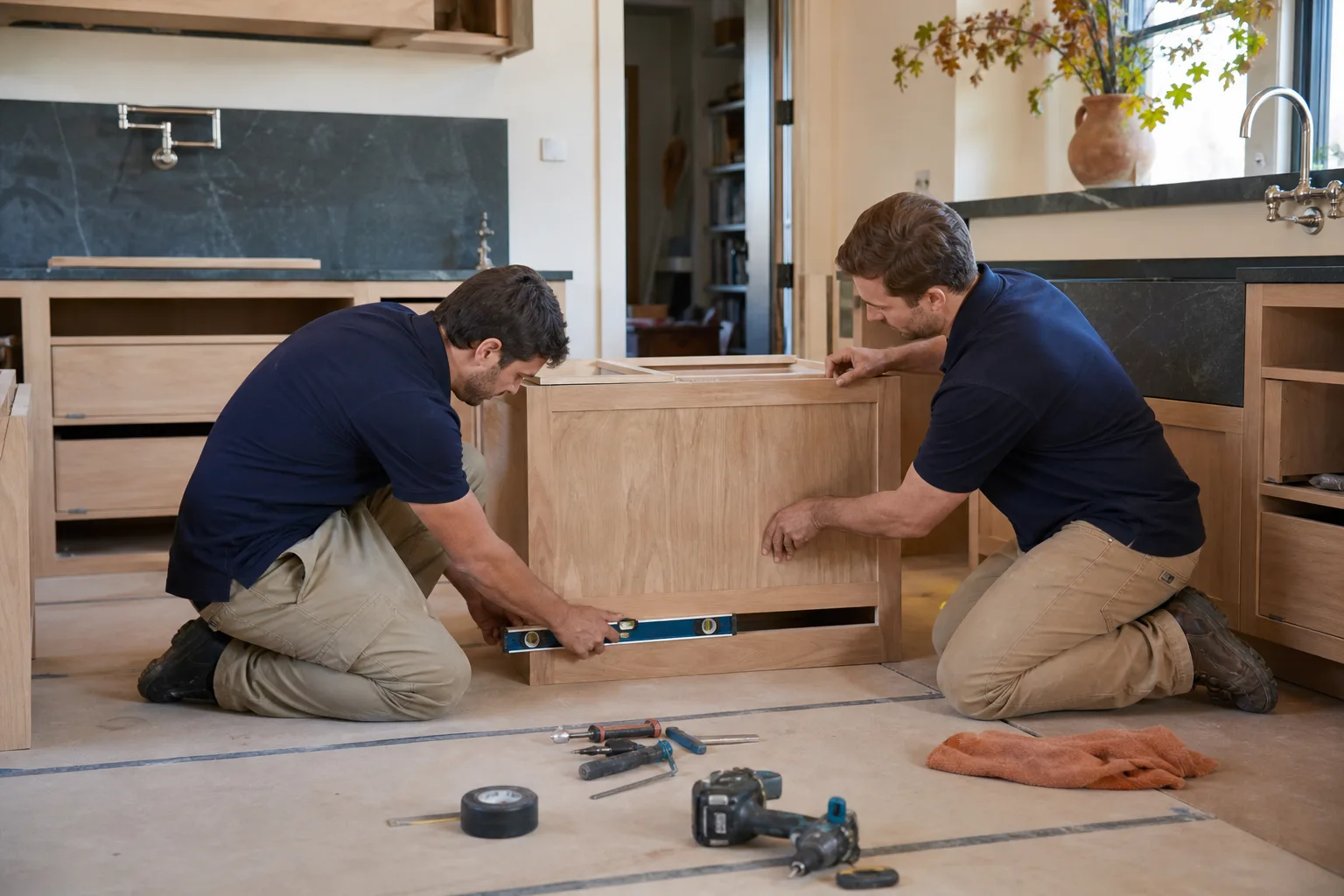
If you notice joints opening on KraftMaid or Wellborn cabinets, don’t tighten or shim anything yourself. Cabinet boxes are engineered as a unit, and a well-meaning adjustment can make the problem worse. A qualified installer can tell you whether the joint needs re-clamping, a new fastener, or nothing at all. Catching a joint gap early is a small repair. Catching it late, after the box has racked enough to twist the countertop above it, is a much bigger one. That’s one reason we build the install around cabinet-box integrity from the start: if you’re planning cabinet installation in a Las Vegas home, the quality of the original install determines how much maintenance the boxes will need down the road. Cabinets built to your spec and installed to stay are cabinets you can maintain with a screwdriver and a flashlight.
Grout and Caulk Inspection on a Thermal-Cycling Schedule
Las Vegas homes swing hard between air-conditioned interiors and exterior temperatures that climb past 115°F in summer. Every swing moves the materials in your kitchen at slightly different rates. Tile expands differently than grout. Caulk stretches differently than the stone it seals. Over a season, those differences open hairline cracks, and water gets in where it shouldn’t.
Check grout and caulk twice a year, and step up to quarterly if you live in an older home with original tile or a kitchen with a west- or south-facing window wall. Walk the kitchen with a flashlight and look for these:
- Cracks in grout lines around the sink and backsplash. Hairline cracks at the sink are the most common failure point. Water wicks behind tile and into cabinet substrate.
- Caulk pulling away from the countertop-to-backsplash joint. This joint takes the most thermal movement in the whole kitchen. Press a fingernail into the caulk; if it’s hard or brittle, it’s done.
- Grout discoloration or soft spots. Dark or soft grout means water is getting in. Don’t just clean it. Find where it’s coming from.
- Seams around the sink rim. An undermount sink sealed with failing caulk can leak into the cabinet below. Test the seal by running water along the rim and checking underneath.
The routine itself is simple. Clean the joint, let it dry completely (in Las Vegas, that’s usually less than a day), and reapply 100% silicone caulk at the countertop and backsplash junction. Use sanded grout for wider joints and unsanded for narrow ones. If a grout line has cracked repeatedly, don’t just patch it again. That pattern usually means the substrate underneath has moved, and that’s a job for someone who can look behind the tile.
Range Hood Filter and Duct Maintenance in a Dusty Climate
Fine desert dust gets into Las Vegas homes even when they’re sealed up tight. That dust doesn’t just settle on shelves and blinds; it gets pulled into the range hood every time you cook. Grease vapor and dust combine into a film that coats the filter mesh, and when the filter clogs, the hood can’t move air. Cooking smoke and moisture then spread through the kitchen instead of venting out.
The right schedule depends on how much you cook, but a general rule for a Las Vegas kitchen is:
- Monthly: Pull the mesh filter and wash it in hot water with a degreasing dish soap. Soak first, then scrub with a soft brush. Let it dry fully before reinstalling.
- Every three months: Check the filter mesh against a light. If you can’t see through it, it’s still loaded even after washing. A clogged mesh filter can’t be saved by more soap, and a replacement is inexpensive.
- Twice a year: Wipe down the hood’s interior cavity, the fan blades, and the grease tunnel with a degreaser. Dust collects in these surfaces and hardens into a sticky film.
- Annually: Inspect the duct run if it’s accessible. If you have a roof or wall cap, check for blockage from dust buildup or nest material. A blocked duct means the hood is recirculating smoke instead of exhausting it.
- Every few years: If you have a ducted hood and the kitchen sees heavy cooking, have the duct professionally cleaned. Grease buildup inside a duct over a long period is a fire concern, and a Las Vegas kitchen’s dry air means the residue hardens faster than it would in a humid climate.
Ductless hoods use charcoal filters instead of mesh. In a Las Vegas kitchen, change those charcoal filters more often than the manufacturer’s minimum, because dust shortens their life. If the hood starts making noise or the fan rattles, don’t ignore it; a failing blower motor usually gives warning before it dies. When we plan a kitchen remodeling project, range hood venting is one of the details we nail down early, because fixing a bad venting setup after the cabinets go in costs far more than getting it right the first time.
Annual Under-Sink Plumbing Check
Under-sink plumbing in older Las Vegas neighborhoods takes more abuse than most people realize. Pressure fluctuations move through the lines as water is used across the system, and every fluctuation flexes the joints, fittings, and supply hoses in your cabinet. Over a year, those little movements add up. A joint that’s just starting to weep doesn’t announce itself; it usually shows up as a musty smell, a soft spot in the cabinet floor, or a water stain on the toe kick below.
Once a year, do this inspection:
- Clear the cabinet and use a flashlight. Look at the cabinet floor, the back panel, and the base joint for water stains, warping, or bubbling finish.
- Trace every supply line. Check the shutoff valves, the flexible connector hoses, and the point where each line meets the faucet body. Look for corrosion on fittings and any sign of moisture on the hose braid.
- Check the drain assembly. Run water and watch the P-trap and the slip joints. A wet joint or a drip on the trap is a failing washer, and it’s cheap to fix before it damages the cabinet.
- Test the shutoff valves. Turn each one off and back on gently. A valve that’s stuck or won’t reseat is one to replace before you need it.
- Look under the dishwasher too. The dishwasher sits in the same pressure loop. Inspect the supply line, the drain hose, and the connection at the cabinet wall.
If you notice a supply hose that’s bulging, cracked, or stiff, replace it. A braided stainless hose is the standard for a reason, and Kohler and Moen parts are widely available, which makes replacement easy on a fixture that’s aging. If your home is older and you don’t know when the shutoff valves were last replaced, a plumber can assess them as part of a routine check.
Caring for Quartz and Stone Countertops
Quartz surfaces are non-porous, but non-porous doesn’t mean invulnerable. Heat is the biggest threat, and a Las Vegas kitchen gets hot in more ways than one: a pan coming off a high-output cooktop, a slow cooker running all day, or direct sun through an unshaded window. Quartz from Cambria, Silestone, and Caesarstone doesn’t want a hot pan set directly on it, and no quartz brand likes a hot appliance sitting on it for hours without a mat or trivet. Wood, cork, or silicone trivets are the cheap insurance.
Here’s what to check and how to handle each surface:
- Quartz: Wipe daily with mild dish soap and water. Skip acidic or abrasive cleaners, since they can dull the surface. Never place a hot pan directly on the counter, and use a cutting board. Knife marks on quartz are usually shallow surface scratches, but they’re harder to remove than on wood.
- Sealed natural stone: Test the seal by dripping a little water on the surface. If it beads up, the seal is intact. If it soaks in and darkens the stone, it’s time to reseal. In a dry climate like Las Vegas, stone typically needs resealing less often than in humid climates, but you should still check every six months.
- Seams between slabs: Run a finger along the seam. If it feels raised or catches a fingernail, check for chipping at the edge. Seams are the one place a countertop is most likely to show movement over time.
- Edges and corners: Quartz edges chip more easily than the flat surface. Address chips early; a small edge repair is far less expensive than a slab replacement.
If you notice a chip, a crack, or a seam that’s opening, don’t try to fill it with a hardware-store epoxy. Countertop repairs are a stone-fabrication job, and a mismatched repair is permanent. A kitchen specialist who works with quartz regularly can tell you whether the issue is cosmetic or suggests the counter needs resetting. When we handle Valor Kitchen Remodeling projects, countertop installation and cabinet installation are handled by the same accountable team, which is exactly how seam movement gets caught and corrected.
A Seasonal Calendar for Las Vegas Kitchens
The best way to keep up with maintenance is to tie it to the calendar. Las Vegas weather gives you useful cues: the first real heat of the year is a good time for cabinet and grout checks, and the cool months are a natural time to inspect ductwork and plumbing. Here’s a simple schedule to follow.
- Every month: Descale faucets and aerators, rinse the dishwasher filter, wipe the sink basin dry, wash the range hood mesh filter.
- Every three months: Inspect cabinet box joints, drawer glides, and door hinges. Check the range hood filter against a light. Wipe down the hood interior.
- Every six months: Inspect grout and caulk lines throughout the kitchen. Check the countertop seal on natural stone. Do a full under-sink look with a flashlight.
- Every year: Test and inspect shutoff valves, supply hoses, and the P-trap. Inspect the range hood duct run. Walk the kitchen with a critical eye for any new gaps, cracks, or movement.
- Every few years: Have a ducted range hood professionally cleaned. Reseal natural stone if the water test shows it’s necessary. Re-tighten or replace cabinet hinges if doors have started to sag.
A simple approach: put the monthly items in your phone as a repeating reminder, and use the change in seasons as the trigger for the bigger checks. In Las Vegas, the transition from spring into summer is when you’ll catch heat-related issues early, before the hottest months put stress on materials. And when the year turns, the cooler months are the right time for plumbing and duct inspections, when it’s comfortable to spend a little time under the sink or on a ladder checking the hood vent.
Common Mistakes to Avoid
- Using vinegar or acidic cleaners on stone countertops. Acid etches marble, travertine, and limestone permanently. Keep acidic cleaners on metal and glass, and use pH-neutral cleaner on stone.
- Setting hot pans directly on quartz. A Las Vegas kitchen gets plenty of heat from the cooktop and the window. Use trivets and mats even for a quick set-down, because quartz can scorch or crack from direct heat.
- Ignoring a stuck drawer until it fails. In a warm, dry kitchen, cabinet joints move first and the glide fails later. A stuck drawer is usually a sign the cabinet box has shifted, and it’s worth checking the box joints before it gets worse.
- Patting a patched grout line and moving on. Grout that cracks repeatedly is telling you the substrate behind it is moving. Re-caulking the same joint every few months hides a deeper problem.
- Skipping the range hood filter until it’s clogged solid. In a dusty climate, a mesh filter loads quickly. A clogged filter turns your hood into a smoke and dust recirculator.
- Assuming a non-porous quartz needs no care. Quartz resists stains, but it still scratches, chips, and reacts to heat. It needs the same attention as anything else in a working kitchen.
- Using a general contractor for a kitchen-specific repair. A kitchen specialist knows where cabinets, countertops, and plumbing meet, and that’s usually exactly where maintenance problems start. A generalist who dabbles between other jobs may solve the symptom but miss the cause.
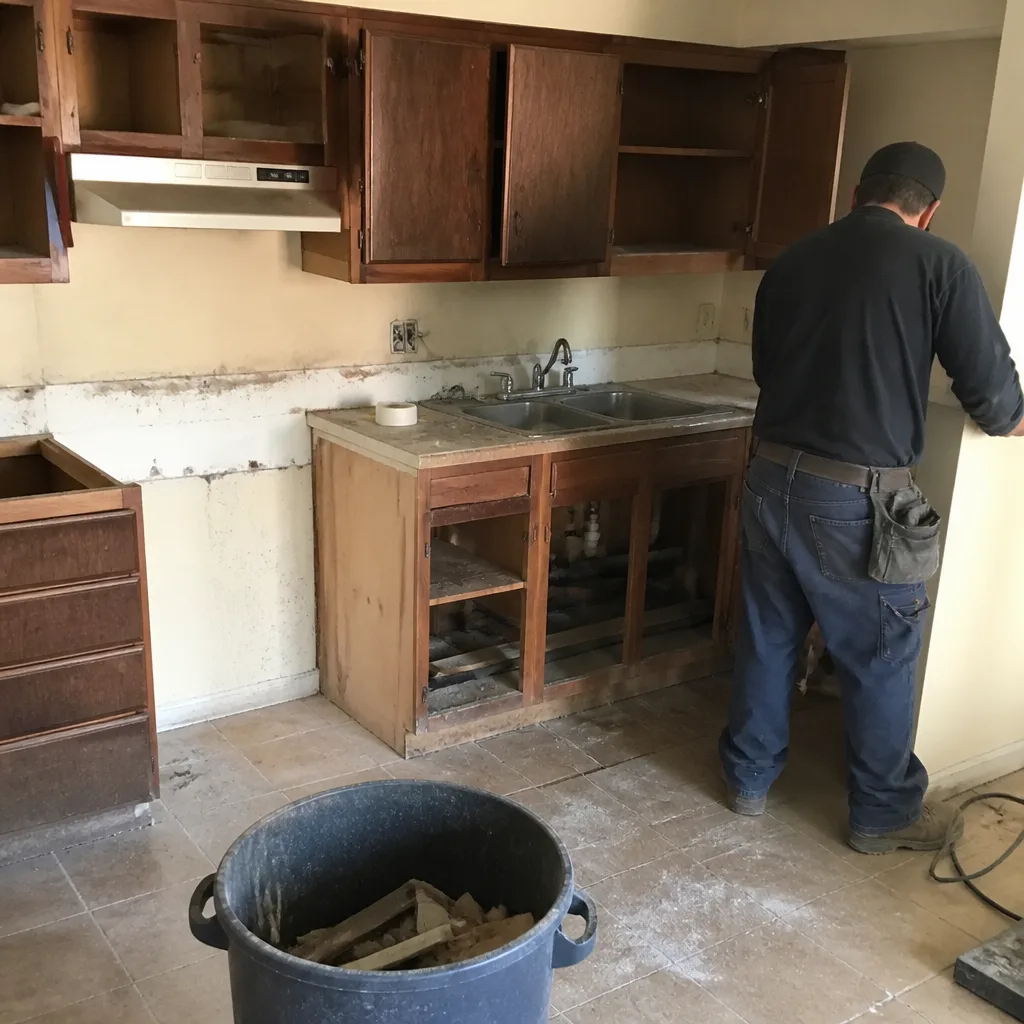
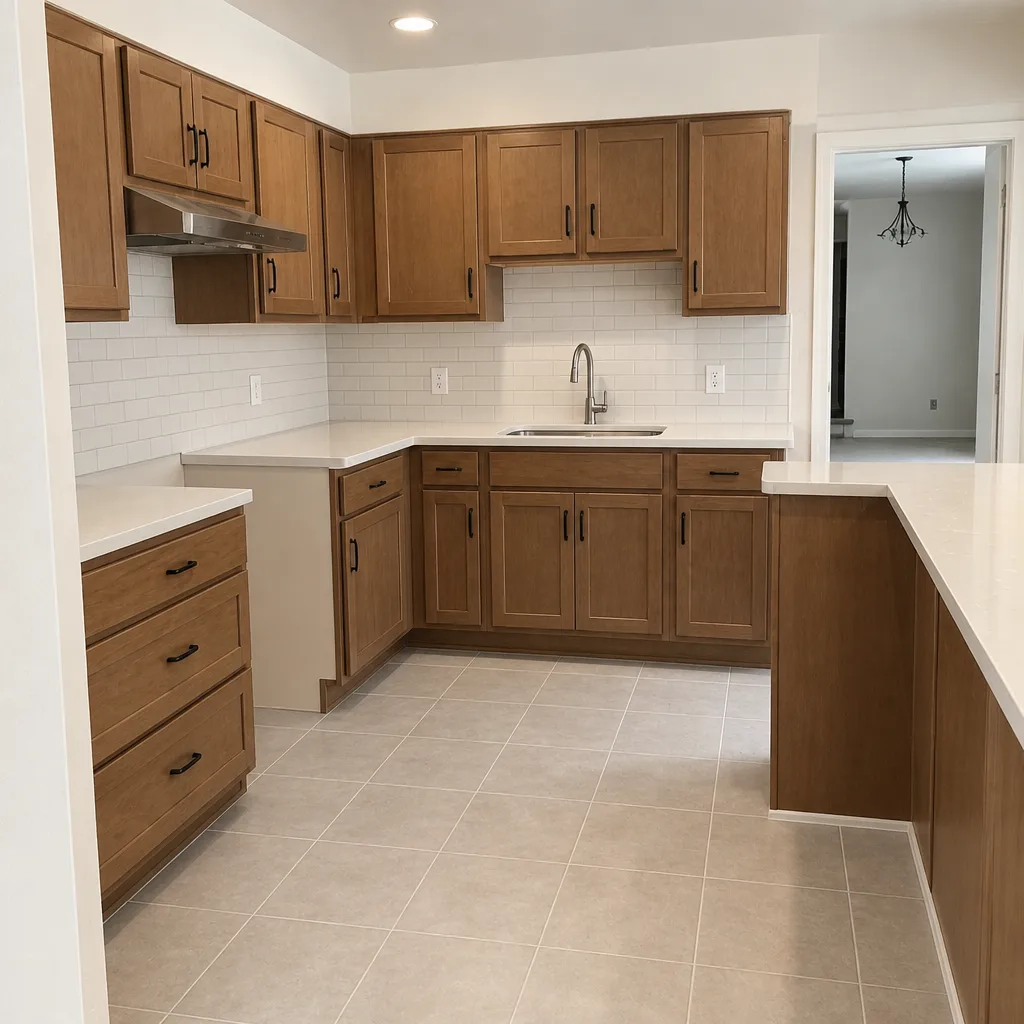
See the difference
 Before
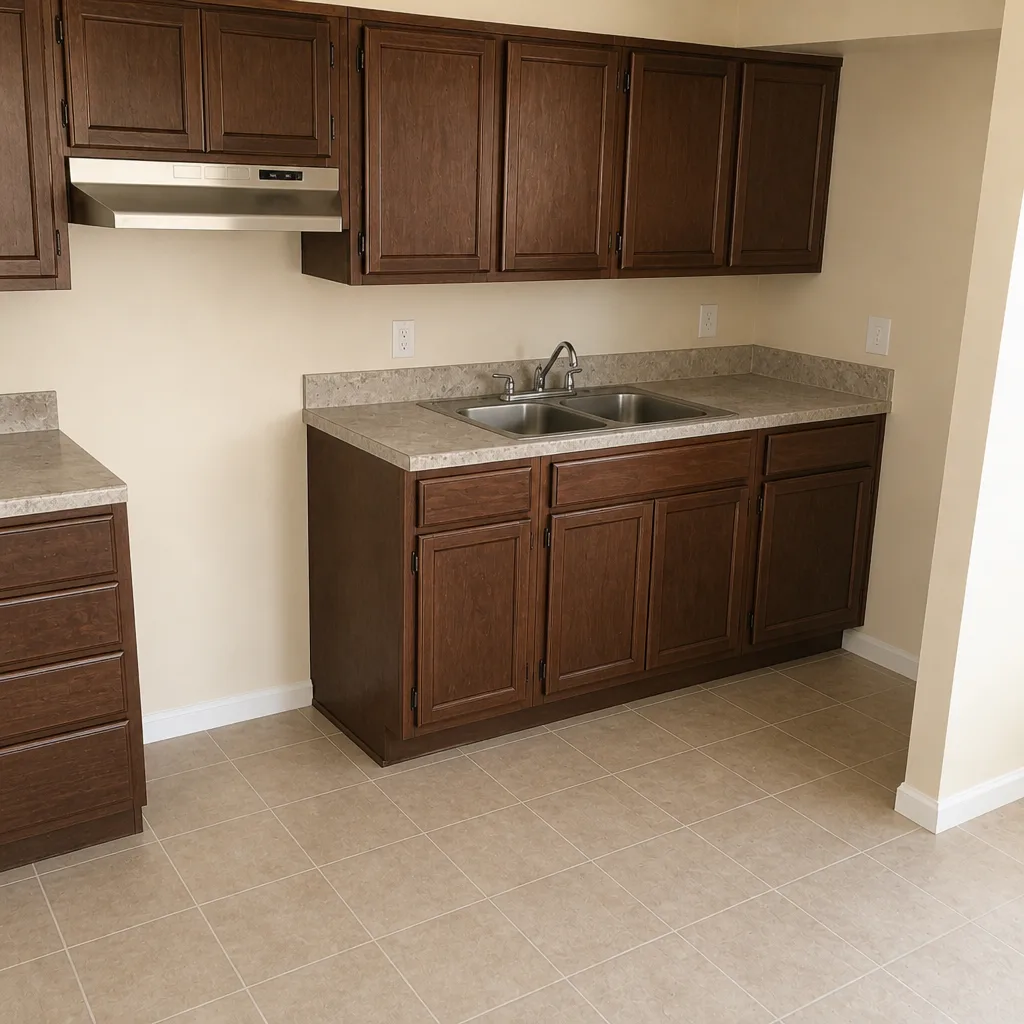 After
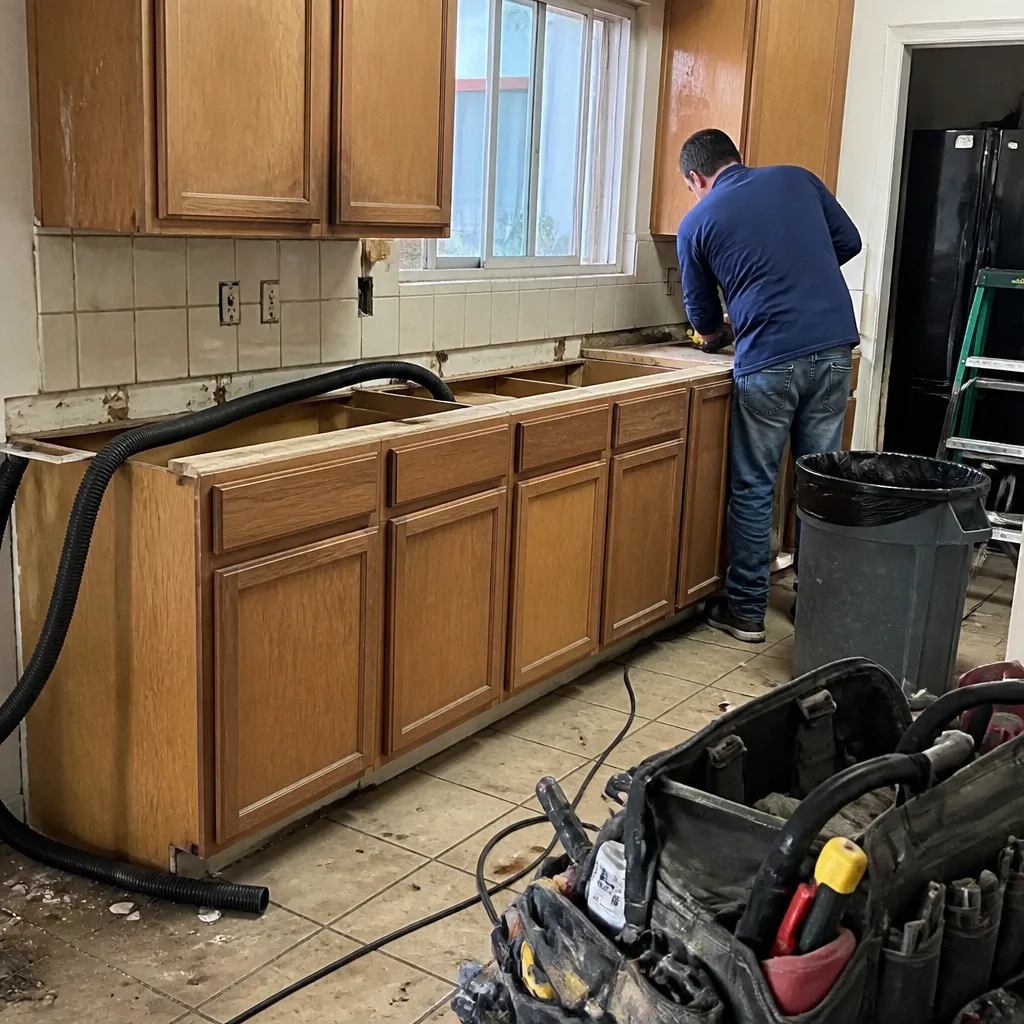 Before
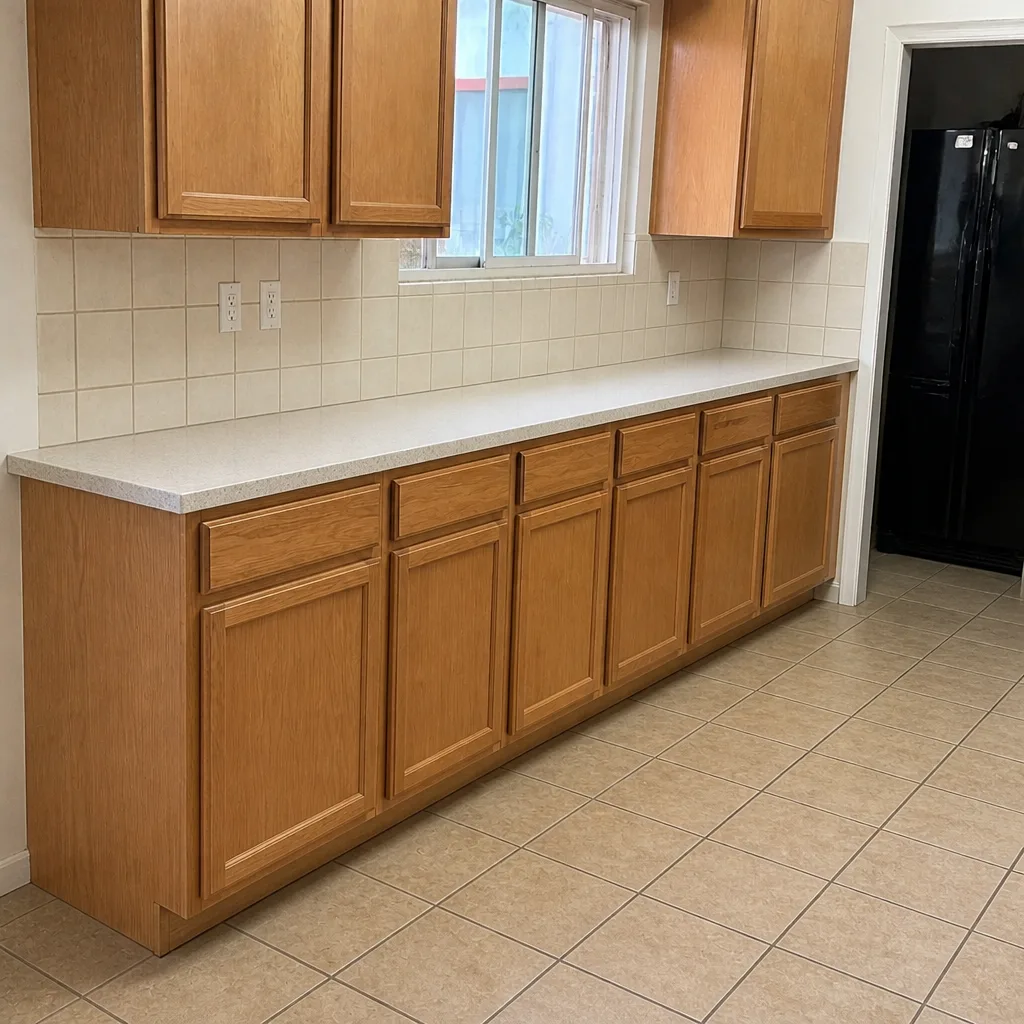 After
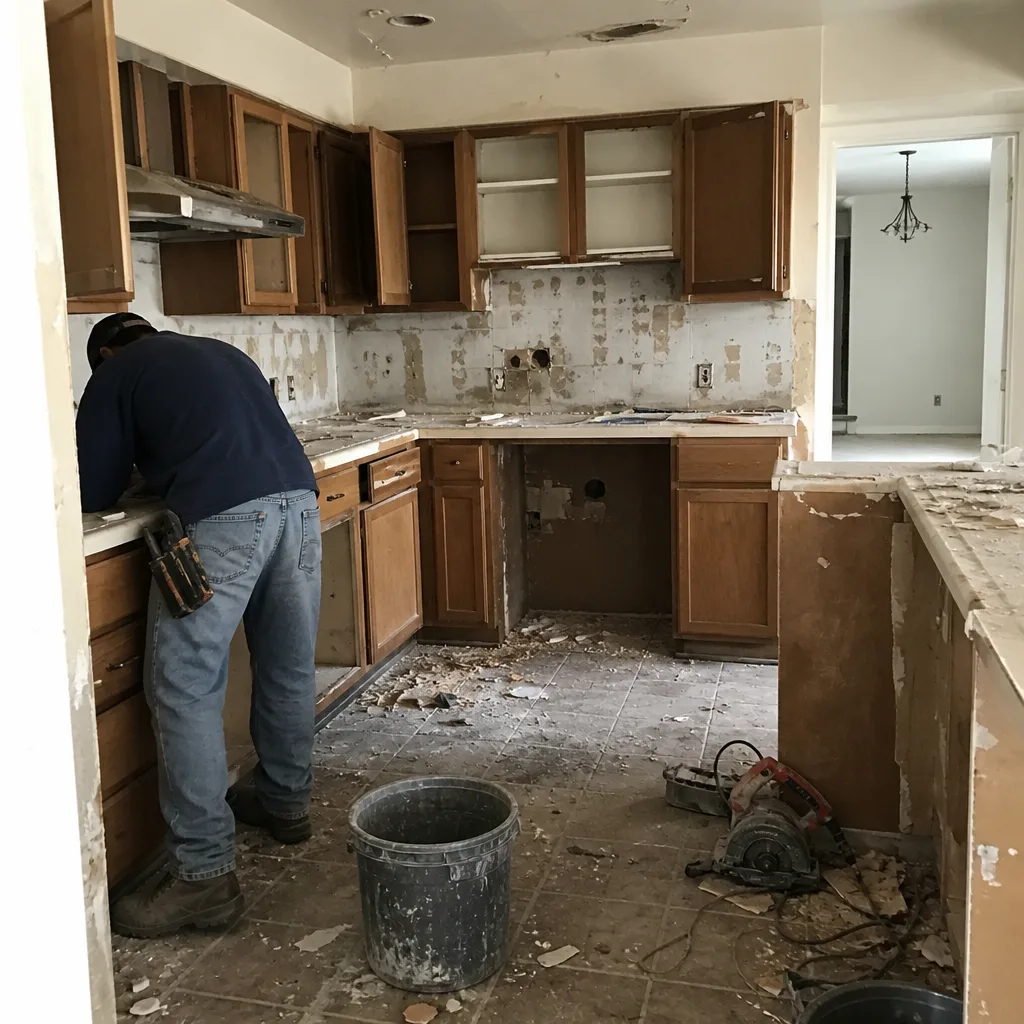 Before
 After
When to Call a Professional
Most of the routine on this list is homeowner work: soaking an aerator, washing a filter, checking a caulk line. But some findings should go to a professional. Call for help if a cabinet box joint has opened enough to change a door’s alignment, if a countertop seam has chipped or the counter has started to move, if a supply hose or shutoff valve is corroded or bulging, or if repeated grout cracks keep coming back to the same spot. Those are signs that something structural or mechanical needs attention, not another coat of caulk. Valor Kitchen Remodeling offers free estimates in Las Vegas for kitchen work, including cabinet and countertop issues, and our technicians have up to 9 years of experience. Call (844) 797-6597 to get an assessment. We answer 24/7. Fast dispatch from 7am to 7pm, Sunday through Friday. Estimates are free, and we’ll tell you plainly whether the issue is a maintenance item or something bigger.
Frequently Asked Questions
Once a month is the sweet spot for most Las Vegas homes, because the local water carries a high mineral load that settles out in aerators and sprayers quickly. If you notice reduced flow or sputtering before the month is up, descale earlier. Soak the aerator in a 50/50 vinegar and water mix, rinse, and reinstall.
Cabinet joints open when wood panels expand and contract with heat and humidity cycles. In a Las Vegas kitchen, the daily swing between air-conditioned air and hot exterior temperatures moves the box repeatedly. A small gap doesn’t mean the cabinet is defective, but frequent or widening gaps should be inspected before they affect the drawers or the countertop above. Call (844) 797-6597 for an assessment, and remember that estimates are free.
No. Keep acidic cleaners off quartz entirely, even though quartz from Cambria, Silestone, and Caesarstone is non-porous. Mild dish soap and water are the right choice for daily cleaning. Acidic cleaners can dull the surface finish over time, and they’re a definite no on natural stone, where acid etches permanently.
Twice a year is the baseline, and quarterly if your kitchen has a lot of glass or a west-facing window wall. The thermal swing between air-conditioned interiors and summer exterior heat moves tile, grout, and caulk at different rates, which opens hairline cracks. Catch them early and they’re a quick fix.
Check the mesh filter before anything else. Desert dust loads the filter quickly in Las Vegas homes, and a clogged filter is the most common reason a hood loses suction. If a clean filter doesn’t fix it, inspect the duct for blockage or call for a duct assessment.
You can do a visual annual inspection yourself: look for stains, bulging hoses, and drips with a flashlight. But call a professional if you see corrosion, a valve that won’t close, or a hose that’s stiff or cracked. Pressure fluctuations in older Las Vegas neighborhoods accelerate wear on those joints, and a small fix now beats cabinet damage later. Call (844) 797-6597 for a free estimate if you’re unsure.
The Bottom Line
A Las Vegas kitchen asks for a different maintenance routine than the generic checklist you’ll find online. The big three are hard water, heat cycling, and dust. Keep a monthly descaling habit, inspect cabinet joints and grout lines on a fixed schedule, stay on top of your range hood filter, and do a yearly walk-through of the under-sink plumbing. None of these tasks takes long. Done consistently, they’re the difference between a kitchen that holds its finish and one that looks tired long before it should. If something looks structural, call a kitchen specialist rather than patching it. A kitchen specialist, not a generalist with a tile saw, is the right call for cabinet and countertop issues in Las Vegas. Call (844) 797-6597 for a free estimate. We answer 24/7. Fast dispatch from 7am to 7pm, Sunday through Friday. From cabinet box to countertop edge, you get one contractor and full accountability. We work with KraftMaid and Wellborn cabinets and with Cambria, Silestone, and Caesarstone surfaces, and we’ll give you a straight assessment of what your kitchen actually needs.
Written by the team at Valor Kitchen Remodeling.