Last updated November 17, 2026


Free design consultation - KraftMaid and Wellborn cabinet lines, Cambria and Silestone surfaces, and every tier from refacing to full custom laid out side by side
Kitchen Remodeling Troubleshooting in Las Vegas: Common Problems and How to Fix Them
Most kitchen problems that show up in the year after a remodel aren’t bad luck. They’re predictable, and in Las Vegas they usually trace back to one thing the installer either planned for or ignored: the desert itself. Humidity here swings from single digits in June to well past 50% during monsoon season, and that range does things to wood, grout and caulk that a contractor from a steadier climate never has to think about. This guide walks through the problems Las Vegas homeowners actually call us about, what causes each one, and how to tell a fix you can handle from a fix that needs a professional.
Quick Answer
Most post-remodel kitchen problems in Las Vegas come from materials installed without accounting for the desert’s humidity swings, intense west-facing sun, and hard water. Cabinet doors that drift out of alignment, grout that cracks near the range, and finishes that peel on sun-facing panels are the three most common issues, and each has a specific cause and a specific fix. Cosmetic adjustments are often safe to do yourself; anything involving structure, substrate, or moving parts inside a warranty should go to a professional.
Styles & brands we work with
- Shaker
- Modern flat-panel
- Two-tone cabinets
- KraftMaid
- Cambria quartz
- Butcher block
- Open shelving
Table of Contents
- Why Do My Cabinet Doors Keep Going Out of Alignment?
- Why Does Grout Crack Near the Range?
- Why Is My Cabinet Finish Peeling on One Side?
- How Does Las Vegas Hard Water Damage Faucets and Quartz?
- Which Fixes Can You Do Yourself and Which Void a Warranty?
- What Monsoon Season Does to a New Kitchen
- How Installation Choices Prevent Most of These Problems
- Common Mistakes to Avoid
Why Do My Cabinet Doors Keep Going Out of Alignment?
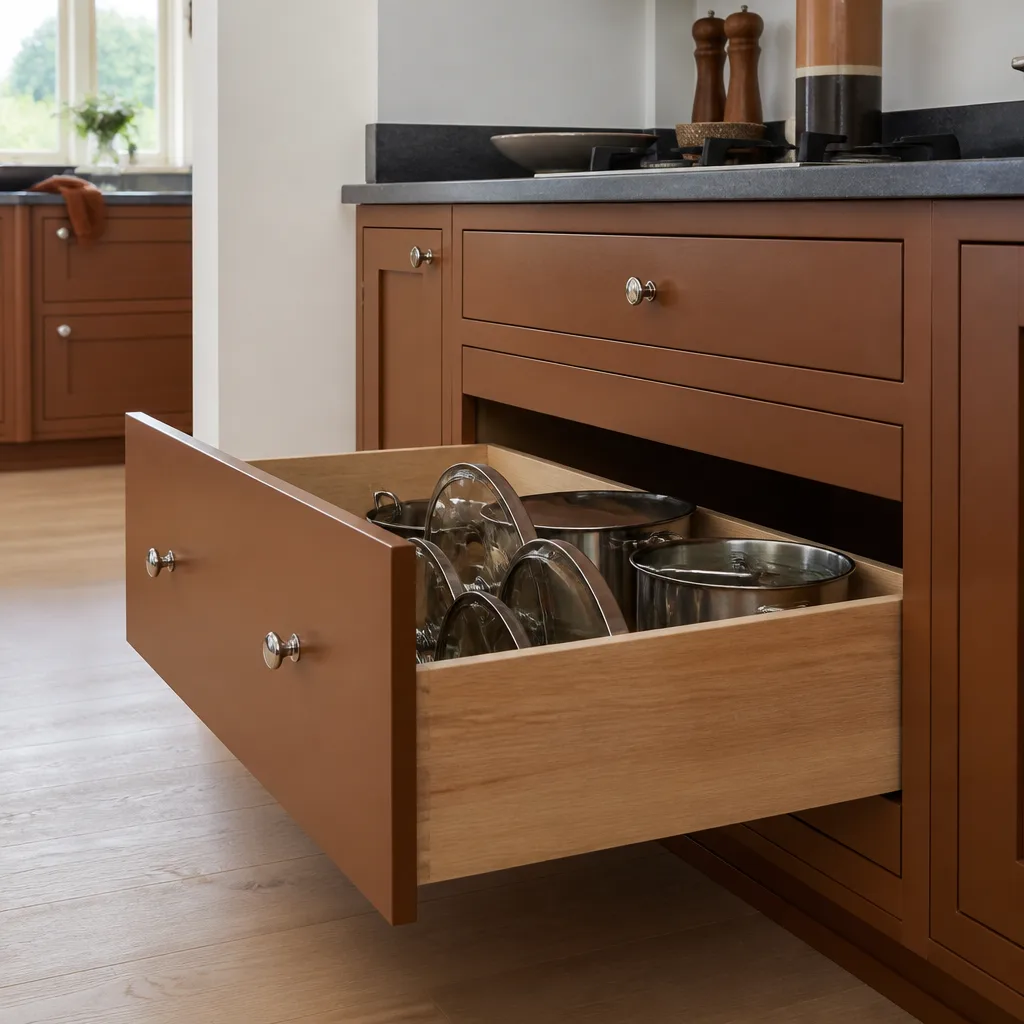
Cabinet doors that rub, gap, or sit crooked after a remodel are almost never a hardware failure. They’re the result of wood and engineered cabinet boxes expanding and contracting at different rates as Las Vegas humidity moves through its annual range. A door hung in a dry June can sit perfectly and then drag on the frame by the end of a monsoon August, because the box grew a fraction and the door didn’t grow the same amount. The hinges are fine. The geometry changed.
This is the single most common complaint we hear in Las Vegas kitchens, and it’s also one of the most fixable. Cabinet hinges on KraftMaid and Wellborn doors, like most quality American cabinetry, are adjustable in two or three directions. A small turn of the adjustment screw moves the door up or down, in or out, and side to side.
How to tell an adjustment from a real problem
- Adjustment needed: the door drags on the frame, sits uneven with its neighbor, or shows a widening gap at the top or bottom. The door itself is flat and square.
- Real problem: the door is visibly warped or bowed, the hinge plate is pulling out of the box, or the cabinet box itself is out of square. These need a professional.
Steps to adjust a misaligned cabinet door
- Open the door and locate the adjustment screws on the hinge plate. There are usually two or three.
- Identify which direction the door needs to move. A door dragging at the bottom needs to rise, or the top needs to drop.
- Turn the adjustment screw a quarter turn at a time. Small moves only.
- Close the door and check the gap. Repeat as needed.
- Check the door again after a week. Seasonal movement can settle, and a door that was adjusted in July may need one more tweak in October.
If you’ve adjusted once and the door drifts back within weeks, that’s the signal to call. Repeated drift usually means the cabinet box is moving more than the door was designed to compensate for, which points to an installation issue worth inspecting before it gets worse.
Why Does Grout Crack Near the Range?
Grout cracking near the range is almost always a substrate movement problem, not a grout quality problem. The heat from a range pushes the surrounding surface to expand, and if the substrate under the tile or slab wasn’t prepped to handle that expansion, the grout line becomes the failure point. Re-grouting without addressing the substrate will crack again within a season. The grout isn’t the problem; it’s the messenger.
In Las Vegas, this shows up most often in two places: the strip of backsplash directly behind a gas range, and the joint where a quartz countertop meets the backsplash. The intense dry heat of summer pushes expansion harder here than in most climates, and a contractor who installed over a rigid substrate without an appropriate movement joint left the grout with nowhere to relieve the stress.
What causes the crack
- Missing or improper movement joint: rigid materials need a small allowance for expansion, and a fully grouted joint in a heat zone has none.
- Insufficient substrate prep: a backsplash installed over uneven or flexing backing will crack at the weakest line.
- Wrong grout for the application: cementitious grout in a high-movement zone cracks faster than a flexible sealant designed for the joint.
- Direct heat exposure: a range installed too close to a fixed backsplash with no heat shield behind it cooks the grout from behind.
Steps to deal with a cracked grout line near the range
- Look at the crack shape. A hairline crack that follows the grout line is usually cosmetic. A crack that runs through a tile or slab is structural and needs inspection.
- Press gently on the tile or slab on either side of the crack. If there’s any give or hollow sound, the substrate is the problem, not the grout.
- If the tile is firm and the crack is at the joint, a flexible sealant rated for the application is the correct fix.
- Do not re-grout over a moving joint with cementitious grout. It will crack again.
- If the crack is in the backsplash behind a gas range, have the installation inspected by a professional before treating the grout.
The countertop and backsplash are the two surfaces most likely to crack in a Las Vegas kitchen, and the reasoning is always the same: expansion has to go somewhere. A well-installed quartz or tile surface was designed with a movement allowance. If yours wasn’t, the fix is bigger than resealing.
Why Is My Cabinet Finish Peeling on One Side?
Delaminating cabinet finish concentrated on the west or south-facing side of a Las Vegas kitchen is a sun exposure problem, not a paint or stain quality problem. Las Vegas sits in a high-UV environment, and a west-facing window can deliver direct sun to a cabinet panel for four to six hours a day through the summer. That heat and UV load will break down a finish over time, and it will do it first on the side that gets the most sun. If only the cabinets facing the window are peeling, this is why.
This is a Las Vegas-specific pattern that most kitchen troubleshooting guides never mention. It gets misdiagnosed as a defective finish more often than not, which leads homeowners to chase the wrong fix. A premium finish on a KraftMaid or Wellborn cabinet is a durable product, but it wasn’t engineered to bake in direct desert sun for a decade without window protection.
How to identify sun-caused finish failure
- Peeling, bubbling or blistering is concentrated on panels facing a window, not spread evenly across the kitchen.
- The finish on cabinets away from the window is intact.
- The affected panels are warm to the touch on a summer afternoon.
- The failure is worse on the side of the panel or door edge facing the sun, not the side facing the room.
Steps to stop further damage
- Reduce direct sun on the affected cabinets. A screen, a sheer curtain, or a UV-blocking window film will change the load significantly.
- Note which panels are affected. Photograph them with dates so you have a record.
- Do not sand or repaint a peeling finish yourself. Cabinet finish is a multi-step factory process, and a brush-on touch-up will show and can void the manufacturer’s warranty.
- Call a professional to assess whether the finish failure is within the manufacturer’s coverage and what the correct repair path is.
A cabinet finish failure on a sun-facing wall is one of the few kitchen problems that doesn’t get better with time. Every month of direct sun is a month of accelerating damage. The right move is to reduce the sun load now and get the finish inspected before the peeling spreads past the affected panels.
How Does Las Vegas Hard Water Damage Faucets and Quartz?
Las Vegas water is hard, averaging around 278 ppm, and that mineral load is what corrodes faucet aerators and leaves stains on quartz within months if the surfaces weren’t sealed correctly. The minerals in hard water deposit on any wet surface, and over time those deposits etch the polish on quartz and clog the fine screens in faucet aerators. A Kohler, Moen or Blanco faucet is built with durable internals, but the aerator screen is still a mineral trap. It’s designed to be serviced, and it needs to be.
The quartz staining problem is different. A properly sealed quartz countertop (Cambria, Silestone and Caesarstone all finish their surfaces to a low-porosity spec) resists hard water staining very well. A countertop installed without the correct edge and seam sealing, or one that was cleaned with an abrasive that wore the polish, will show mineral rings and dull spots within a few months of daily Las Vegas water exposure.
Signs of hard water damage
- Faucet aerator losing flow, spitting, or spraying unevenly.
- White or chalky deposits at the base of the faucet, on the sprayer, or under the rim of the sink.
- Dull or cloudy patches on quartz near the sink or where water regularly sits.
- Soap scum that builds back within days of cleaning.
Steps to slow hard water damage
- Remove and soak the faucet aerator in white vinegar to dissolve mineral deposits, then rinse and reinstall. Check with your faucet’s documentation first.
- Wipe the sink and surrounding quartz dry after each use. Standing water is what leaves the deposits.
- Clean quartz with a pH-neutral cleaner only. Avoid acidic or abrasive products.
- Have the aerator replaced if soaking no longer restores flow. Moen and Kohler aerators are widely available.
- If quartz shows dull spots that don’t lift with a damp cloth, have the surface inspected before treating it yourself.
Hard water is the one Las Vegas kitchen problem homeowners can’t fully eliminate, because it’s in the supply. But sealing the surfaces correctly during install and servicing the aerators regularly will keep the visible damage to a minimum, and both are much cheaper than replacing a faucet or re-polishing a countertop.
Which Fixes Can You Do Yourself and Which Void a Warranty?
The difference between a cosmetic fix a homeowner can safely do and a structural fix that voids a manufacturer’s warranty is one of the most important things to understand about a new kitchen. Working on the wrong part of the wrong product is the fastest way to turn a covered repair into an out-of-pocket one. Our technicians have up to 9 years of experience, and one of the first questions we ask on a troubleshooting call is whether the homeowner has already tried to fix it. That answer determines the path forward.
Cosmetic fixes you can usually do yourself
- Adjusting a cabinet hinge with the built-in adjustment screws.
- Replacing a faucet aerator screen (Moen and Kohler make this straightforward with the faucet’s parts sheet).
- Cleaning quartz with a pH-neutral cleaner.
- Tightening a loose cabinet knob or pull with the correct screwdriver.
- Replacing a loose cabinet shelf pin.
Structural fixes that need a professional
- Any finish repair on a cabinet door or box, which will void the factory finish warranty if sanded or repainted.
- Any repair to a countertop seam, edge or surface polish.
- Any work around the substrate under a backsplash or countertop.
- Any repair to a cabinet box that is out of square or pulling away from the wall.
- Any adjustment to a gas range installation, which is a licensed trade for a reason.
How to check before you touch it
- Find the manufacturer’s warranty document for the cabinet or surface.
- Read the “what voids this warranty” section. Most finish warranties specifically exclude homeowner sanding, painting or refinishing.
- If the answer isn’t clear, call the contractor who installed it before doing anything.
- Document the problem with photos before any repair.
A well-chosen Kohler or Moen faucet and a KraftMaid or Wellborn cabinet are all backed by real product warranties. The reason to protect those warranties isn’t paperwork. It’s the fact that a covered repair is a free repair, and an uncovered one is not. Call before you reach for a tool that changes the surface.
What Monsoon Season Does to a New Kitchen
Monsoon season in Las Vegas pushes humidity above 50% for weeks at a time, and that spike is the annual stress test for every cabinet, grout line and caulk joint in your kitchen. The problem isn’t the humidity itself. It’s that the kitchen was installed during the dry months, and the materials have spent nine months contracting. When the monsoon arrives, everything expands at once, and the joints and panels that don’t have room to move will show it.
What homeowners typically see during or just after monsoon season:
- Cabinet doors that suddenly rub or gap when they didn’t a month before.
- Caulk joints at the backsplash that open up along the countertop edge.
- Grout lines that crack in the zones with the most heat or the most movement.
- Drawer fronts that drag on the cabinet face.
Steps to prepare a Las Vegas kitchen for monsoon season
- Walk the kitchen in late spring and check every caulk joint and grout line. Note any that are already showing a hairline gap.
- Adjust any cabinet doors that aren’t sitting even before the humidity climbs.
- Keep the kitchen ventilated. Range hood use and open interior doors help the indoor humidity track the outdoor swing more slowly.
- Have a professional inspect any joint that opens up more than a hairline during the season.
The good news is that a kitchen installed with the correct movement allowances handles monsoon season without drama. The bad news is that a kitchen installed without them will show a predictable set of problems, year after year. If your kitchen is showing the same monsoon symptoms each summer, the underlying issue is in the installation, not the season.
How Installation Choices Prevent Most of These Problems
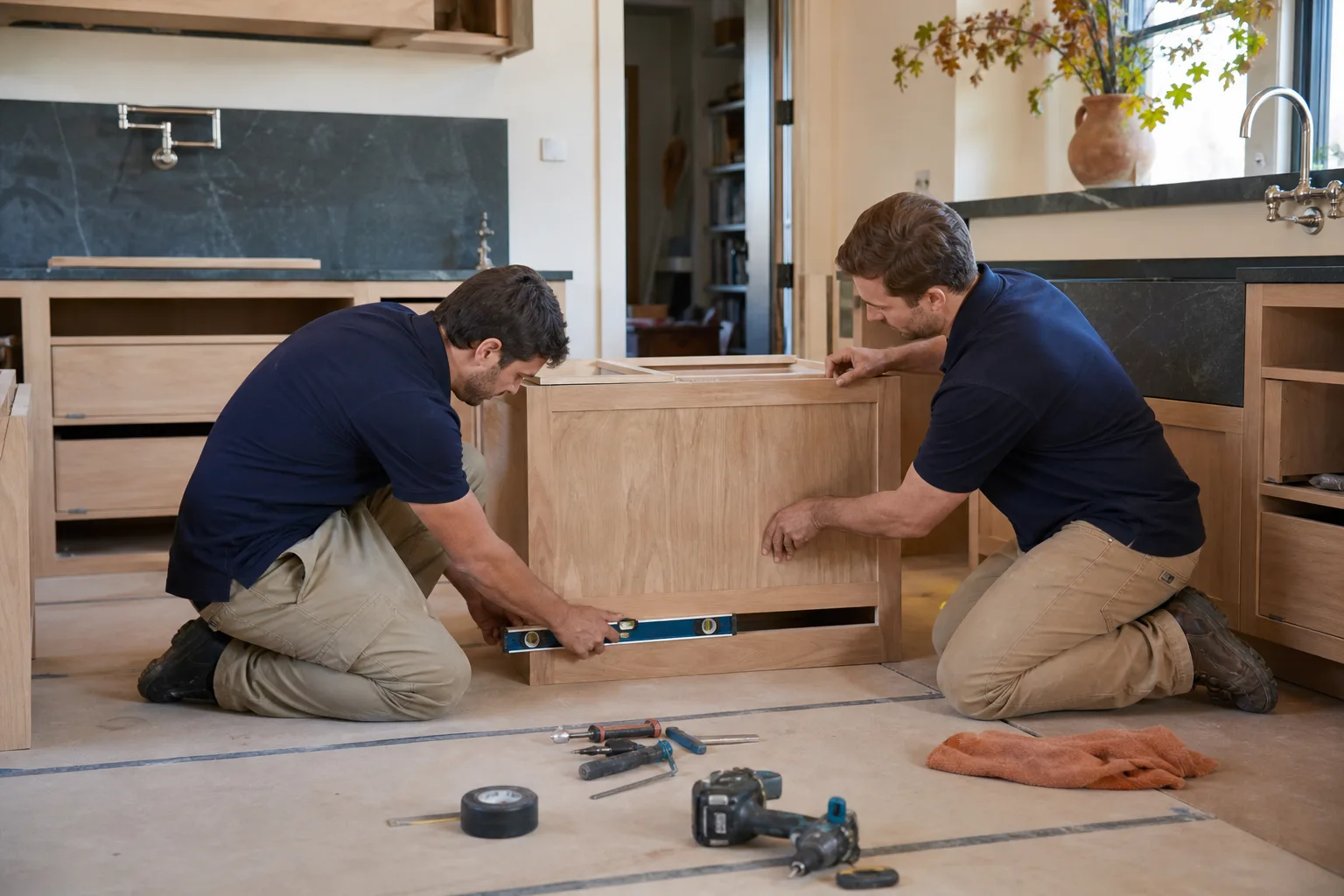
Almost every problem in this guide traces back to an installation decision, which means it was preventable. That’s the reason we focus on kitchen remodeling as a specialty rather than one job among many. The install choices that prevent desert-climate failures aren’t complicated, but they require the installer to be thinking about the next ten summers, not just the handover day.
The installation choices that prevent Las Vegas kitchen problems
- Moisture allowance in the cabinet installation: cabinets installed with the expansion range of the desert in mind, not just the dry-season fit.
- Movement joints in tile and grout: a flexible joint at the heat zones and at the countertop backsplash interface, so expansion has somewhere to go.
- Correct sealing on quartz: seams and edges sealed to the manufacturer’s spec so hard water can’t etch the surface.
- Finishes selected for sun exposure: cabinet finish chosen with the kitchen’s actual sun load in mind, not just the color palette.
- Proper cabinet hardware adjustment at handover: doors hung and adjusted in the correct position, with the homeowner shown how to make small seasonal tweaks.
- Ventilation that handles the range heat: a hood sized to the range, so the heat load behind the backsplash is reduced before it reaches the wall.
This is the case for hiring a specialist rather than a generalist. A kitchen specialist has seen the same desert-climate failures enough times to design around them. KraftMaid and Wellborn cabinets, Cambria, Silestone and Caesarstone quartz, and Kohler, Moen and Blanco fixtures are products we know because we install them into this climate regularly, and we know which ones tolerate the sun load and the hard water and which ones need extra care. A generalist who installs a kitchen once a month is unlikely to have that institutional memory. When you are ready to plan a kitchen, our kitchen remodeling service covers the full scope, from cabinet and countertop work through fixture installation.
Common Mistakes to Avoid
- Re-grouting without addressing the substrate. If the crack near the range is a movement problem, fresh grout over the same joint will crack again before the next summer. Fix the cause, not the surface.
- Sanding or repainting a peeling cabinet finish. This is the fastest way to void a factory finish warranty and the surest way to make a cosmetic problem into a structural one. Have it inspected first.
- Using abrasive cleaners on quartz. Cambria, Silestone and Caesarstone all finish their surfaces to a specific polish, and an abrasive scouring pad wears that polish down. Use pH-neutral cleaners only.
- Ignoring the aerator until the faucet fails. A mineral-clogged aerator puts pressure on the internal cartridge. Servicing the screen is cheap; replacing the cartridge is not.
- Ignoring a cabinet door that keeps drifting after adjustment. One adjustment is normal in Las Vegas. Repeated drift usually points to a cabinet box issue that gets worse over time.
- Choosing a cabinet finish without considering the window. A beautiful finish that can’t take four hours of west-facing sun a day is the wrong finish for that wall, regardless of how it looks on a sample.
- Hiring a generalist for a Las Vegas kitchen. The desert climate is not the same as a temperate one. An installer who doesn’t account for the humidity swing and the UV load will hand over a kitchen that fails within the first year.
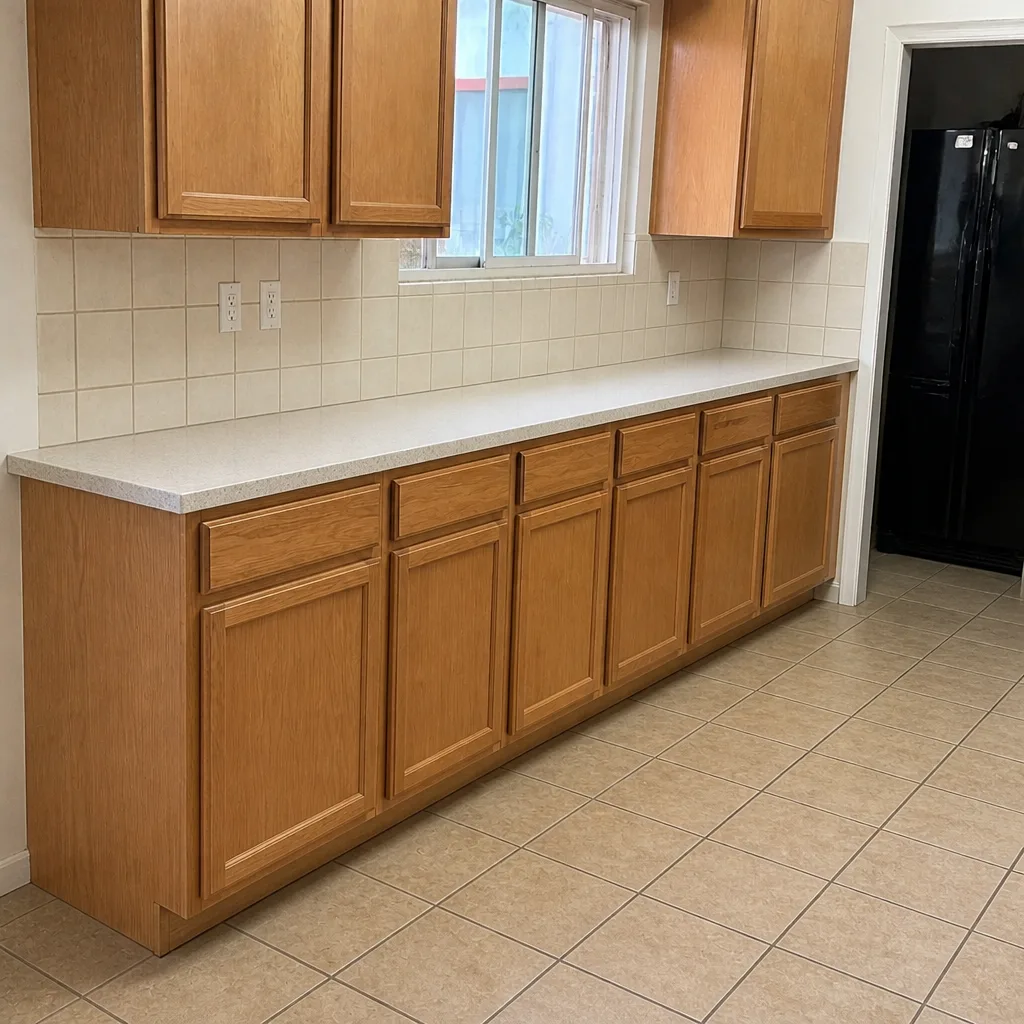
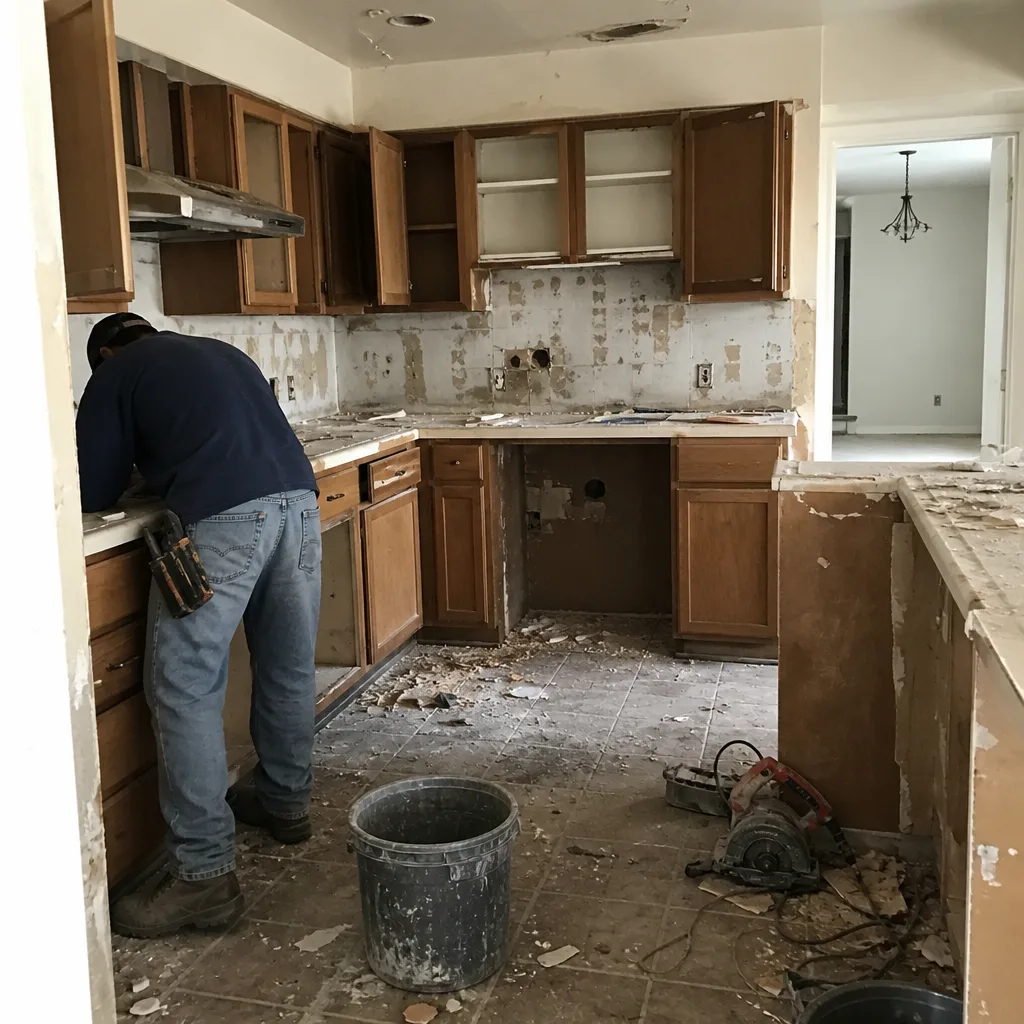
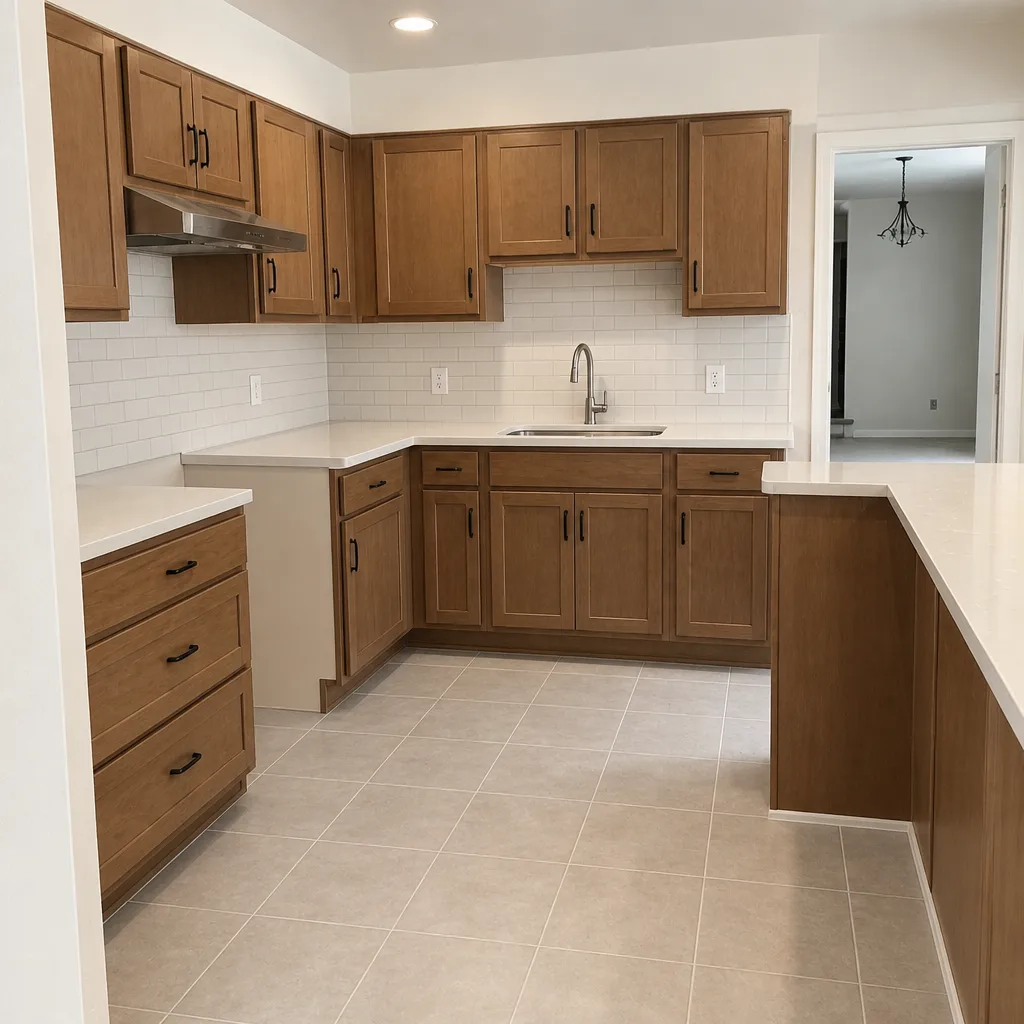
See the difference
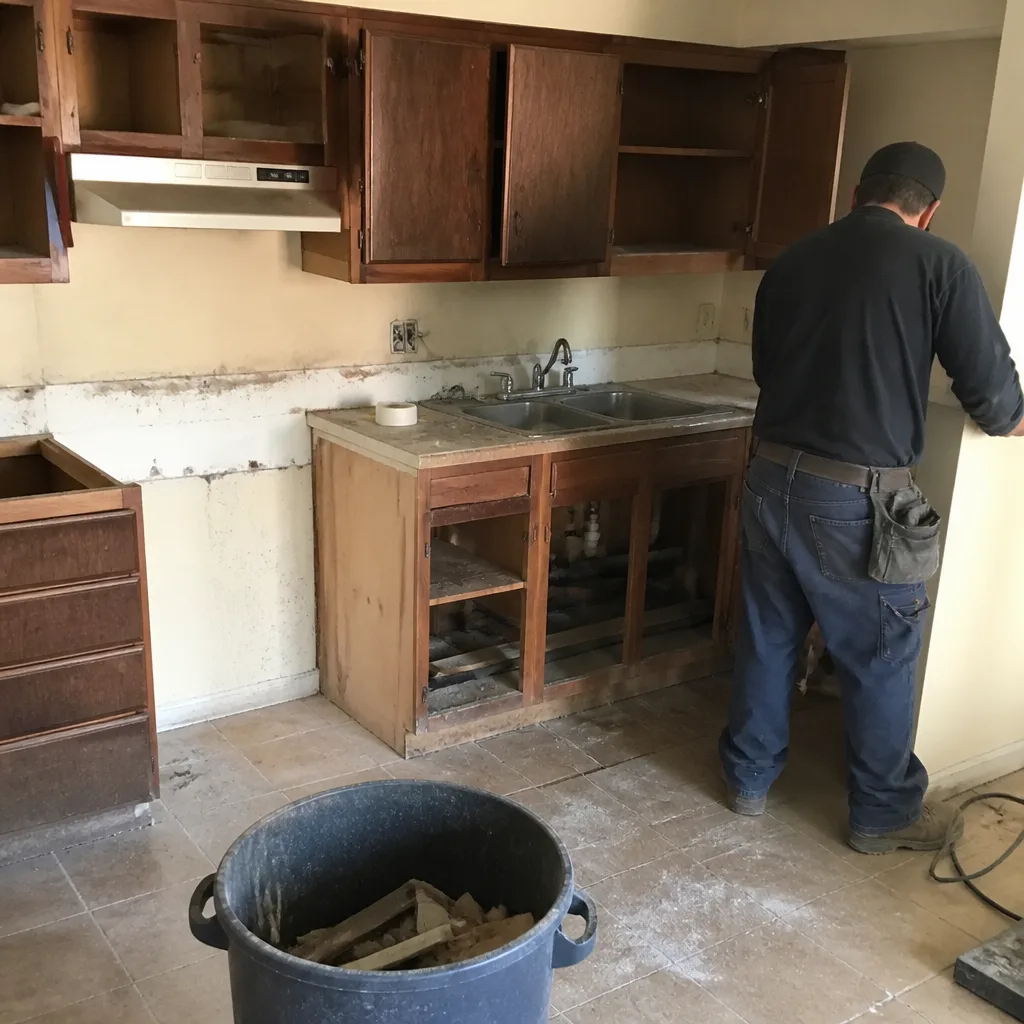 Before
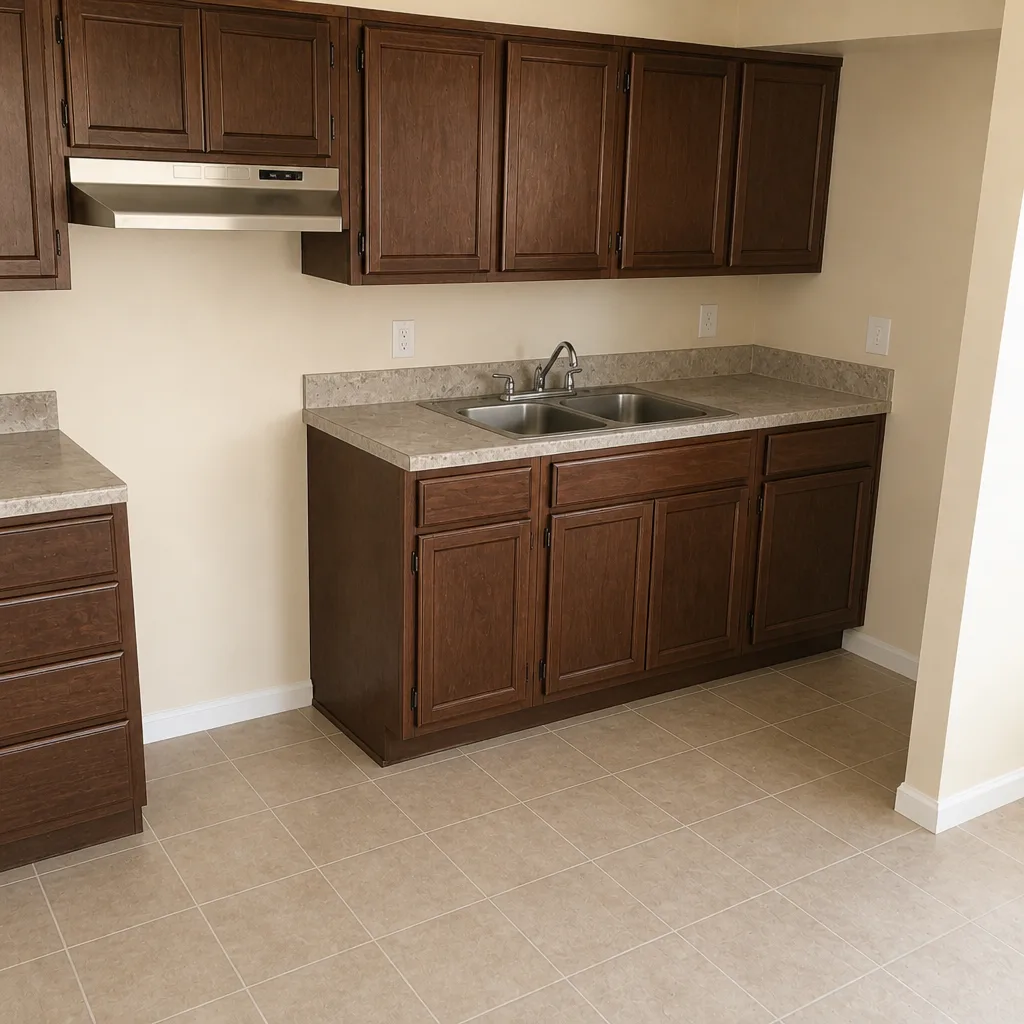 After
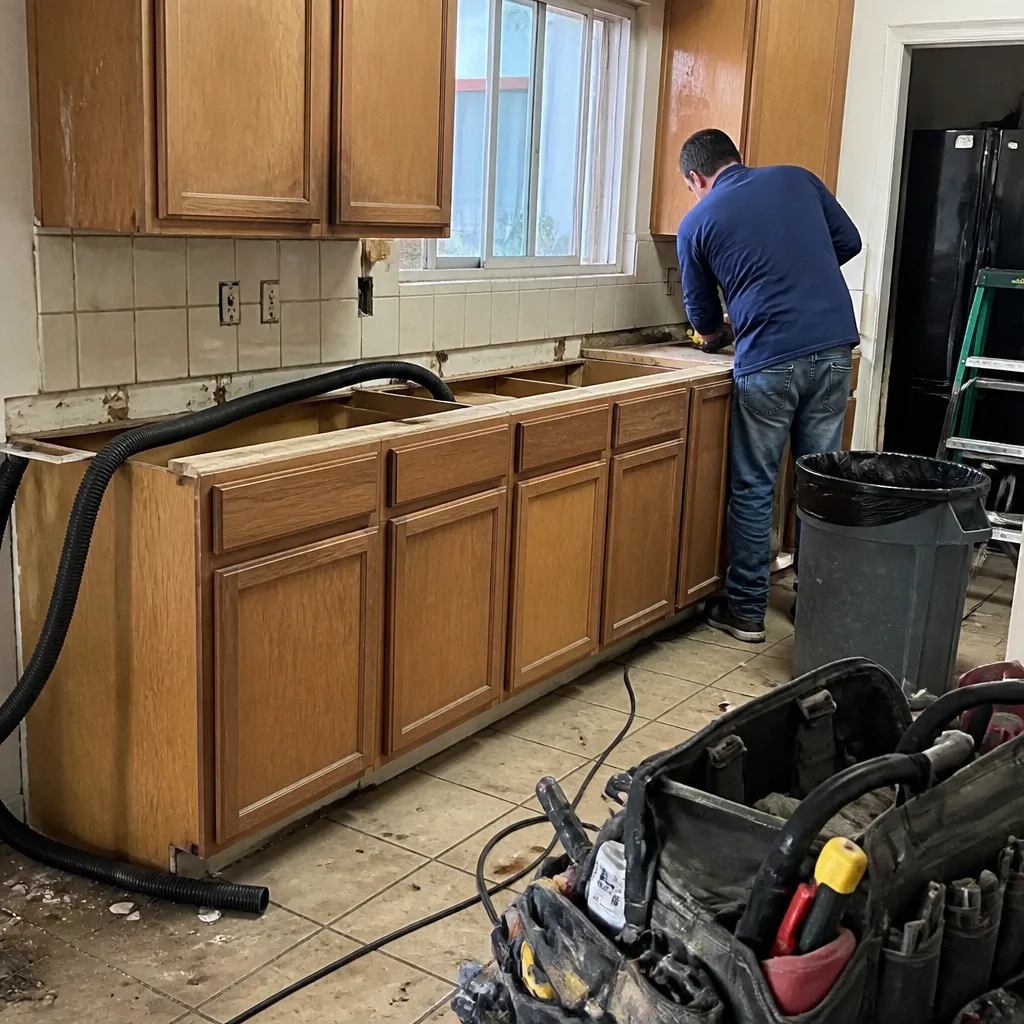 Before
 After
 Before
 After
When to Call a Professional
Call a professional when the problem is structural rather than cosmetic. That means: a cabinet door that drifts back after adjustment, a crack that runs through a tile or slab rather than along the grout line, a countertop joint that has opened up, a finish failure that’s more than a single door, or any faucet issue that persists after the aerator has been serviced. If you’re on the fence, document the problem with photos and dates first, then call and describe it. A quick conversation usually tells you whether the fix is covered by a warranty and how to proceed. Valor Kitchen Remodeling offers free estimates in Las Vegas – call (844) 797-6597 for an assessment.
Frequently Asked Questions
Cabinet doors go out of alignment in Las Vegas primarily because extreme seasonal humidity swings expand and contract the cabinet box while the door moves less. The hinges are usually fine; the geometry of the opening changed. Adjusting the hinge is the first fix, and if the door drifts back within weeks, call a professional to inspect the box.
It can be. A hairline crack that follows a grout line is often a cosmetic joint issue, but a crack that runs through a tile or slab, or one with any give when you press on the surrounding surface, indicates a substrate movement problem. That needs a professional inspection before any repair, because re-grouting over a moving joint won’t hold.
Las Vegas water averages around 278 ppm, which is genuinely hard. The mineral load clogs faucet aerators, leaves deposits on fixtures, and can dull or stain quartz if the surface wasn’t properly sealed. Regular aerator service and pH-neutral cleaning are the main defenses.
No, not safely. Cabinet finish on KraftMaid and Wellborn products is a factory multi-step process, and a brush-on repair will both show and typically void the finish warranty. Reduce the sun load on the affected panels and have the finish inspected before you touch it.
A kitchen installed with the correct moisture allowances, flexible joints at heat zones, and properly sealed surfaces handles monsoon season well. If your kitchen shows the same symptoms each summer, the underlying cause is in the installation, not the season.
Call a kitchen specialist rather than a generalist. A specialist has installed in this climate often enough to know which failures are predictable and how to fix them without making it worse. Cabinet installation and countertop work are the two areas where improper installation causes most of the problems in this guide. Call (844) 797-6597 for a free estimate.
The Bottom Line
Most kitchen problems that surface in the year after a remodel in Las Vegas aren’t random. They’re the predictable result of ignoring humidity swings, sun load and hard water during installation. Cabinet doors that drift are almost always a seasonal adjustment, not a hardware failure. Grout that cracks near the range is almost always a substrate movement issue. A finish that peels on one side is almost always a sun exposure problem. And faucet and quartz damage is almost always a hard water and sealing issue. Each has a correct fix, and the line between a cosmetic repair and a structural one is the line between a warranty that holds and one that doesn’t.
The right move on any of these is to document the problem, check the warranty, and call before you reach for a tool that changes a surface. If you’re planning a kitchen remodel in Las Vegas and want the installation done with the desert in mind from the start, call Valor Kitchen Remodeling at (844) 797-6597 for a free estimate. We answer 24/7. Fast dispatch from 7am to 7pm, Sunday through Friday. Our technicians have up to 9 years of experience, and we work exclusively on kitchens, with KraftMaid and Wellborn cabinets, Cambria, Silestone and Caesarstone quartz, and Kohler, Moen and Blanco fixtures. Single point of accountability, from cabinet box to countertop edge.
Written by the team at Valor Kitchen Remodeling.