Last updated November 17, 2026






Free design consultation - KraftMaid and Wellborn cabinet lines, Cambria and Silestone surfaces, and every tier from refacing to full custom laid out side by side
Kitchen Remodeling Warning Signs: A Las Vegas Homeowner’s Reference Guide
A cabinet door that won’t close flush is rarely a hinge that failed. In a Las Vegas home, it’s often the first visible symptom of something larger: subfloor moisture, framing movement, or an installer who shimmed over a problem instead of fixing it. The same logic applies to a grout line that keeps darkening, a breaker that trips when the microwave runs, or a countertop seam that opens wider every summer. These small annoyances are signals, and the homeowners who learn to read them early save themselves the cost of tearing out work that was wrong from day one. This guide walks through those signals one by one, from the slab up to the cabinet crown, so you can tell cosmetic settling from a structural problem while there’s still time to act.
Quick Answer
The most reliable kitchen remodeling warning signs in Las Vegas are cabinet doors that drift out of alignment, grout and caulk that fail repeatedly in the same spots, countertop seams that open seasonally, and electrical symptoms like AFCI or GFCI breakers that trip without cause or outlets that feel warm. Each points to a specific type of installation failure – moisture intrusion, improper fastening, missing substrate, or wiring done outside code – and each gets more expensive the longer it goes unaddressed. Cosmetic settling tends to be stable and minor; structural or workmanship problems get worse over time and usually cluster in one area.
Styles & brands we work with
- Shaker
- Modern flat-panel
- Two-tone cabinets
- KraftMaid
- Cambria quartz
- Butcher block
- Open shelving
Table of Contents
- Cosmetic settling vs. structural problems in Las Vegas homes
- Cabinet installation warning signs: fastening and wall construction
- Efflorescence, grout discoloration, and recurring caulk failure
- Electrical warning signs in remodeled Las Vegas kitchens
- Countertop installation red flags and why hard water exposes them
- Tile, backsplash, and the telltale signs of a rushed install
- How to vet a contractor before work starts
- What to check before you sign off on the finished job
Cosmetic Settling vs. Structural Problems in Las Vegas Homes
Most Las Vegas homes sit on slab-on-grade foundations, and the soil beneath them is a large factor in how a kitchen ages. Expansive clay soils swell when they take on water and shrink when they dry out, and in a desert climate that cycle can be dramatic. What that means inside the house is that walls can move slightly, doors can rack, and the rigid surfaces in a kitchen – tile, counters, cabinet boxes – take up that movement first. Some settling is normal and settles into a stable pattern. Structural movement doesn’t.
Here’s how to tell the two apart:
- Stable settling: A hairline crack in tile grout at a room corner, a door that needed one adjustment after the first year and then stayed put, or a caulk joint that shrank once after install and held after re-caulking.
- Active movement: Cracks that widen over successive seasons, cabinet runs that pull away from the wall in the same spot, doors that need adjustment every few months, or countertops that rock slightly when you press on one end.
- Structural red flags: A crack that runs diagonally through tile and continues up the wall, gaps between cabinet and drywall that open wider after each summer, or a countertop that has visibly separated from the backsplash in a way re-caulking won’t hold.
In our experience, the difference comes down to pattern and direction. Movement that repeats along the same line, in the same direction, is a message from the building. It’s worth having a licensed professional look at it before you spend money on finishes that the movement will simply crack again. Our team at Valor Kitchen Remodeling treats foundation-related movement as a design constraint, not something to cover up.
Cabinet Installation Warning Signs: Fastening and Wall Construction
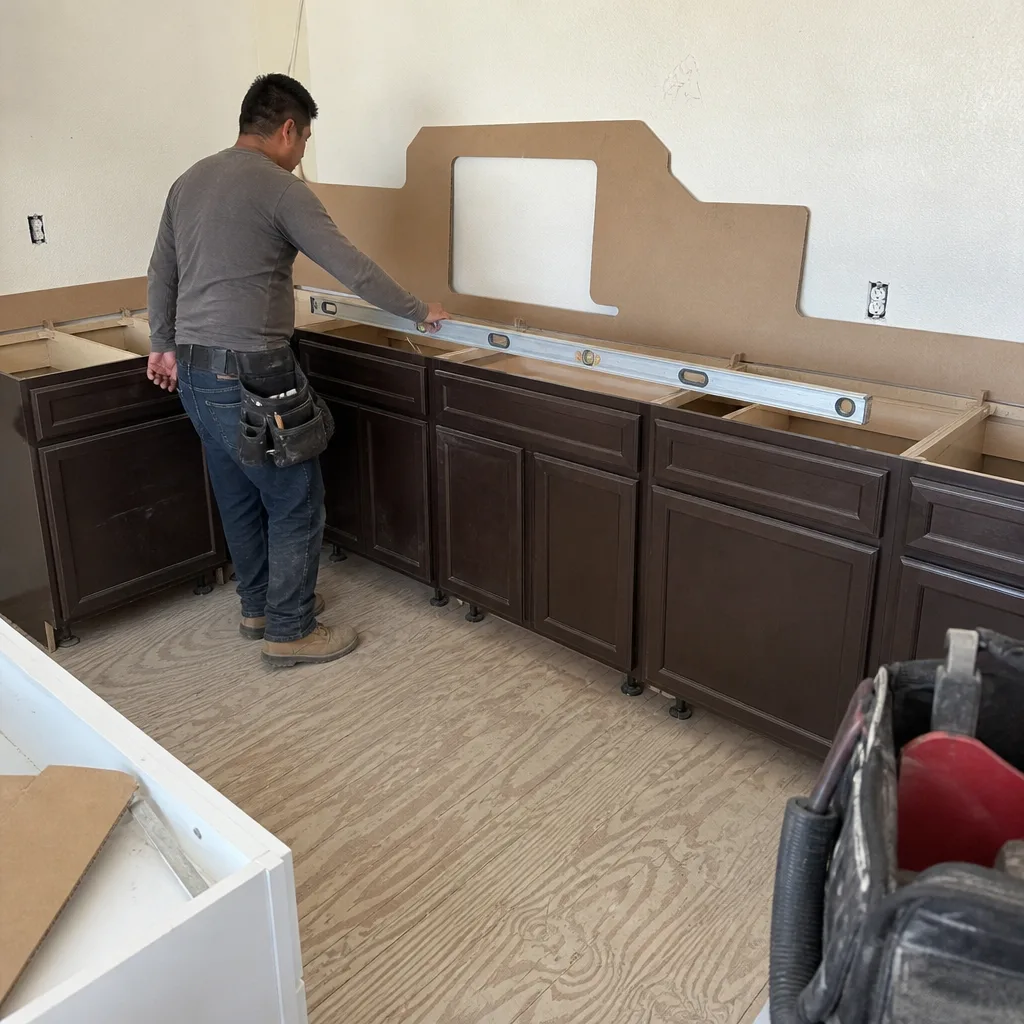
A lot of kitchen cabinets in Las Vegas are hung on drywall over concrete block. It’s a common construction method in the valley, and it has a specific failure mode: if the installer treats the drywall as a structural surface instead of locating the block behind it and fastening into that, the cabinet is essentially hanging on paper and a few screws. It may look fine for a year. Then gravity and load win.
Walk up to your upper cabinets and look for these signals:
- Gaps that grow. A visible gap between the cabinet back and the wall that widens toward the top, especially on a long run, points to fasteners that are pulling out rather than anchors set into masonry.
- Sagging shelves. If the cabinet box itself is bowed or the shelf support has cracked the side panel, the load is being carried unevenly.
- Doors that drift out of alignment. Upper cabinet doors that touch at the bottom corner and separate at the top are often a sign the box has twisted because the anchoring isn’t holding.
- Fastener heads that are countersunk too deep. A screw driven so hard it cracks the cabinet back panel isn’t holding anything; it’s just punched a hole.
- No visible anchors where you’d expect them. In block-wall construction, proper installation means anchor hardware set into the block. If you see drywall plugs or plain screws, ask questions.
The installation method matters as much as the cabinet itself. That’s one reason we stick to cabinet installation performed by people whose only job is kitchens, and why we work with KraftMaid and Wellborn – two lines that give us both semi-custom and fully custom construction options so the box, the box’s construction, and the wall behind it all line up honestly.
Efflorescence, Grout Discoloration, and Recurring Caulk Failure
Moisture is the quiet warning sign in many kitchens, and Las Vegas has an unusual relationship with it. The air is dry, but kitchens generate a lot of humidity from cooking, dishwashing, and sinks, and if that moisture gets behind a surface, there’s nowhere for it to escape quickly. The first signs often show up on the surface.
Efflorescence is a white, powdery deposit that appears on grout, tile, or masonry. It’s the mineral residue left when water moves through the material and evaporates. A little efflorescence on an exterior wall isn’t a crisis. Efflorescence on an interior kitchen backsplash, especially near a sink or behind the range, means water is passing through and coming back out. That’s a moisture management problem behind the finished surface.
Grout discoloration that keeps returning after cleaning is another version of the same message. Grout that goes dark in one zone around the sink and stays dark after it dries is telling you the substrate behind the tile is holding moisture.
Recurring caulk failure is the third. Caulk that peels, cracks, or mold-stains within months of a fresh application isn’t a caulk problem – it’s movement plus moisture, and caulk can’t cover both indefinitely. In our experience, the fix is never another bead of caulk. It’s finding where the water is coming from: a sink that’s been leaking under the cabinet for a while, a dishwasher connection, a poorly sealed range hood penetration, or a backsplash installed without proper waterproofing.
If you find any of these signs, resist the urge to clean and re-caulk and call it done. Have someone look behind the surface. This is one area where a specialty contractor earns their value: a full kitchen remodel that ignores moisture management just rebuilds the same failure with newer materials.
Electrical Warning Signs in Remodeled Las Vegas Kitchens
Electrical symptoms in a kitchen are the ones homeowners most often explain away. They shouldn’t. A remodeled kitchen that trips breakers, flickers lights, or runs warm outlets has a workmanship problem or a code problem, and both are worth taking seriously.
- AFCI or GFCI breakers that trip repeatedly without an obvious appliance fault usually mean circuit wiring that was done incorrectly during the remodel – shared neutrals, a circuit undersized for the load, or a kitchen appliance wired onto a circuit that can’t carry it. Modern kitchen circuits have specific requirements, and a remodel that skipped the electrical permit limits what’s actually been verified.
- Flickering over-cabinet lighting is often a loose connection in a junction box above the cabinets, a poorly terminated LED driver, or a dimmer that isn’t compatible with the fixture. It’s a workmanship flag because a properly installed circuit doesn’t flicker.
- Outlets that feel warm to the touch, or show any discoloration on the faceplate, are a serious signal. Stop using them and have a licensed electrician look at the circuit. Warm outlets mean resistance in the connection – loose wiring, an undersized conductor, or a device that’s failing.
- Kitchen outlets without GFCI protection near the sink are a code issue. If a remodel was done without pulling electrical permits, this is exactly the kind of thing that slips through.
Electrical work is not a place for DIY diagnostics beyond visual checks. Call a licensed electrician. The same standard applies to cabinetry: if the installation crew didn’t coordinate with the electrician during the planning phase, the wiring behind the cabinets was likely an afterthought. At Valor Kitchen Remodeling, we plan electrical locations into the cabinet layout before the boxes go on the wall – it’s cheaper and safer than retrofitting.
Countertop Installation Red Flags and Why Hard Water Exposes Them
A countertop installed without a proper substrate – the supporting deck or framing beneath the slab – is one of the most common problems we see in remodeled Las Vegas kitchens. The problem is subtle, because a quartz slab is heavy and rigid enough to look solid even when it’s slightly unsupported. But quartz, including Cambria, Silestone, and Caesarstone, still needs continuous support, correct seams, and proper adhesive. When that’s missing, the failure shows up in a few specific ways:
- Seams that open seasonally. A seam that separates slightly in the summer and closes in the winter is responding to temperature and moisture. That’s normal for the adhesive to move a fraction. A seam that shows a visible gap that doesn’t close is a sign the slabs aren’t fully supported or the seam adhesive wasn’t set correctly.
- Rapping the counter. Tap lightly across the surface. A solid, consistent sound is what you want. A hollow sound over an area means the slab is bridging a void beneath it. That’s the substrate warning.
- Hard water staining. Las Vegas water is mineral-rich, and hard water leaves deposits on any unsealed or improperly finished edge. Where a countertop edge has been cut but not properly polished or sealed, hard water stains show up there first, and they show the underlying substrate if you look closely.
- Cracks at sink cutouts. The sink cutout is the point of highest stress on any countertop. Cracks emanating from the sink corners usually indicate inadequate substrate around the cutout and stress from a sink that isn’t properly supported.
Hard water is genuinely useful here. In a market with softer water, a poorly finished countertop edge might stay unnoticeable for years. In Las Vegas, hard water finds those edges fast, and the staining pattern tells you exactly where the finish is thin. This is one reason we only work with quartz lines we trust – Cambria, Silestone, and Caesarstone – and install them over substrate that meets each manufacturer’s requirements. Full kitchen remodeling should treat the countertop as a system, not a slab.
Tile, Backsplash, and the Telltale Signs of a Rushed Install
Backsplash tile is fast to install and easy to install badly. A rushed job often looks fine from across the room, so the warning signs need a closer look. Walk up to the backsplash and check these:
- Lippage. Run your hand flat across the tile surface. You shouldn’t feel a noticeable step between adjacent tiles. Pronounced lippage means the substrate wasn’t flat or the installer didn’t take time to level each tile.
- Uneven grout lines. Grout lines of varying width, especially near outlets and corners, mean the layout wasn’t planned. A well-planned install starts from a reference line that puts the joints where they look right.
- Hollow spots under tile. Tap gently on a few tiles with a plastic tool. A hollow sound is a sign of insufficient thinset coverage – the tile will eventually loosen.
- Grout that cracks along the tile edges. This is often the result of grout being used where caulk should have been, or of an installer who didn’t respect expansion joints.
Tile looks simple. It isn’t. In a dry climate like ours, movement is real, and the way a kitchen crew handles that movement is a fair test of how they’ll handle the rest of the install. Cabinet installation, countertop installation, and tile all have to work together. A crew that only specializes in one of them tends to leave the joints between them as someone else’s problem – which is exactly where the failures show up first.
How to Vet a Contractor Before Work Starts
The cheapest way to avoid kitchen remodeling warning signs is to hire well in the first place. The signals you can read before signing a contract are clearer than anything you’ll see after the cabinets go up.
- Ask for the permit plan. A legitimate kitchen remodel should include permits where required. Ask which permits will be pulled, by whom, and when the inspections are scheduled. “We don’t need permits for this” is an answer that should make you uncomfortable.
- Ask who actually installs each piece. Cabinet installation, countertop installation, plumbing fixtures, and electrical are different trades. Ask who is doing each, who’s coordinating, and who’s accountable when something’s wrong at the joint between them. A single point of accountability is how you avoid finger-pointing between subcontractors.
- Ask about brand authorization. If the contractor claims to install a major cabinet or surface brand, ask whether they’re authorized. A brand-authorized installer has access to manufacturer support and knows the product’s installation requirements. We work with KraftMaid and Wellborn because we’re authorized for both, and the installation requirements those brands put on a job are things we plan around, not afterthoughts.
- Ask for the written estimate line by line. A written, itemized estimate tells you what’s included. A single-line “kitchen remodel – $X” quote doesn’t, and change orders are how those turn into more expensive projects.
- Ask what happens if the substrate is bad. No one can know until the cabinets come off. Ask how a contractor handles discovered conditions, and get the change-order process in writing.
- Ask about warranty on labor and product. Cabinet and surface brands offer warranties; the installation matters as much as the product. Get both in writing.
In our experience, the best contractors answer those questions without irritation. The ones who don’t are usually the ones you’ll be chasing for answers later.
What to Check Before You Sign Off on the Finished Job
The final walkthrough is your best chance to catch warning signs while the contractor is still accountable. Don’t rely on sight alone. Use your hands and your ears.
- Open and close every cabinet door and drawer. They should close flush, without rubbing, with consistent gaps. Check soft-close mechanisms slow consistently across the run. Any drift now is a sign the box is under stress.
- Test every outlet and switch. Bring a small plug-in tester. Test GFCI outlets with their test and reset buttons. Everything should work the first time without tripping a breaker.
- Check every caulk joint and seam. Sink to counter, counter to backsplash, backsplash to upper cabinets. Each should be smooth, continuous, and correctly placed. Note any gap you can fit a fingernail into.
- Rap the countertop across its full surface. Listen for hollow spots, particularly around the sink cutout and any seams.
- Run the water and test drainage. Cold and hot at each sink and the dishwasher. Check under the cabinet for any moisture after running the water for several minutes.
- Confirm the permits and inspections are documented. Ask for copies of the final inspection sign-offs before you make the final payment.
Once you’ve signed off, the contractor’s responsibility is mostly behind them. Sign off deliberately, not politely. In Las Vegas, where kitchen remodeling is competitive and busy, the walkthrough is the moment that keeps a project honest.
Common Mistakes to Avoid
- Treating recurring caulk failure as a caulk problem. Re-caulking without finding the moisture source just covers a bigger issue. It typically takes a professional opening the wall or cabinet to get to the root cause.
- Assuming breaker trips are “normal.” Occasional trips happen; repeated trips in a remodeled kitchen are a sign of a wiring or load issue that should be diagnosed, not lived with.
- Skipping permits to save time. Las Vegas-area building departments require permits for most structural, electrical, and plumbing work in kitchens, and skipping them leaves you without inspection records, which matters when you sell.
- Judging a countertop by the surface alone. A beautiful slab can be a failure if it’s not properly supported. Ask what’s under it.
- Hiring a generalist for a specialist trade. Kitchen installation is not the same as general construction. A crew that installs cabinets one week and roofs the next doesn’t build the same depth of cabinet-specific knowledge.
- Ignoring small signs in the first year. Cabinet gaps, grout lines, and door alignment that change in the first year are a message. Address them before the warranty window closes.
- Accepting a verbal estimate. A written, line-item estimate is the only way to know what’s included, and it’s the basis for the final price. A verbal estimate is a starting point for a dispute.
See the difference
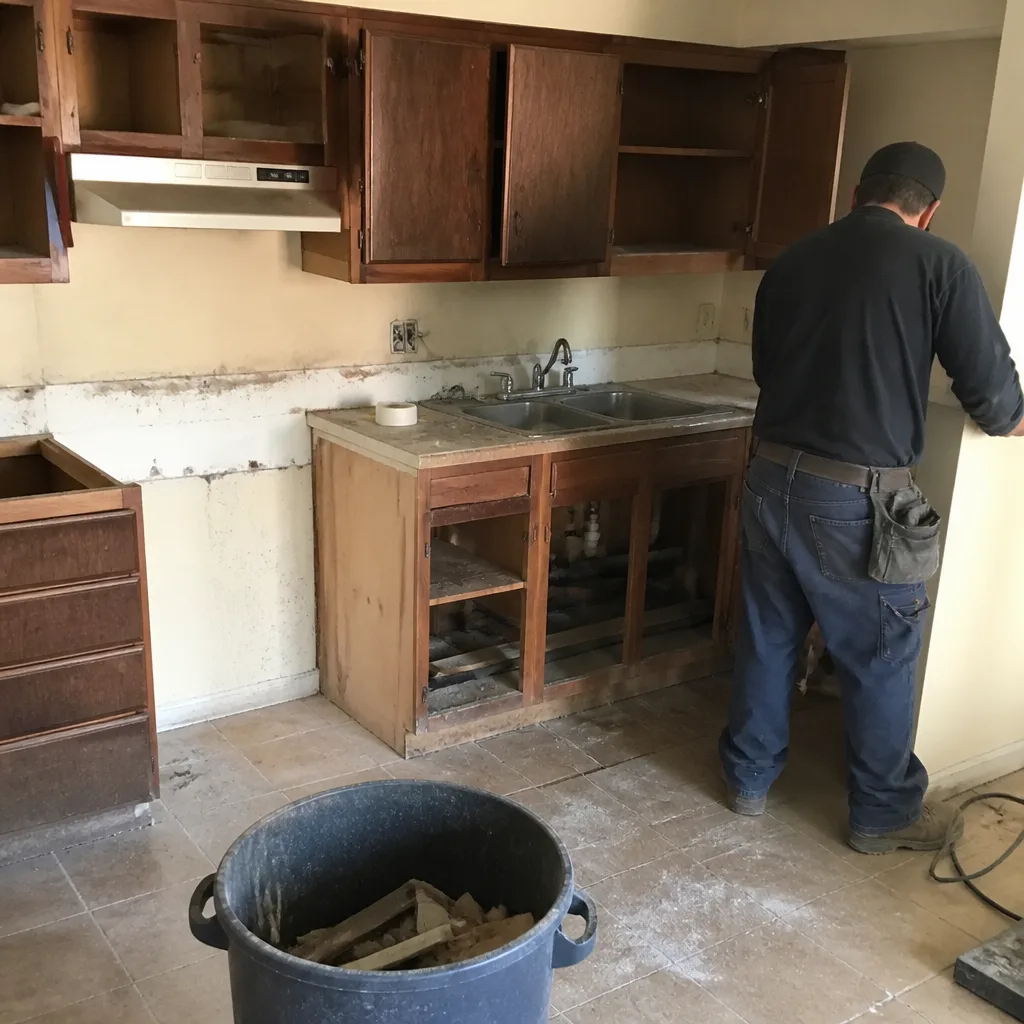 Before
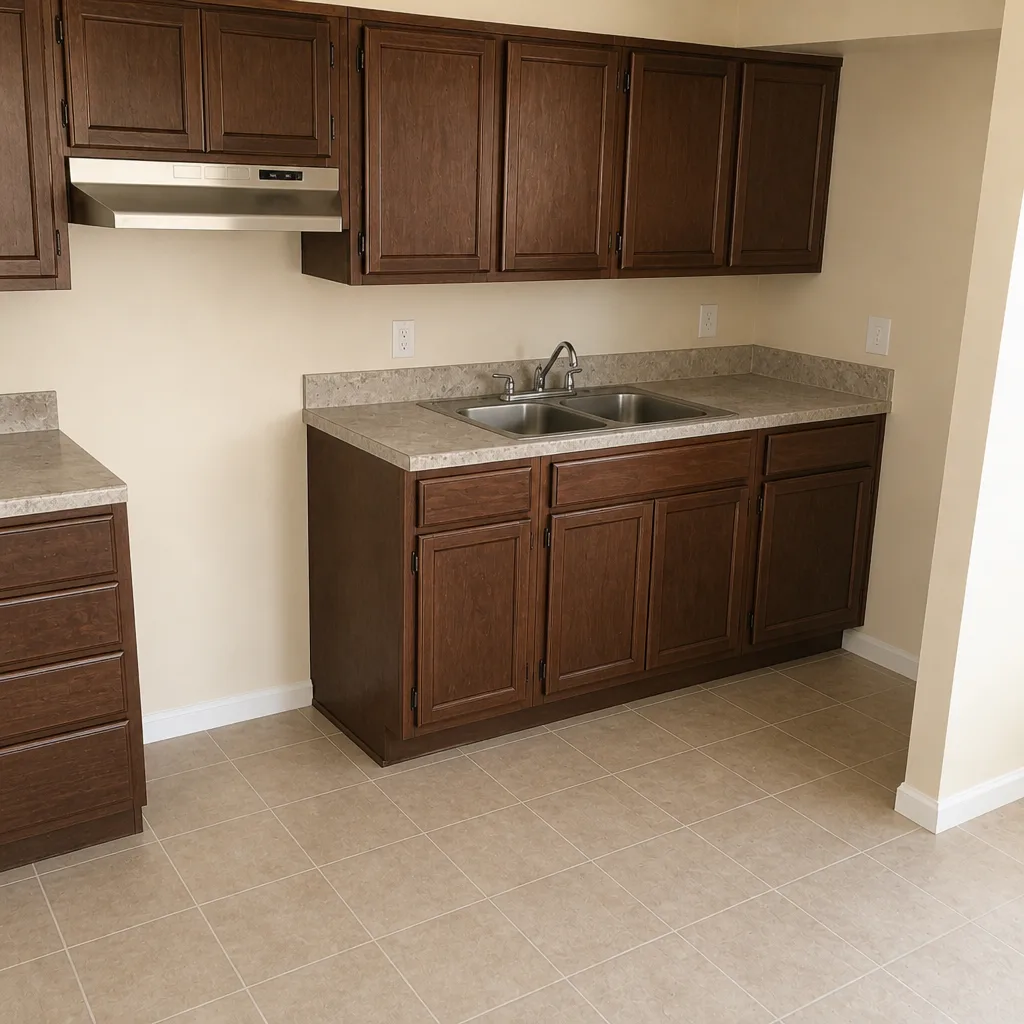 After
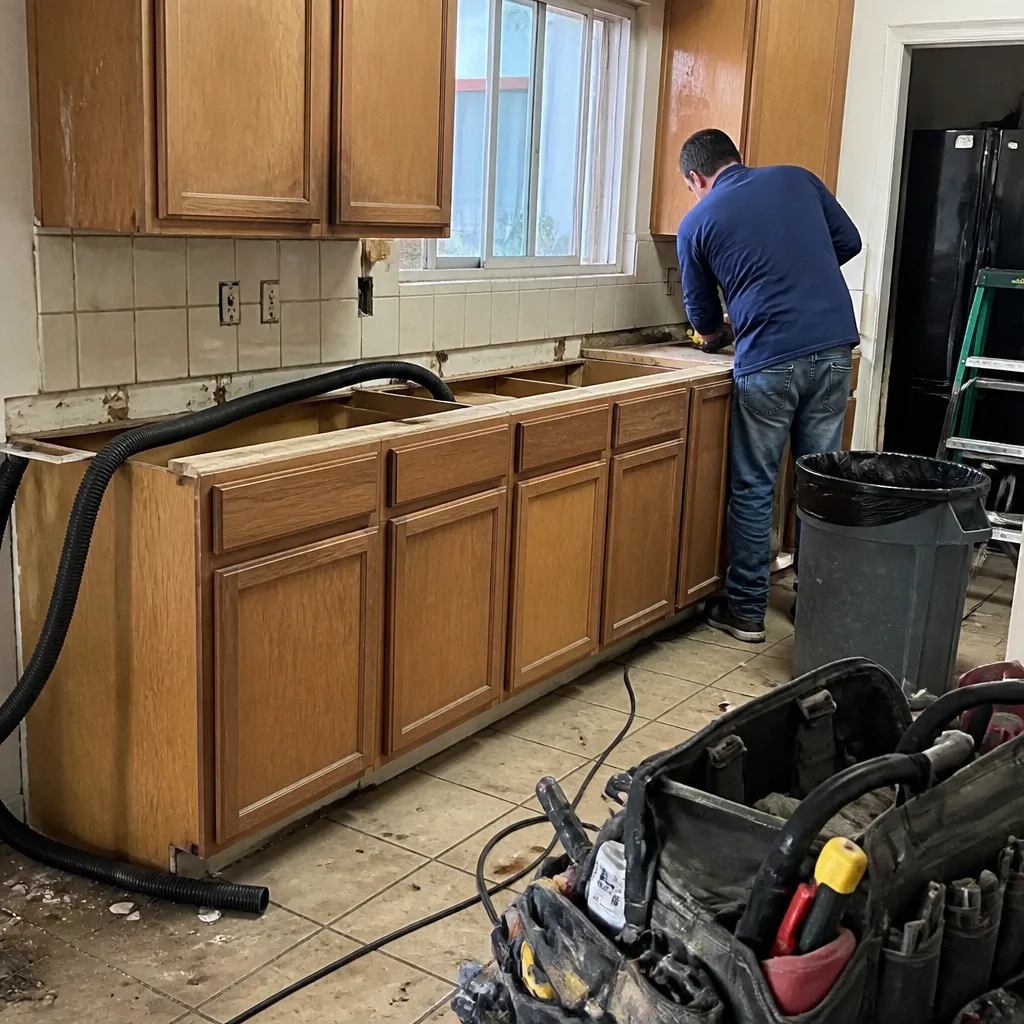 Before
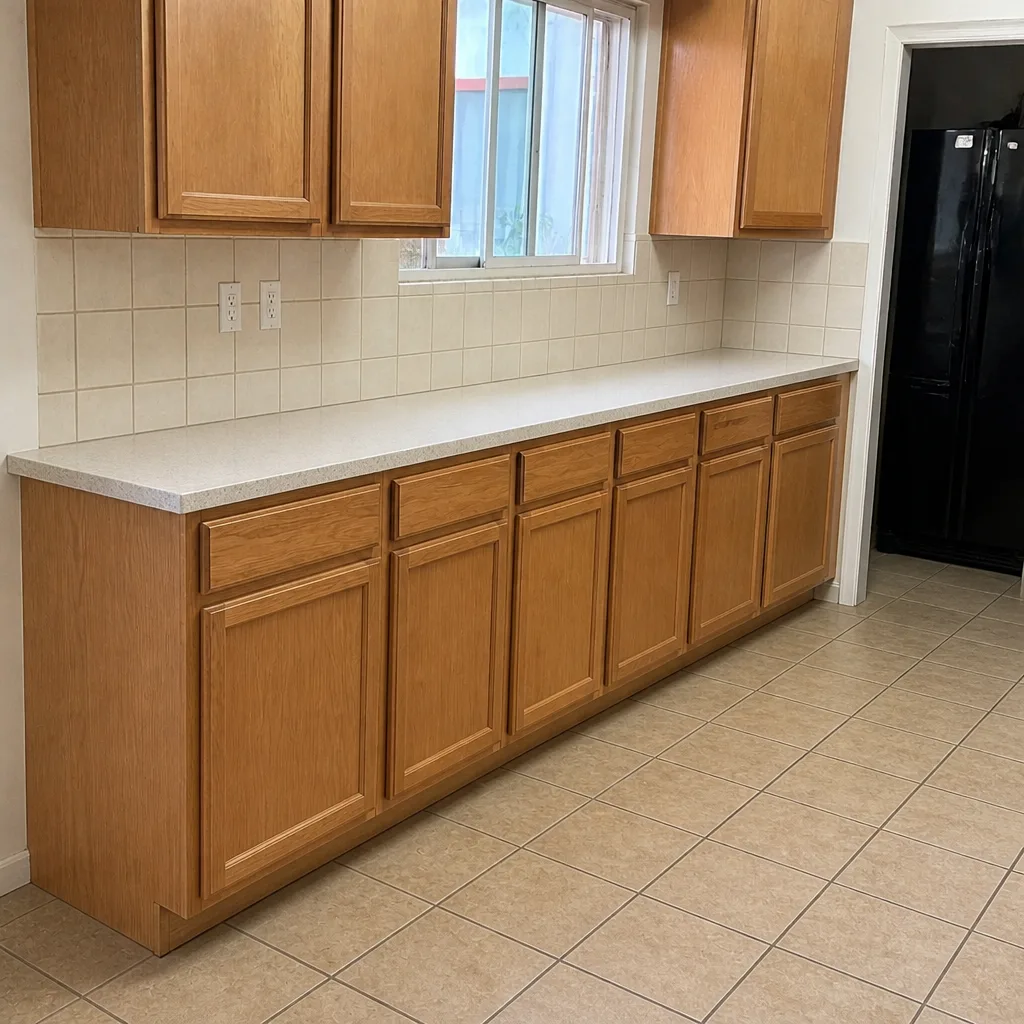 After
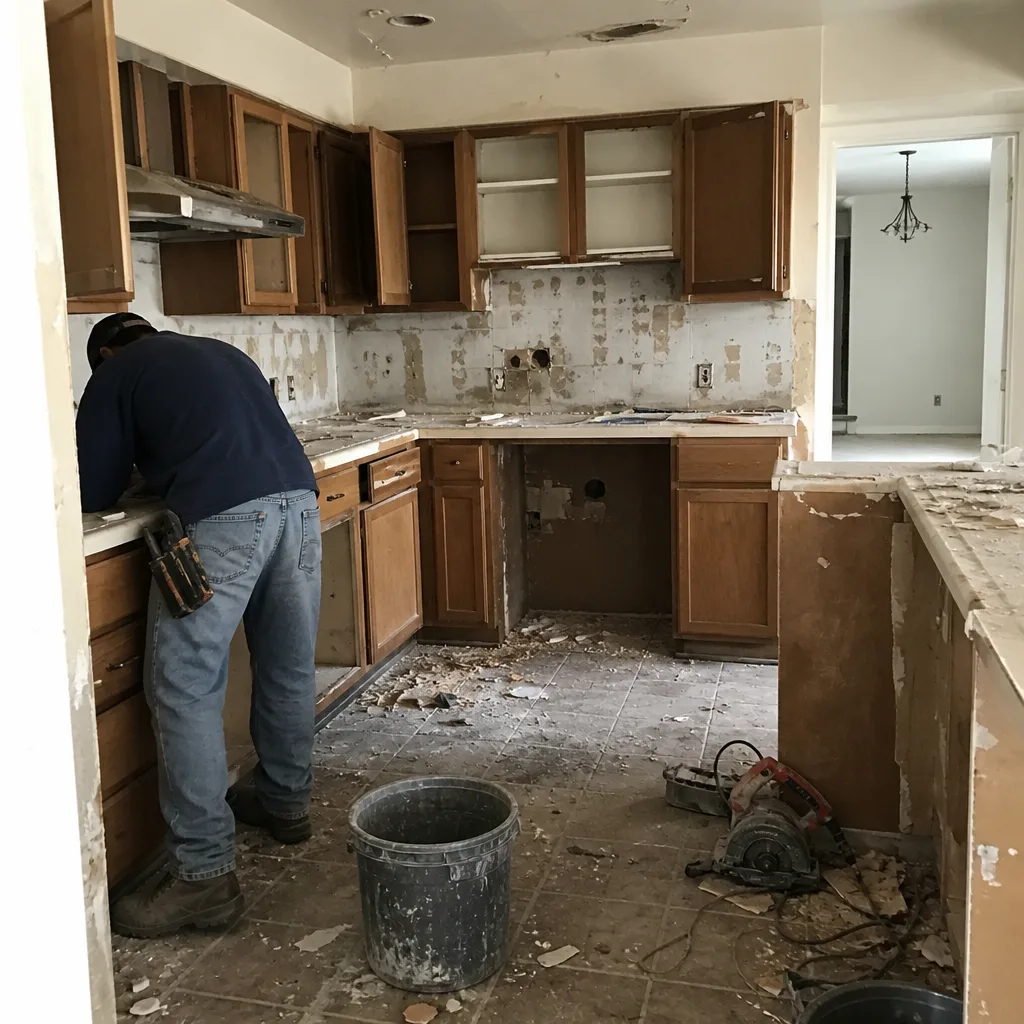 Before
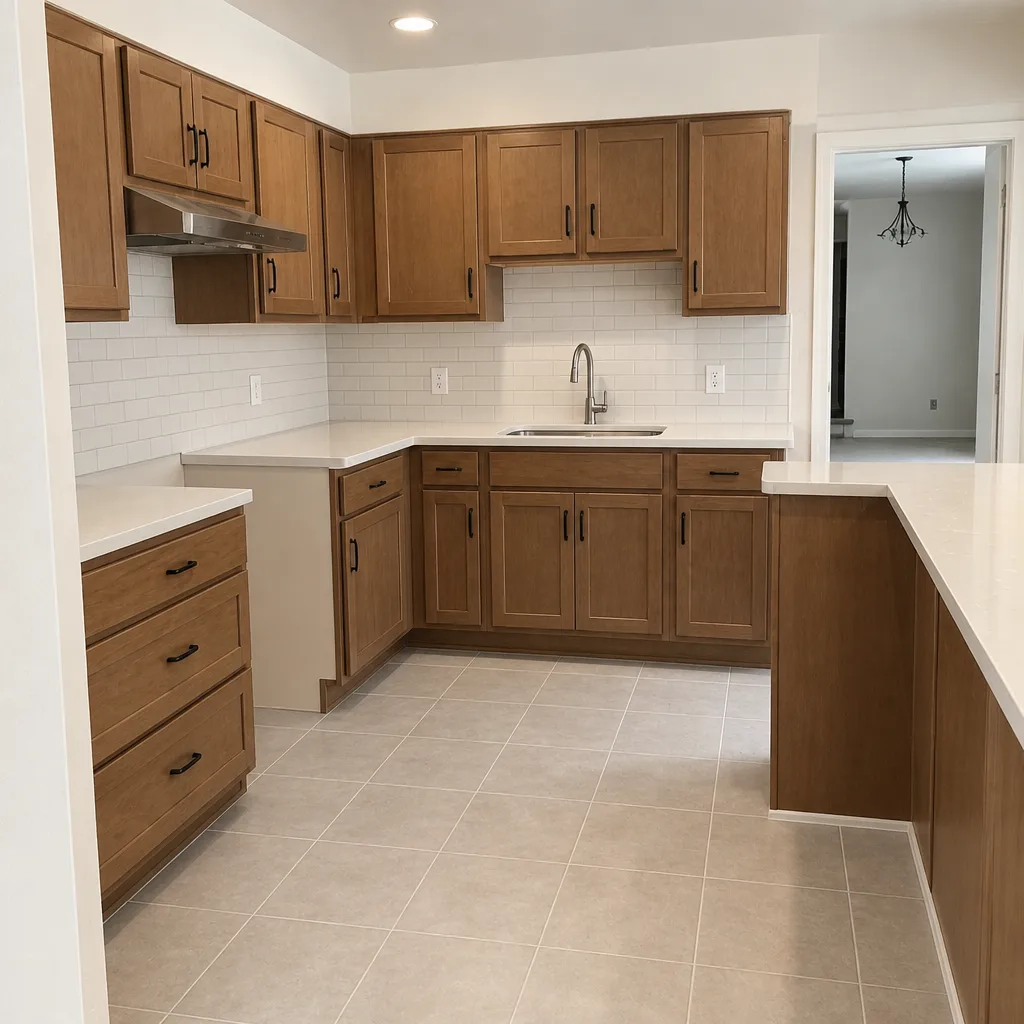 After
When to Call a Professional
Call a professional when any warning sign is active and growing, not when it’s occasional and stable. That means cabinet gaps that widen over weeks or months, a countertop that’s separated from the wall, repeated breaker trips in the same circuit, warm outlets or any discoloration at a faceplate, moisture symptoms that return after re-caulking, or cracks that appear to run from a countertop through tile into the wall. Those are the signals that warrant a professional assessment – the small ones are within range of a homeowner’s careful observation. Electrical work should always go to a licensed electrician; never attempt to trace or repair wiring in a panel yourself. If you’re in Las Vegas and you want an unbiased look at what a licensed kitchen specialist sees, call (844) 797-6597 for a free estimate. We answer 24/7, and we dispatch from 7am to 7pm, Sunday through Friday.
Frequently Asked Questions
Cosmetic settling is stable and stops changing after it’s adjusted once – a hairline crack that doesn’t widen, a door that needed a single adjustment. Structural movement keeps changing in the same direction and same location, and it tends to repeat every summer as the soil under the slab expands and contracts. If the same gap reopens within weeks of being closed, or if a crack grows across tiles and continues up the wall, that’s a structural signal, not cosmetic. Call (844) 797-6597 to get an unbiased look at the pattern.
Recurring caulk failure around a kitchen sink usually means moisture is getting behind the caulk line, or the joint is under stress from movement. Caulk can only handle so much of both. The most common sources are a sink that isn’t fully sealed to the counter, a supply or drain connection that’s slowly leaking under the cabinet, or a countertop that’s bridging a void rather than sitting solid. Re-caulking solves it for a few months; identifying and stopping the moisture source is the real fix. Our team can look at the install and tell you what’s actually happening.
Not when they’re repeated. A GFCI tripping once can be a moisture issue near a device; an AFCI tripping over and over on the same circuit in a recently remodeled kitchen usually means wiring work or a load issue that should be diagnosed by a licensed electrician. Repeated trips are a workmanship flag. A properly installed kitchen circuit doesn’t trip, and it shouldn’t be something you learn to live with. Call a licensed electrician first; call (844) 797-6597 if the electrical work was part of a kitchen remodel and you want it looked at.
Tap the surface across its full area with your knuckles or a plastic tool – a solid, consistent sound is good, and a hollow sound over any area means the slab is bridging a void. Seams that show an open gap that doesn’t close are another sign. Look around the sink cutout for cracks radiating from the corners; those often indicate inadequate support under the cutout. Cambria, Silestone, and Caesarstone all require continuous substrate support, and in Las Vegas, hard water staining on the edges will usually reveal any place the slab hasn’t been properly finished. Have a specialty contractor look before the damage spreads.
Most structural, electrical, plumbing, and mechanical changes in a kitchen require a permit through the local building department, including moving walls, changing wiring, or adding or moving plumbing. Cosmetic changes like paint and tile may not. The safest approach is to ask your city’s building department directly for your specific scope, and to expect any contractor you hire to include the permits in the plan. If a remodel is planned without permits, ask why before you sign.
An authorized cabinet installer is specifically approved by the cabinet manufacturer to install that brand, which means they understand the product’s installation requirements and have access to manufacturer support if a problem comes up. A general contractor may install cabinets but isn’t necessarily authorized by the brand. For KraftMaid and Wellborn, we’re an authorized installer; that’s a difference that shows up in the fit, the warranty support, and how the brand handles any issue that arises after install.
The Bottom Line
Kitchen remodeling warning signs are usually quiet at first. A cabinet gap that widens, a grout line that stays dark, a breaker that trips more often, a countertop seam that opens seasonally. Each of those is a message from a specific part of the installation, and each gets more expensive the longer it’s ignored. Read them early, take the electrical ones to a licensed electrician, and use the final walkthrough as your most important check. In Las Vegas, the dry climate and the soil under our slabs create their own specific pattern of movement, and a kitchen specialist who understands that pattern will save you from rebuilding the same failure with newer materials. Our technicians have up to 9 years of experience working specifically on kitchens, and we’ve built our process around Las Vegas kitchens – from cabinet installation through countertop installation, with a single contractor accountable for all of it.
Call (844) 797-6597 for a free estimate. We answer 24/7. Fast dispatch from 7am to 7pm, Sunday through Friday. Our estimates are written line by line, and the written estimate sets the price.
Written by the team at Valor Kitchen Remodeling.