
Last updated November 17, 2026








Free design consultation - KraftMaid and Wellborn cabinet lines, Cambria and Silestone surfaces, and every tier from refacing to full custom laid out side by side
How to Hire a Kitchen Remodeling Contractor in Las Vegas: A Step-by-Step Guide
Most homeowners treat a Nevada contractor’s license as the finish line of their vetting. It’s the starting line. Nevada requires a contractor’s license for any job over $1,000, which means almost every kitchen renovation in this valley clears that bar, so nearly every bidder you meet will have a license number to show you. The difference between a good kitchen and a bad one sits in what that number does and doesn’t tell you: complaint history, bond status, disciplinary actions, and whether the person holding it actually builds kitchens for a living. Las Vegas has one of the largest and most uneven remodeling markets in the country, shaped by boom-and-bust construction cycles that reward volume over craft. This guide walks you through the screening process that market actually demands, step by step, so you can hire with your eyes open instead of your fingers crossed.
Quick Answer
To hire a kitchen remodeling contractor in Las Vegas, verify the contractor’s full license record with the Nevada State Contractors Board, not just the license number, then confirm they specialize in kitchens, request a written line-item estimate, and negotiate five key contract clauses before signing: payment schedule, lien waivers, change-order thresholds, timeline, and warranty terms. A license proves the contractor is legally allowed to work. It does not prove they’ll finish your kitchen well.
Styles & brands we work with
- Shaker
- Modern flat-panel
- Two-tone cabinets
- KraftMaid
- Cambria quartz
- Butcher block
- Open shelving
Table of Contents
- Why the Las Vegas Contractor Market Is Different
- How to Pull and Read a Contractor’s NSCB License Record
- Kitchen Specialist or General Contractor? Why It Changes Accountability
- Five Contract Clauses You Must Negotiate Before Signing
- Las Vegas Red Flags That Should End the Conversation
- How to Run a Reference Check That Surfaces Real Problems
- Questions That Reveal Whether a Contractor Knows Kitchens
- What a Realistic Kitchen Remodel Timeline Looks Like
Why the Las Vegas Contractor Market Is Different
Las Vegas grew fast, then stopped, then grew again. That cycle left the valley with an unusually wide spread of contractor quality: companies that scaled up during the boom years and learned to move volume, and smaller firms that built their reputation one kitchen at a time. Both exist side by side, often advertising in the same places, which makes the hiring decision harder here than in a slower-growth city where reputations travel by word of mouth.
The practical consequence for homeowners is that big ad budgets and polished websites say very little about installation quality. A company that spent the boom building out sales infrastructure may have never needed to earn referrals. A smaller kitchen specialist might have fewer online reviews but a decade of finished rooms behind them. The screening process in this guide is built to separate those two, which is genuinely hard to do from a search results page.
One more local wrinkle: summer heat and the pace of new construction both push subcontracted labor in different directions. During heavy building seasons, skilled installers get pulled toward big commercial and residential jobs, and the crews left working on small remodels aren’t always the most experienced ones. Asking a contractor who will actually be in your kitchen, and whether those people are employees or subcontractors, is one of the most useful questions you can ask in this market. It’s not suspicious to ask. It’s standard due diligence in a city that grows this quickly.
How to Pull and Read a Contractor’s NSCB License Record
Every contractor doing work over $1,000 in Nevada must hold a license from the Nevada State Contractors Board, or NSCB. Checking that a license exists takes about two minutes. Reading the record behind it takes fifteen and tells you about ten times as much. Here’s how to do it properly.
- Search by license number and by business name. Contractors sometimes operate under multiple business names. Search both, and note which names are tied to the license you were quoted.
- Confirm the license classification. Nevada licenses carry classifications that define what type of work the contractor is authorized to perform. Make sure the classification actually covers residential remodeling, and ask the contractor directly whether kitchens fall inside it.
- Check the license status and expiration date. An expired or inactive license is a dealbreaker, not a paperwork detail.
- Read the complaint history. Every complaint, its resolution, and its disposition is part of the public record. One complaint isn’t disqualifying; it’s the pattern that matters. Look at how the contractor responded and whether the outcome shows a dispute resolved in the homeowner’s favor or a contractor who ignored the process.
- Look for disciplinary actions. The NSCB disciplines contractors every year, and those actions are recorded. A history of discipline, especially around workmanship or payment practices, is a serious warning sign.
- Confirm bond status. Nevada requires licensed contractors to carry a bond, and the bond’s status is listed on the record. An active bond gives you a real remedy if something goes wrong. A lapsed one tells you the contractor’s affairs may not be in order.
- Verify who actually holds the license. In Nevada, the license is tied to a qualifying individual. Ask a direct question: is the person quoting your kitchen the same person whose name is on the license? If not, you’re hiring a company, not a contractor, and the accountability picture changes.
A license number alone is table stakes in Las Vegas. The record behind it is the actual vetting step.
Kitchen Specialist or General Contractor? Why It Changes Accountability
This is the decision most homeowners don’t think to make, and it has the biggest effect on how your project runs. A general contractor spreads attention across roofing, bathrooms, additions, and kitchens. A kitchen specialist concentrates every crew hour and every process refinement on one trade. That difference shows up in how problems get handled.
Here’s the accountability gap in plain terms. On a general contracting job, you’re coordinating a chain: the GC, the cabinet installer, the countertop fabricator, the plumber setting fixtures. When a cabinet box arrives wrong or a countertop opening doesn’t match the sink cutout, the question of who fixes it can stall a job for days while the trades point at each other. A specialist who owns the full scope, from cabinet installation through countertop installation to the plumbing fixtures, absorbs that problem inside their own project, not at the seam between two unrelated companies.
Warranty enforceability matters here too. When one contractor is answerable for the cabinet fit, the countertop edge, and the sink basin, the warranty is one warranty against one company. When it’s split across three, understanding what’s covered and by whom can turn into a disputes project of its own. Ask the specialist directly: who is accountable if the cabinet install and the countertop install don’t meet cleanly? A contractor who can’t answer that in one sentence probably doesn’t control both.
This is the model we build Valor Kitchen Remodeling around: a kitchen specialist, not a generalist with a tile saw. We’re authorized installers for KraftMaid and Wellborn cabinetry, and we work with Cambria, Silestone, and Caesarstone for countertops, so material selection and installation sit inside one accountable conversation. That structure removes a layer of coordination risk that generic contractors can’t remove for you.
Five Contract Clauses You Must Negotiate Before Signing
Las Vegas homeowners sign kitchen contracts every day without negotiating a single line. That’s the mistake. These five clauses are where disputes begin, and all five are negotiable before the pen touches paper.
- Payment schedule. Never pay more than a modest deposit upfront for a planned kitchen remodel. A contractor who asks for more than half the job cost before starting work is asking you to finance their entire business, and if the job stalls, your leverage walks out the door. Tie the remaining payments to milestones you can inspect: cabinets delivered, cabinets installed, countertops templated, countertops installed, final walkthrough.
- Lien waiver requirements. Nevada allows subcontractors and suppliers to file a mechanic’s lien on your home if they aren’t paid. Contract language should require the contractor to furnish lien waivers from every subcontractor and supplier as payments are made. This protects you from paying twice.
- Change-order approval thresholds. The contract should specify exactly how change orders get approved, in writing, and at what dollar threshold. Without that threshold, small “we found something” additions can quietly add thousands to a fixed-price job. Insist that any work beyond the written scope requires your signed approval before it happens.
- Timeline and delay terms. Get a start date and a completion date, and understand what happens if the schedule slips. Cabinet lead times and countertop fabrication schedules are real, so ask the contractor to explain the sequence, not just the total duration.
- Warranty terms. Know exactly what the workmanship warranty covers, how long it runs, and what product warranties come with your cabinets, countertops, and fixtures. Product warranties from brands like Wellborn or Silestone only help if the installation behind them is done right, so both halves matter.
The written estimate should be fixed-price with no change orders beyond what you approve. If a contractor resists putting these terms in writing, that’s your answer about how the job will run.
Las Vegas Red Flags That Should End the Conversation
The Las Vegas market has specific warning signs that tell you more than a generic list of “avoid contractors with no website” ever could. Here’s what we’ve seen go wrong in this city.
- Permits described as “optional.” Most cities require permits for kitchen work that touches wiring, plumbing, or structure, and pulling the permit typically triggers an inspection. A contractor who treats that as an optional extra is either cutting corners or planning to skip the inspection entirely. Either way, the risk lands on you.
- Requests for more than 50% upfront. Large upfront payments shift all the risk to you. A contractor with a functioning business doesn’t need your entire job cost before breaking ground.
- Can’t name their cabinet supplier. Ask directly: which cabinet lines do you install, and are you an authorized dealer or installer for them? A kitchen contractor who can’t name their lines isn’t a kitchen specialist. You want a firm answer, not a vague one about “working with several vendors.”
- No written line-item estimate. A single lump-sum number is not an estimate. You should see the cabinets, the countertops, the installation labor, and the plumbing fixtures broken out.
- Pushes you away from a fixed price. “Time and materials” with a rough guess at the total is how budgets double. For a planned kitchen remodel, you want a written fixed price.
- Evades questions about their NSCB record. Every contractor knows their own record. One who gets defensive when you ask about complaints or disciplinary actions is telling you something.
- No mention of inspection. Local code inspections are there to check the work before the drywall goes back up. A contractor who never brings up inspections, or who suggests skipping them, is one to walk away from.
How to Run a Reference Check That Surfaces Real Problems
Most reference checks are useless because they ask the wrong questions. “Were you satisfied?” gets you a polite yes from almost anyone. To actually learn something about a contractor’s installation quality, you need to ask questions with specific, checkable answers.
Start by requesting references from jobs finished at least a year ago. A newly finished kitchen still looks perfect; a year-old kitchen has been through a summer of Las Vegas heat, cabinet doors have been opened thousands of times, and countertop edges and sink caulking have proven themselves or not. Ask for three references and actually call all three.
Then ask these questions, in this order:
- Did the cabinets sit flush and level at final walkthrough, and did the contractor fix any misalignments before calling the job done? You’re checking the fit quality, not just whether the room got finished.
- How were problems handled during the build? Every kitchen has at least one surprise. The reference’s answer tells you whether the contractor absorbed it professionally or argued about it.
- Did the countertop template and install match what was in the contract? This catches fabricator coordination issues that wouldn’t have shown up at the reference’s first enthusiastic review.
- Was the timeline close to what was quoted, and did the contractor communicate delays in advance? Ask for the specific quote versus the actual completion.
- Did anything need rework after the final walkthrough, and did the contractor come back promptly? This is where warranty enforceability gets tested in the real world.
- Did the final cost match the written estimate, and were change orders approved in writing? A reference who says “it came in on budget” means more than one who says “they were nice.”
A good reference check surfaces problems and shows you how the contractor responded to them. A weak one gives you a satisfaction score you can’t do anything with.
Questions That Reveal Whether a Contractor Knows Kitchens
You can tell within ten minutes of conversation whether a contractor builds kitchens for a living or dabbles in them between other jobs. Ask these questions and pay attention to whether the answers are specific or vague.
Ask which cabinet lines they install and whether they’re authorized installers. A specialist will name their lines and explain the difference between semi-custom and fully custom options. Ask which quartz brands they work with and whether they can compare them honestly. A specialist will tell you the actual differences between Cambria, Silestone, and Caesarstone, not just hand you a brochure. Ask about fixtures: which sink and faucet brands do they work with? Brands like Kohler, Moen, and Blanco come with established warranties and wide replacement part availability, and a contractor who knows this will explain why the fixture choice matters as much as the cabinet face.
Then ask the harder questions. Who templates the countertop, and who installs it? Who sets the plumbing fixtures, and who’s responsible for the sink cutout? Where do permits get pulled, and who schedules the inspection? What’s the sequence from cabinet installation to countertop installation to fixture installation, and what happens if one step runs long?
A kitchen specialist answers all of these without hesitation because they’ve done each one hundreds of times. A generalist answers some of them, deflects others, and mentions their roofer.
If you’re still narrowing down which contractors to interview, our guide to kitchen remodeling in Las Vegas breaks down what the full scope of a remodel typically includes, which helps you ask better comparison questions. And if you’re deciding between a kitchen specialist and a general contractor, the cabinet installation page explains what a proper install involves from the inside out.
What a Realistic Kitchen Remodel Timeline Looks Like
The biggest timeline mistake Las Vegas homeowners make is expecting a kitchen remodel to move as fast as new construction. It doesn’t. A planned kitchen remodel is a sequence of dependent steps, and each step waits on the one before it. Here’s the realistic shape of a project, from the moment you sign to the moment you cook your first meal in the new room.
- Design and material selection: a few weeks. Cabinet selection, countertop selection, and fixture decisions all happen here. This is the stage where a kitchen specialist saves real time because you’re comparing cabinet lines and quartz brands under one roof instead of driving between vendor showrooms.
- Cabinet ordering and lead time. Semis-custom and custom cabinet lines carry lead times that vary by product and specification. Ask your contractor to state the lead time in writing before you sign, and build the schedule around it.
- Permits and inspection scheduling. This step involves the city, and it takes what it takes. A contractor who promises to skip permits to save schedule is a contractor you don’t want.
- Demolition and rough work: days, not weeks. Removing the old kitchen and bringing plumbing and electrical up to code rarely runs long. The cabinets and countertops are the slow parts.
- Cabinet installation. This is the step that determines whether the finished kitchen feels solid or slapped together. Level, plumb, and square matter here more than anywhere else.
- Countertop template, fabrication, and installation. The template comes after the cabinets are installed, which is why the two are inseparable. Fabrication adds time, and a good contractor won’t compress it.
- Plumbing fixtures, sinks, and final walkthrough. Setting the fixtures, connecting the sink, and inspecting the whole room. This is where the finish line actually is.
Total time depends heavily on cabinet lead times and the specific materials you choose, so ask your contractor to give you the full sequence in writing, with the cabinet and countertop lead times called out. A contractor who tells you the whole job is “a couple weeks” isn’t being optimistic; they’re telling you they don’t understand the sequence.
Common Mistakes to Avoid
- Treating the license alone as sufficient vetting. Nevada requires a license for any job over $1,000, so nearly every bidder will have one. The complaint history, bond status, and disciplinary record behind that license is the information you actually need.
- Choosing a general contractor because the kitchen is “just one room.” A kitchen remodel touches cabinets, countertops, plumbing, and electrical all at once. A generalist’s attention is split across their whole business. A kitchen specialist’s attention isn’t.
- Skipping the lien waiver requirement in the contract. Unpaid subcontractors and suppliers can file a lien on your home, even after you’ve paid the contractor in full. Contract language requiring lien waivers as payments are made protects you from a second bill you never agreed to.
- Paying more than a modest deposit upfront. A contractor asking for more than 50% before the job starts has shifted the entire risk onto your shoulders. Milestone-based payments keep your leverage intact.
- Accepting a verbal change order. Without a signed approval threshold in the contract, “we ran into something” becomes a line-item surprise. Insist that any work beyond the written scope requires your written approval first.
- Not asking which brands the contractor actually installs. A contractor who can’t name their cabinet lines or their quartz brands isn’t a kitchen specialist. If you want Wellborn or KraftMaid cabinets and Cambria, Silestone, or Caesarstone counters, ask specifically whether they work with those brands and understand them.
- Calling references that only just finished their kitchen. A newly installed kitchen still looks perfect. A year-old kitchen has been through a Las Vegas summer, cabinet doors have been used daily, and the countertop seam has been through it. Ask for references on a year-old job.
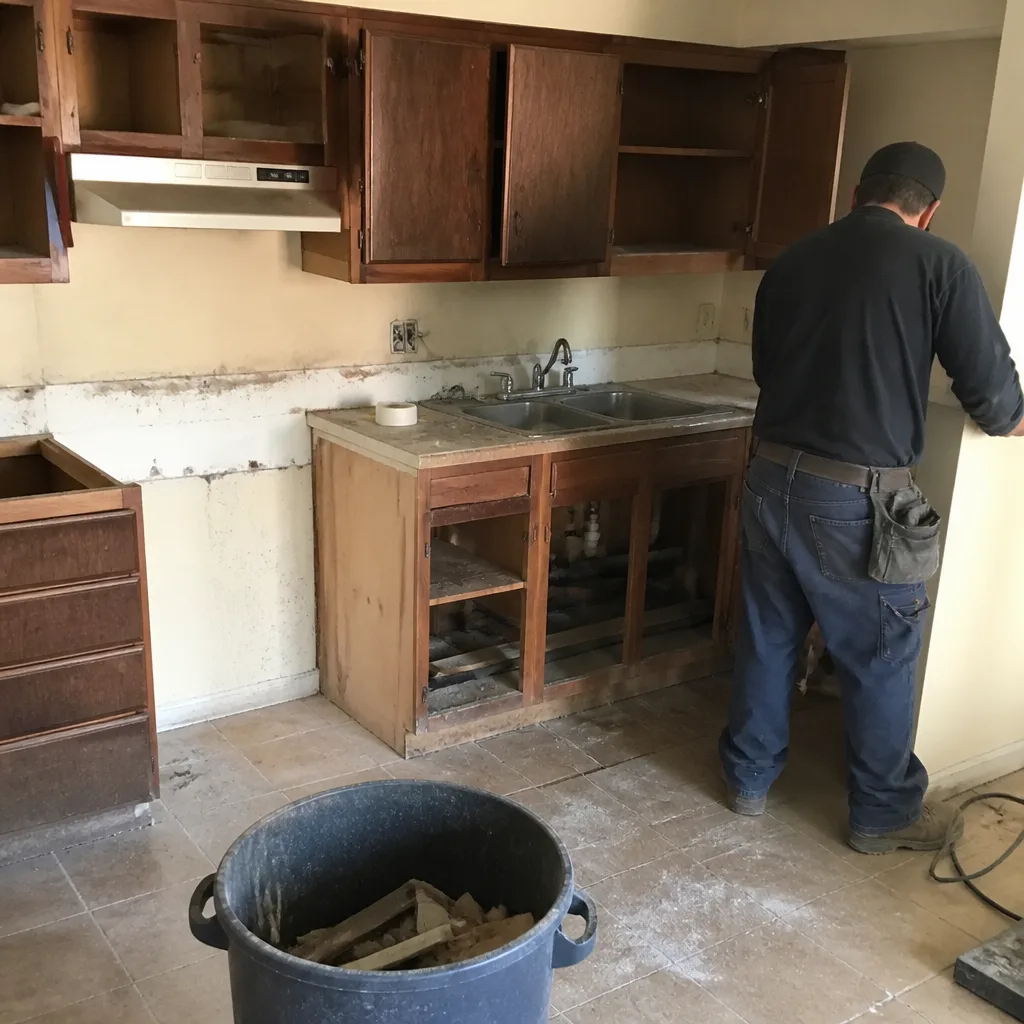
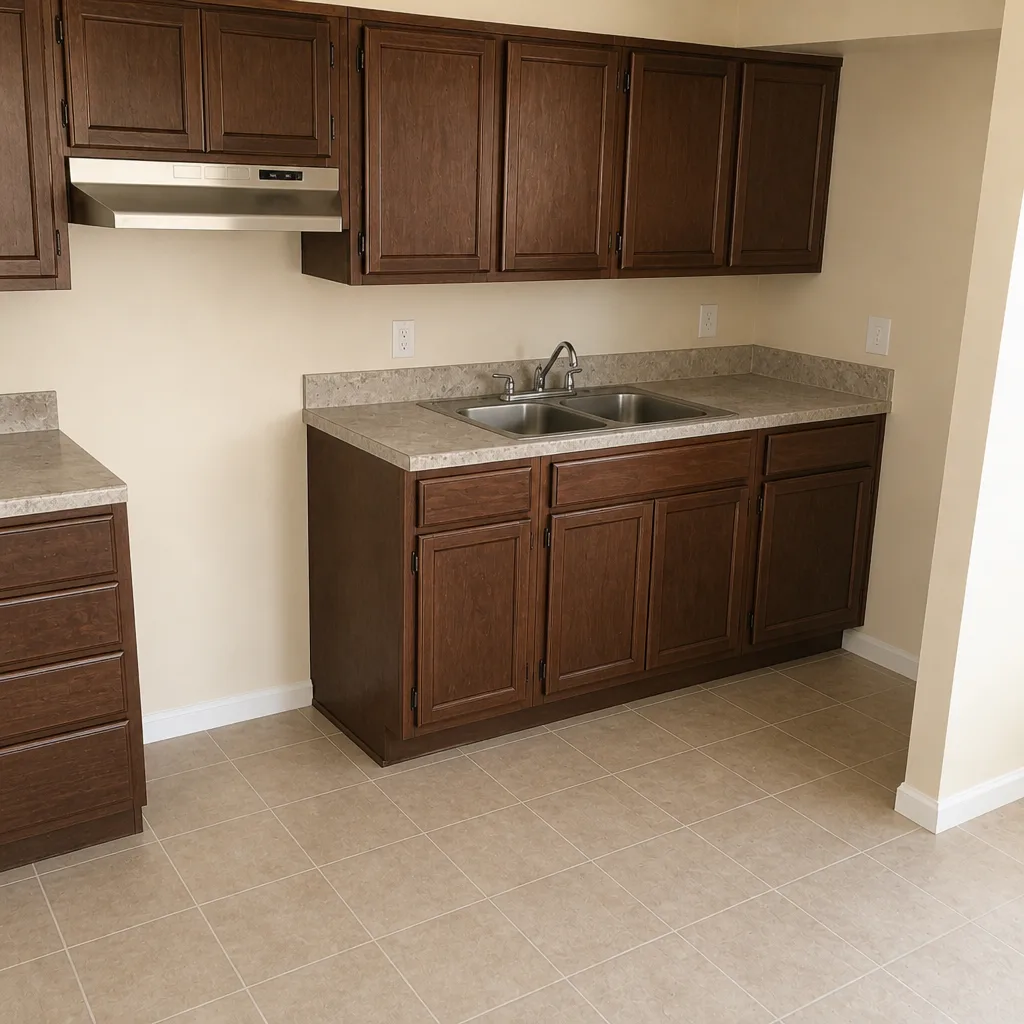
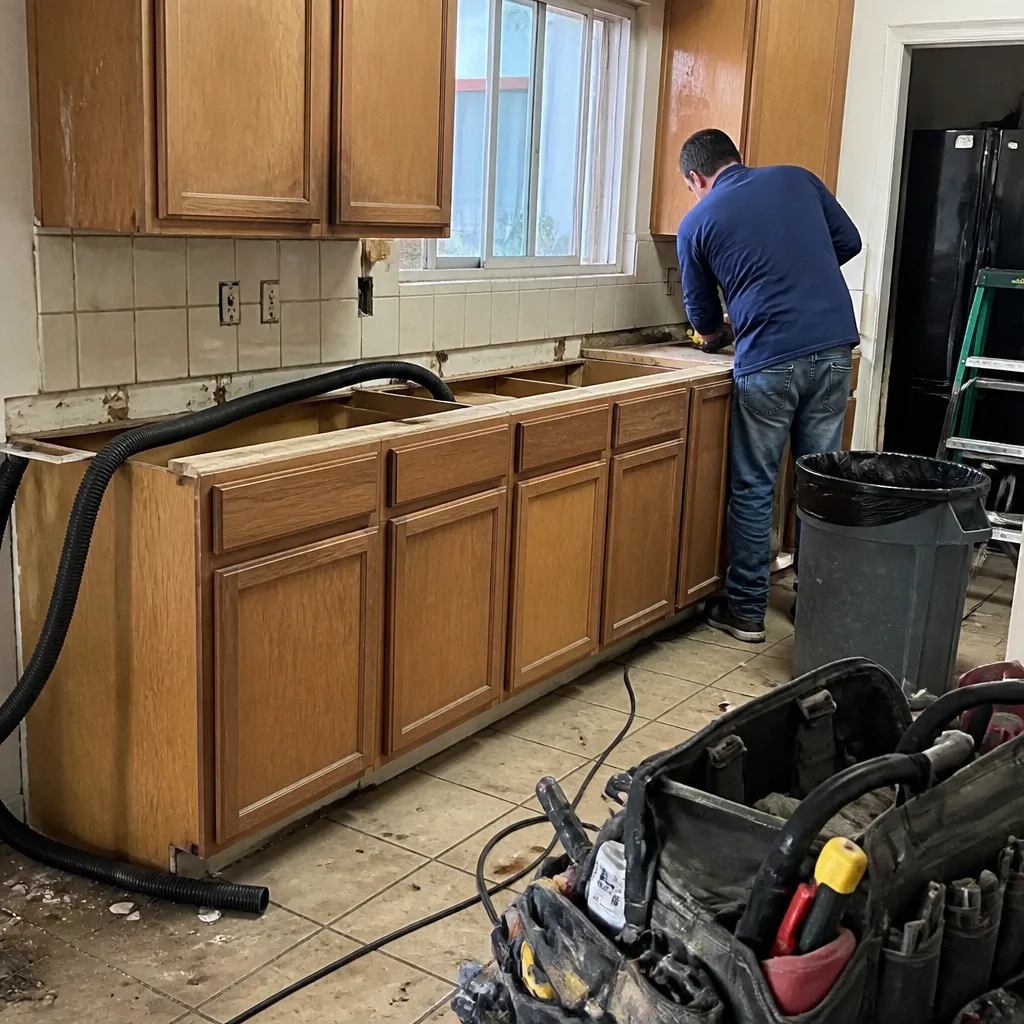
See the difference
 Before
 After
 Before
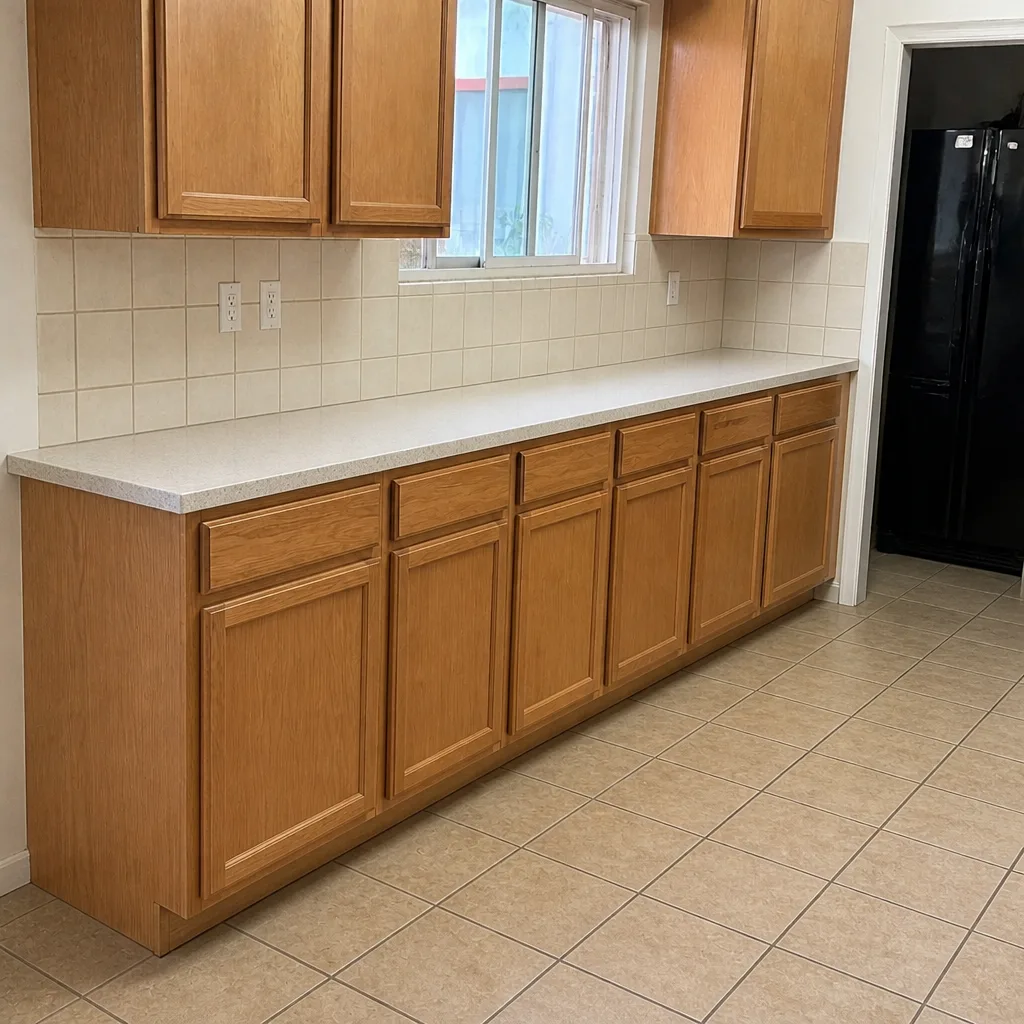 After
 Before
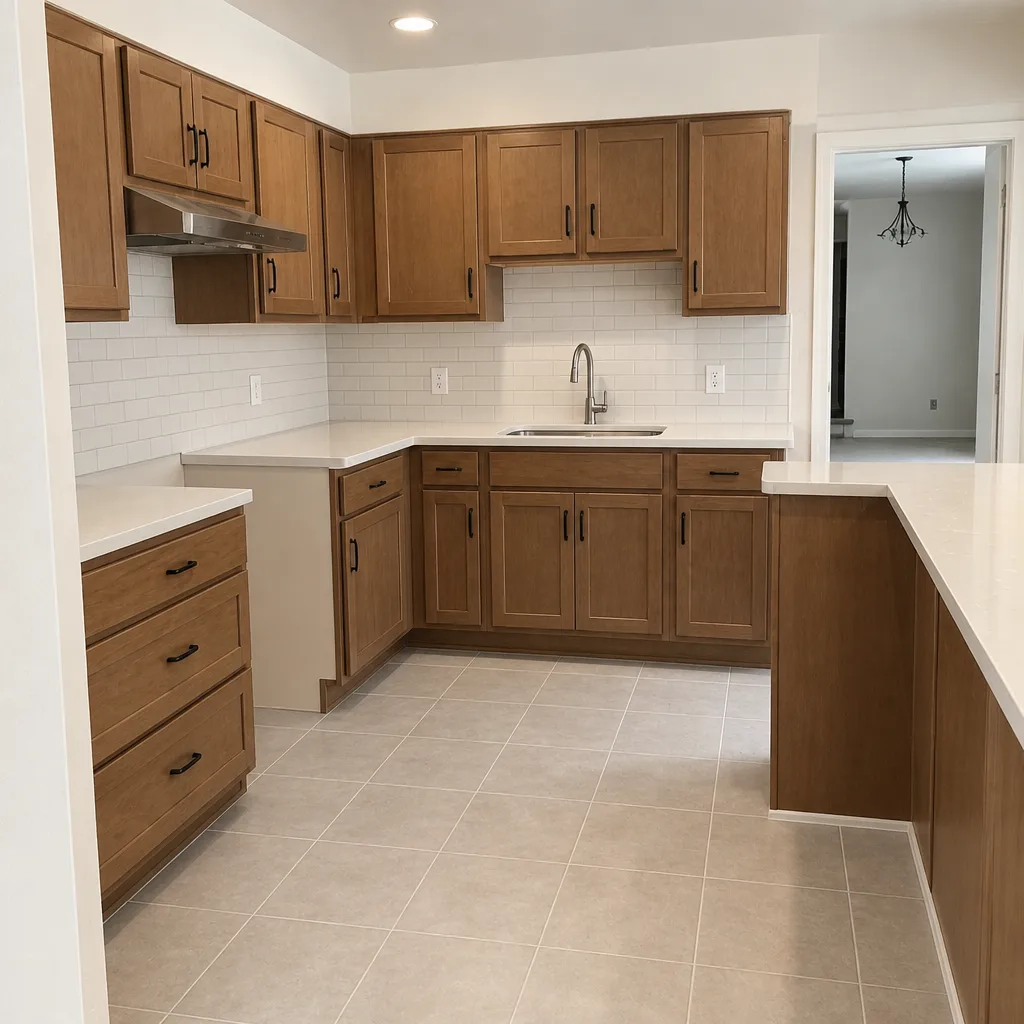 After
When to Call a Professional
Some kitchen projects are genuinely a single conversation with a contractor. Others are a much longer project than most homeowners realize, and calling a professional early saves real money. If your kitchen has had water intrusion behind a cabinet wall, if the plumbing layout needs to move a sink or add a dishwasher hookup, if the electrical panel needs to be touched to serve a new appliance, or if you’re replacing all the cabinets, the work has outgrown what a homeowner can coordinate alone. Anything that touches structure, gas, or wiring in the panel deserves a licensed contractor, full stop. If you’re planning a full kitchen remodel or deciding between cabinet refacing and full cabinet replacement, that’s a decision worth a professional conversation before anything gets ordered. Valor Kitchen Remodeling offers free estimates in Las Vegas, and every written estimate we produce includes a fixed price and a line-item breakdown so you can compare bids honestly. Call (844) 797-6597 to schedule yours.
Frequently Asked Questions

The honest answer is that a kitchen remodel in Las Vegas costs what your specific scope, materials, and cabinet line cost, so the right way to price it is a written, line-item estimate, not a per-square-foot formula. Cabinet line choice, quartz brand, and whether the plumbing and electrical need to move are the three biggest cost drivers. Call (844) 797-6597 to schedule a free estimate and see your actual number.
Yes. Nevada requires a contractor’s license for any project over $1,000, which covers nearly every kitchen remodel. Verify the license through the Nevada State Contractors Board and read the full record, including complaint history and bond status, not just whether the number exists. A license alone doesn’t prove the contractor is good; it proves they’re allowed to work.
Yes, for most planned kitchen projects. A kitchen specialist concentrates their crews and processes on one trade, which means the cabinet installation, countertop installation, and plumbing fixtures sit inside one accountable scope. A general contractor who moves between kitchens and other jobs is coordinating subcontractors they may not control closely. A specialist absorbs coordination problems; a generalist hands them to you.
Check the license classification, the expiration date, the complaint history and how each complaint was resolved, any disciplinary actions, and the bond status. Search by both license number and business name, since contractors sometimes operate under multiple names. Then ask which qualifying individual holds the license and whether that’s the person you’ll actually be dealing with.
Only a modest deposit. Never more than half the job cost upfront, no matter how good the deal sounds. The rest should be tied to completion milestones you can inspect: cabinets delivered, cabinets installed, countertops fabricated, countertops installed, final walkthrough passed. Any contractor who insists on paying most of the job before starting is asking you to take on the risk they should be carrying.
Most cities require a permit for kitchen work that touches plumbing, electrical, or structural elements, and pulling the permit typically triggers an inspection before the work is closed up behind walls. Ask the contractor directly whether they pull permits and who schedules the inspection. A contractor who calls permits “optional” is a contractor to walk away from.
The Bottom Line
Hiring a kitchen remodeling contractor in Las Vegas is a screening process, not a shopping decision. Verify the full NSCB license record, not just the number. Decide whether a kitchen specialist or a general contractor gives you better accountability, and lean toward the specialist for a planned remodel. Get a written fixed-price estimate with line items. Negotiate the five contract clauses: payment schedule, lien waivers, change-order thresholds, timeline, and warranty terms. And call references from year-old jobs with specific questions about fit, function, and how problems were handled. Las Vegas rewards homeowners who do the work before signing. The right contractor is worth the screening effort, and the screening itself is what makes the right contractor findable.
When you’re ready to bring a specialist into the conversation, Valor Kitchen Remodeling works exclusively in kitchens, with KraftMaid and Wellborn cabinets and Cambria, Silestone, and Caesarstone surfaces. We’d rather answer a hard question than tell you what you want to hear. Call (844) 797-6597 to schedule your free estimate. We answer 24/7, and fast dispatch runs from 7am to 7pm, Sunday through Friday. You can also read more about how we work on our Las Vegas page.
Written by the team at Valor Kitchen Remodeling.