Last updated November 17, 2026
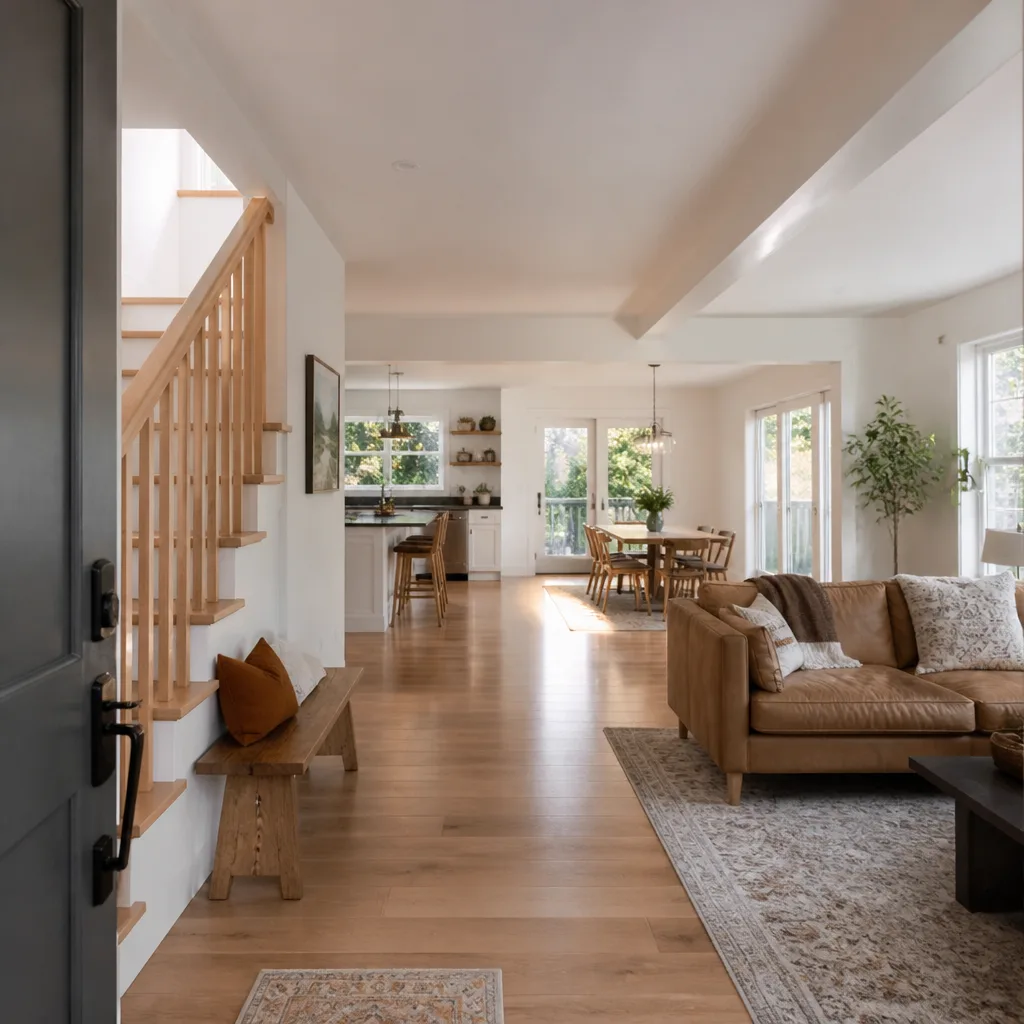
Free design consultation - KraftMaid and Wellborn cabinet lines, Cambria and Silestone surfaces, and every tier from refacing to full custom laid out side by side
Choosing the Right Kitchen Remodeling Brand: A Buyer’s Guide for Las Vegas
A thermofoil cabinet door that holds up fine in a damp, mild climate can delaminate within two summers in a Las Vegas kitchen that faces west. That single fact reshapes how you should choose brands here. Most kitchen remodeling buyers pick a cabinet finish and a countertop color first, then worry about construction later. In Las Vegas, that order is backwards. Desert heat, intense UV, and hard water eliminate whole product categories before style ever enters the conversation, and the brands worth your money are the ones built for these conditions. This guide walks you through cabinet construction, surface performance, what “designer-grade” actually means, and the warranty questions that protect your investment.
Quick Answer
The right kitchen brand for a Las Vegas home is the one whose construction and finish are rated for sustained heat, direct UV, and hard water, not simply the one with the best showroom display. In practice that means a plywood cabinet box over MDF in heat-exposed walls, a quality painted or stained finish over thermofoil on west-facing walls, and a countertop material chosen for thermal shock and UV stability. Choosing a brand with a local, accountable installer matters as much as the product itself, because installation errors – not material defects – cause most finish failures.
Styles & brands we work with
- Shaker
- Modern flat-panel
- Two-tone cabinets
- KraftMaid
- Cambria quartz
- Butcher block
- Open shelving
Table of Contents
- Why Las Vegas Kitchens Stress Materials Differently
- How to Evaluate Cabinet Construction for Desert Conditions
- Countertop Material Performance Rankings for Las Vegas
- What “Designer-Grade” Actually Means in Cabinet Specifications
- How to Verify a Las Vegas Showroom Really Stocks and Warrants Its Brands
- The Warranty Question Almost Nobody Asks
- Specialist Versus Generalist: Why It Changes the Outcome
- A Step-by-Step Way to Evaluate Any Brand
Why Las Vegas Kitchens Stress Materials Differently
Las Vegas sits in a high desert valley where summer highs routinely push past 100°F and the sun delivers some of the strongest UV in the country. A west- or south-facing kitchen wall absorbs that heat all afternoon. Interior wall surfaces near those windows can run far hotter than room temperature, and cabinet doors and countertop edges sit in that zone all day. Add the local water supply, which runs hard with dissolved minerals, and you have three stressors acting on every kitchen surface at once.
UV exposure is the quieter problem. It fades stained finishes, yellows certain plastics, and degrades the adhesives under laminates and thermofoil. Hard water leaves mineral film on polished stone and etches some surfaces over time, especially around the sink where splashing is constant. Rapid temperature change is the third stressor – a hot pan set on a countertop, an oven door opened against a nearby cabinet face.
What this means for a buyer is that brand marketing written for a national audience rarely addresses local performance. A finish that carries a strong warranty in a mild climate may carry the same warranty here while failing twice as fast, because warranties cover defects, not environmental wear. Reading the specifications with Las Vegas conditions in mind is the whole game. Our technicians have up to 9 years of experience working in these conditions, and the pattern is consistent: the failures we see trace back to product selection mismatched to exposure, or to installation shortcuts, far more often than to a defective product.
How to Evaluate Cabinet Construction for Desert Conditions
Cabinet construction is the part of the purchase most homeowners can’t see, and it’s the part that decides whether your kitchen still looks right after several Las Vegas summers. Three components matter most: the box material, the door finish, and the drawer box.
The Box Material: Plywood Versus MDF
Plywood holds up better in heat and humidity swings than MDF or particleboard, especially along walls that see direct sun. MDF is denser and takes paint well, but it swells if it ever gets wet and can sag under load in a hot zone. In a Las Vegas kitchen, plywood boxes are the safer default on exterior-facing walls, and MDF is acceptable in interior runs away from heat. Ask to see a cutaway of the actual box, not the display door.
The Door Finish: Thermofoil, Painted, or Stained
This is where the desert makes its clearest judgment. Thermofoil – a vinyl film bonded over an MDF core – is the finish most likely to peel or delaminate under sustained heat and UV, and a west-facing wall is the worst place for it. Painted finishes hold up well if the coating is a quality catalyzed or conversion varnish system. Stained finishes on solid wood or quality veneer also perform, but expect some color drift under strong UV over the years. For the sun-facing run of cabinets, painted or stained beats thermofoil.
The Drawer Box and Hardware
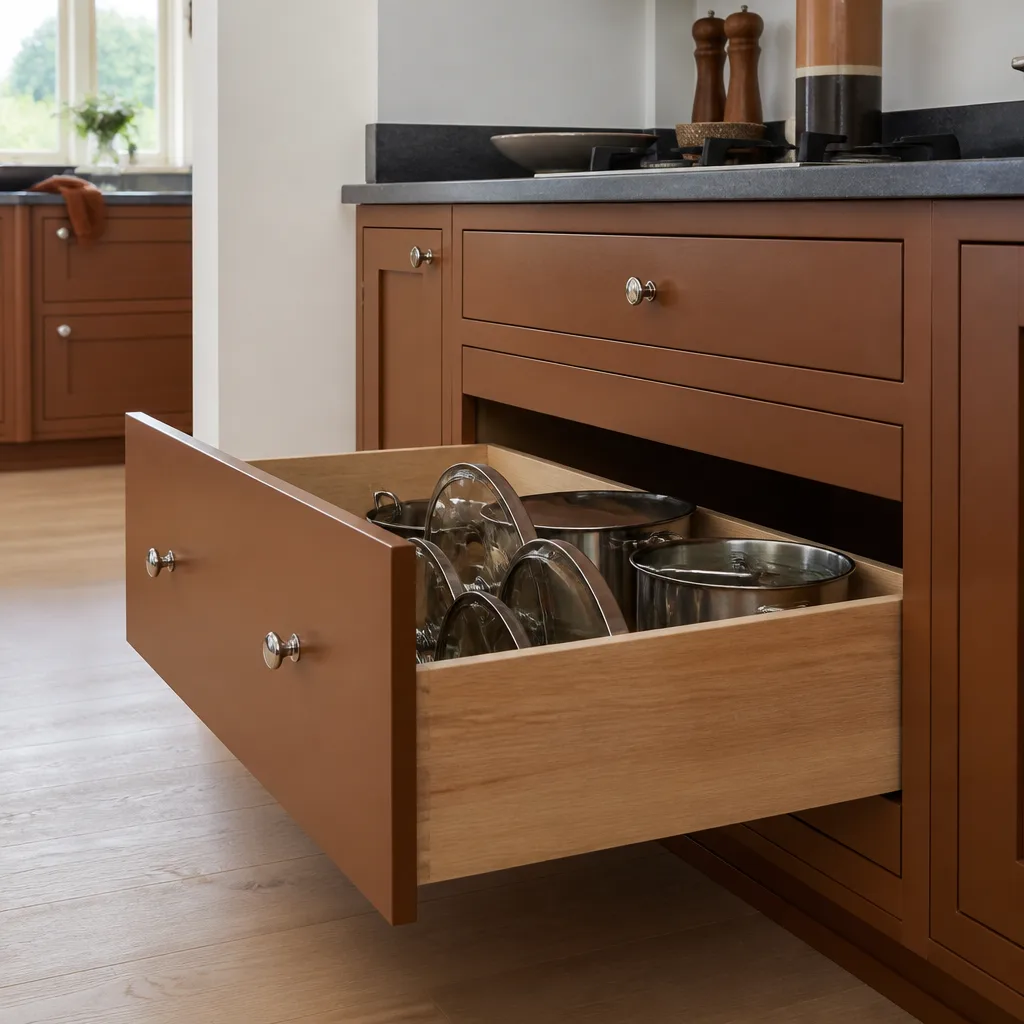
- Dovetail-jointed solid wood drawer boxes outlast stapled or glued particleboard boxes, which weaken under load and heat.
- Full-extension, soft-close drawer glides rated for heavier loads are worth the upgrade – hardware is what you touch every day.
- Check that hinges and glides come from an established hardware maker with replacement parts available.
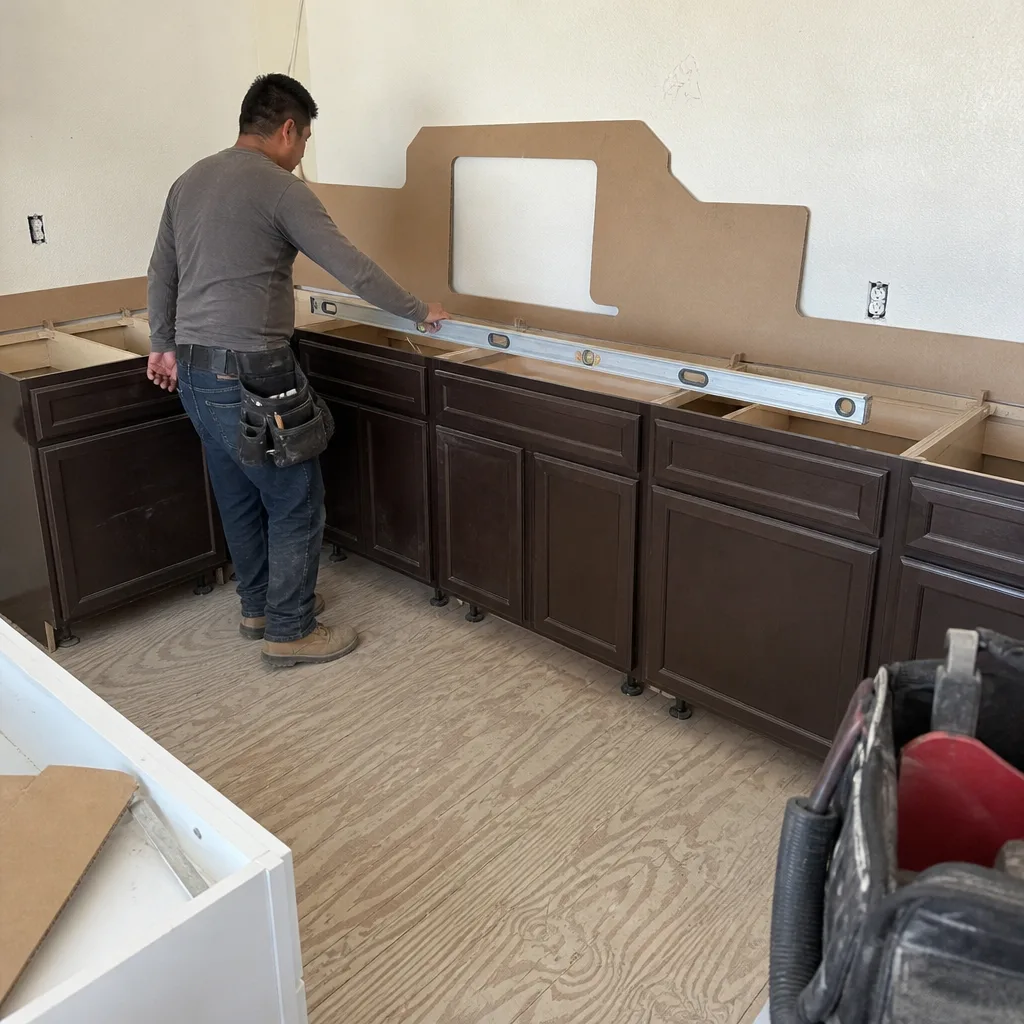
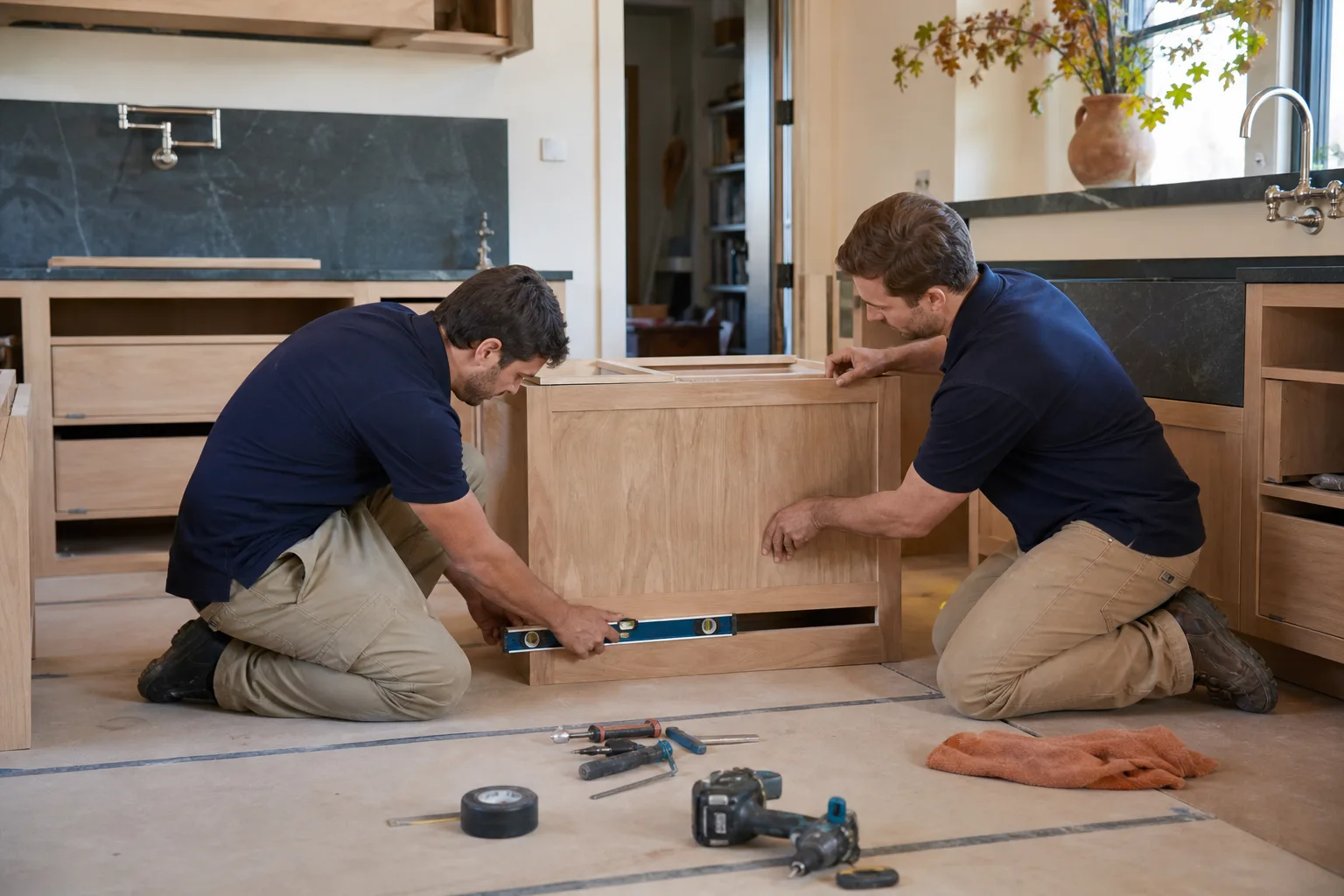
In our experience working with cabinet installation across Las Vegas, this is where the difference between a builder-grade box and a semi-custom line like Wellborn or KraftMaid becomes obvious side by side. Manufacturer specifications for the box material, finish type, and drawer construction should be in writing before you sign anything.
Countertop Material Performance Rankings for Las Vegas
Countertop choice in Las Vegas is a performance question first. Each common material responds differently to UV, hard water, and thermal shock from hot cookware. Here’s how they compare for a desert kitchen.
Quartz (Engineered Stone)
Quartz – including premium lines like Cambria, Silestone, and Caesarstone – is non-porous, so hard water and staining are far less of a concern than with natural stone. It holds color well under UV. Its weak point is heat: quartz resin binders can scorch or discolor under a hot pan, so trivets are non-negotiable. Between the three premium quartz brands, the differences come down to color line, edge profiles, and slab availability more than durability. It’s the strongest all-round pick for most Las Vegas kitchens.
Quartzite (Natural Stone)
Quartzite is harder and more heat-tolerant than quartz, which makes it appealing near a range. But it’s porous, so hard water and oils can stain unless it’s sealed and resealed on schedule. UV is generally kind to it. It requires more maintenance than engineered quartz but handles thermal shock better.
Granite
Granite handles heat beautifully and shrugs off UV. It’s porous too, so it takes sealing, and the hard local water leaves a film that needs routine attention. It’s a strong performer for thermal shock, slightly behind quartz on stain and water resistance.
Porcelain Slab
Porcelain is non-porous, UV-stable, and extremely heat-tolerant – a solid performer on all three stressors. The catch is installation: porcelain slabs are unforgiving on seams and edges and demand an experienced installer. Where quartz can absorb a small error, porcelain often won’t.
- Best all-round for Las Vegas: premium quartz from a brand with a strong warranty.
- Best heat tolerance: quartzite, granite, or porcelain slab.
- Lowest maintenance with hard water: quartz or porcelain.
- Most installer-dependent: porcelain slab – choose your installer carefully.
What “Designer-Grade” Actually Means in Cabinet Specifications
“Designer-grade” is a marketing word until you pin it to specifications. What actually separates builder-grade, semi-custom, and full custom cabinets is construction, adjustability, and finish quality – the three things that matter most in a desert climate. Here’s how the tiers break down.
- Builder-grade: standardized sizes, particleboard or MDF boxes, fewer finish and door options, thermofoil common. Mass-produced for volume, and the tier most vulnerable to heat and moisture failures.
- Semi-custom: plywood boxes standard, adjustable shelving, dovetail drawer boxes, a broad range of door styles and finish types, and sizes adjusted to your kitchen. This is the tier most Las Vegas homeowners land on – flexible enough for real floor plans and built to hold up.
- Full custom: sized to the inch, premium materials throughout, the widest finish range, and the longest lead times and highest cost. Worth it for unusual spaces, non-standard layouts, and specific design goals.
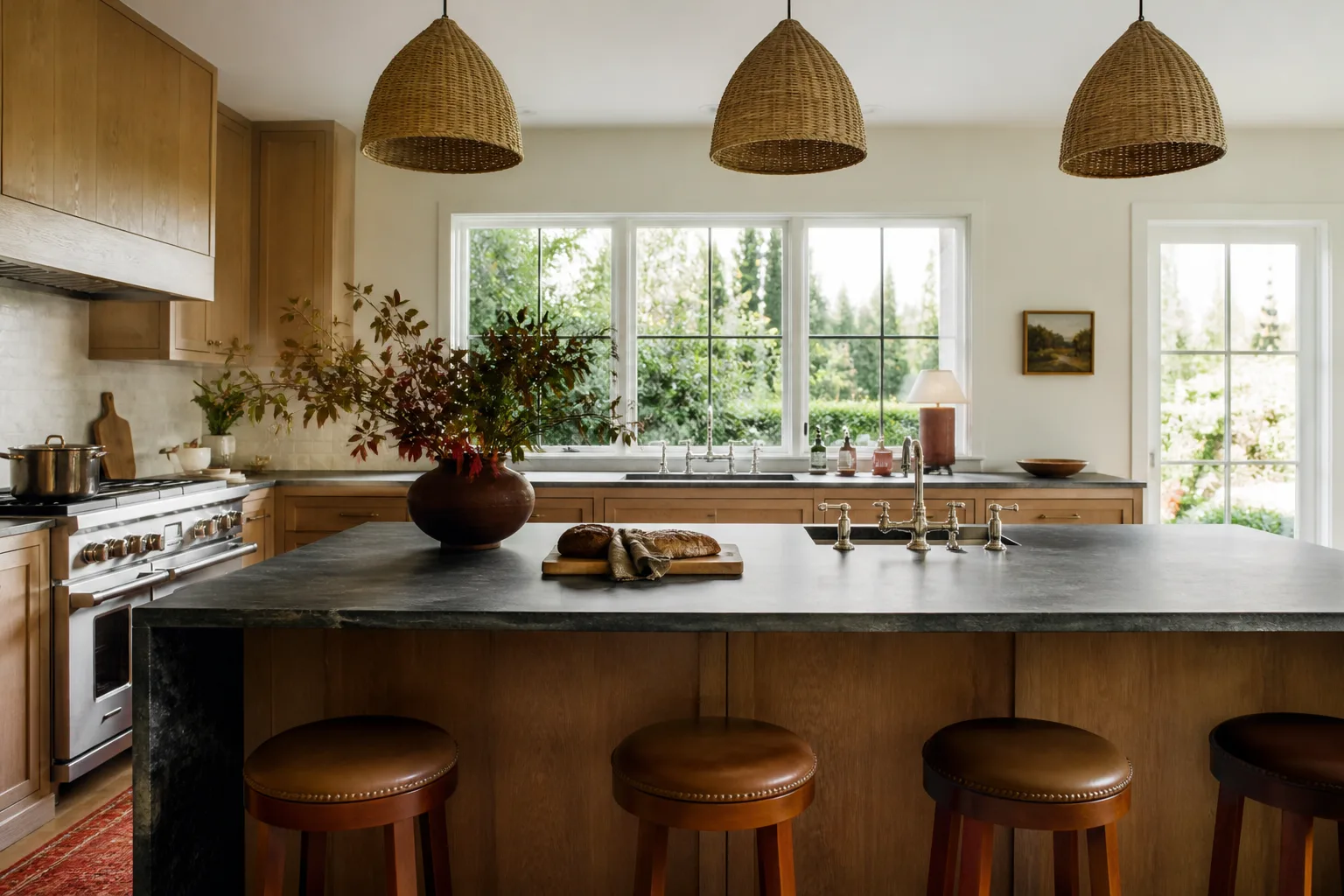
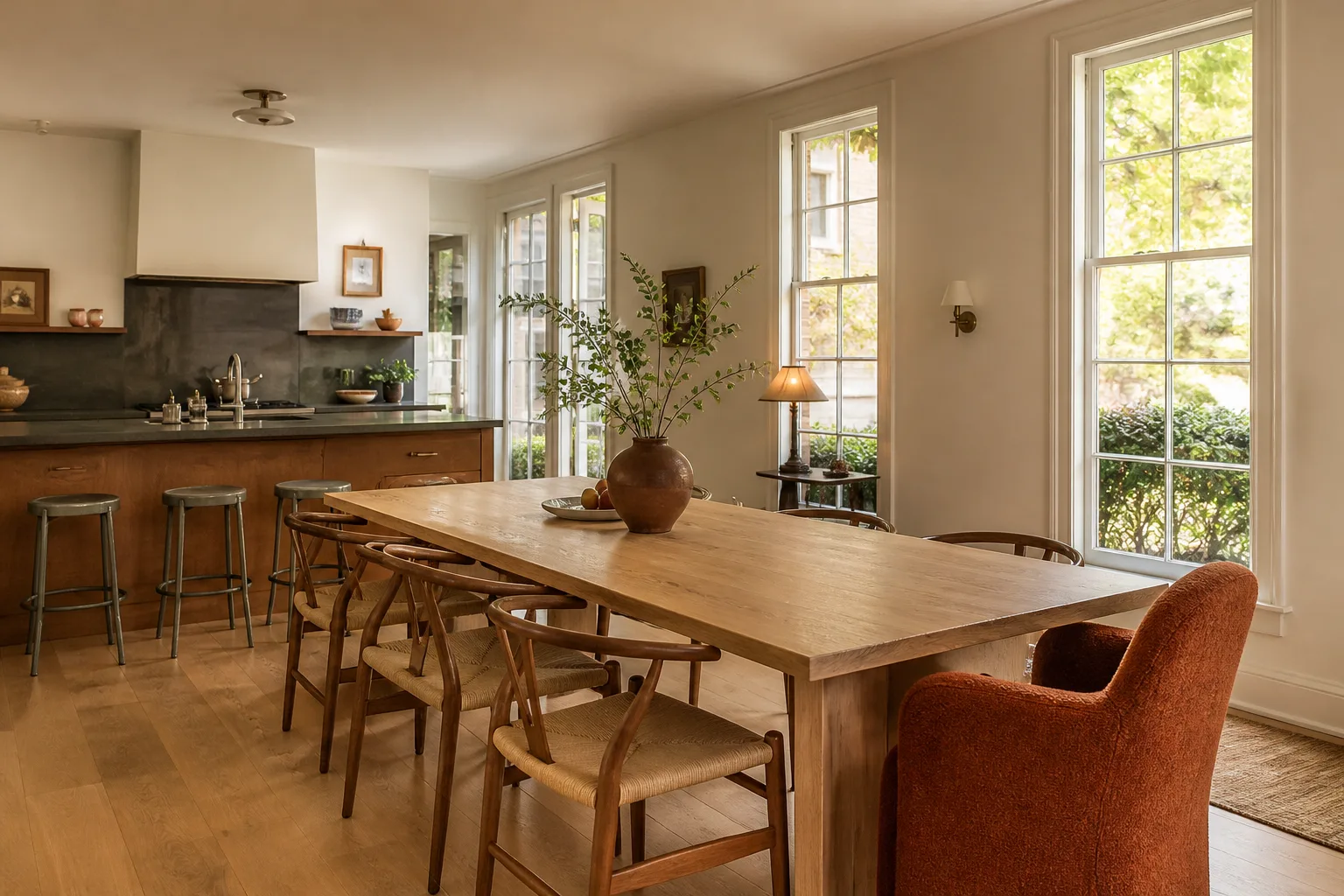
The premium you pay for semi-custom or full custom buys you exactly the things heat punishes: a plywood box, a durable baked-on finish, and drawer hardware that doesn’t sag. A curated lineup like KraftMaid and Wellborn gives you a semi-custom line and a fully custom line from names with established specs and warranty terms – two tiers without leaving one contractor’s process. For the broader picture of how a kitchen is planned and built, our guide to kitchen remodeling walks through scope and sequencing in detail.
How to Verify a Las Vegas Showroom Really Stocks and Warrants Its Brands
Plenty of showrooms display cabinets and countertops they’ve never installed and don’t warrant. They function as brokers: you pick a sample, they order it, and when a problem shows up you’re stuck between the manufacturer, the broker, and the installer. In a market with as much new construction and renovation as Las Vegas, that pattern is common. The good news is that you can spot it before you commit.
Questions That Separate Real Dealers from Brokers
- “Are you an authorized dealer or installer for this brand?” Verified authorization means the brand stands behind the product through that dealer and knows who installed it.
- “Can I see a cutaway of the actual cabinet box I’m buying?” A real dealer has samples. A broker shows you a door and a brochure.
- “Who handles a warranty claim if the finish fails?” The answer should name the person and the process. “You’ll have to call the manufacturer” is a warning sign.
- “Do you do the installation, or is it subcontracted?” Either is fine if a single party is accountable for the finished result.
- “Can I see the written brand warranty before I sign?” The terms that govern finish and construction coverage should be in your hands, not promised verbally.
- “What happens if the countertop template doesn’t match the installed cabinets?” A kitchen-only specialist owns that handoff. A generalist may hand it back to you.
Walk in with these questions and you’ll learn more in fifteen minutes than in three hours of showroom browsing. The right answer to almost all of them is a single accountable party who carries the brand relationship and installs the product.
The Warranty Question Almost Nobody Asks
Brand warranties on cabinets and countertops typically cover material defects – a failing finish, a warping door, a defective slab. They typically don’t cover failures caused by installation error: improperly shimmed cabinets that rack and crack a seam, moisture trapped behind a countertop, a sink cutout that stresses the slab edge. This distinction matters enormously, because in practice installation-related failures are common and material defects are not.
That has three consequences for how you buy:
- Ask what the warranty covers and what it excludes. Get the finish and construction coverage in writing, and read the exclusions.
- Ask who owns the remediation. A specialist who carries the brand relationship can go to the manufacturer on your behalf. A broker with no relationship can’t do much.
- Choose installation quality as carefully as you choose the product. A premium cabinet installed without proper shimming or moisture control will fail on schedule regardless of its brand name.
In our experience, the warranty conversation is where brand relationships earn their value. Our technicians have up to 9 years of experience with premium cabinet and surface installation, and the failures they see most often trace to installation, not the product. Working with an authorized installer means the warranty is backed by a relationship the brand recognizes, and a claim lands on someone who can act on it. Read the warranty before you sign, and ask the dealer exactly how they handle a claim. If the answer is vague, the warranty is worth less than it looks.
Specialist Versus Generalist: Why It Changes the Outcome
A generalist contractor who “does kitchens” alongside roofing, bathrooms, and decks spreads attention thin. The result is that kitchen-specific knowledge – which finish fails on a west-facing wall, which surface handles thermal shock, how to sequence cabinet installation against countertop templating – gets learned on your job. A kitchen-only specialist applies that knowledge every day, and the process is refined around exactly one trade.
Las Vegas buyers feel this most in coordination. A kitchen remodel touches cabinet installation, countertop installation, and plumbing fixtures in sequence, and the handoffs are where timelines and fit issues arise. When one party owns the full kitchen scope – from cabinet box to countertop edge – there’s no finger-pointing between trades about whose measurement was off or who damaged the corner of the slab. That’s not a marketing line. It’s the difference between one accountability structure and three.
Fixtures are part of that coordination too. Sinks and faucets from established makers like Kohler, Moen, and Blanco hold up better and carry warranty terms and replacement parts you can actually find. They also have to be chosen with the countertop in mind – a sink cutout stresses a quartz slab differently than a cast-iron farmhouse sink demands support. Getting fixtures, countertop, and cabinets from one place saves you from chasing a mismatch across three vendors. If you’re early in the process and want the broad picture, our Las Vegas page explains what a full kitchen project involves. And for the simplest brand question – who should do the work – Valor Kitchen Remodeling offers a clear starting point.
A Step-by-Step Way to Evaluate Any Brand
You don’t need to become a cabinet engineer to pick well. You need a repeatable process that forces the right questions. Here’s one you can run on any brand or dealer you’re considering.
- Define your exposure. Note which walls face west or south and catch afternoon sun. That’s where product performance matters most, and where thermofoil is least welcome.
- Ask for construction specs in writing. Box material, finish type, drawer box construction, hardware maker, and warranty terms. Written, not spoken.
- Compare tiers honestly. Decide whether you need semi-custom adjustability or full custom sizing. Most Las Vegas kitchens land on semi-custom; full custom is for unusual spaces.
- See a cutaway. If the dealer can’t show you the actual box and finish, walk away.
- Confirm authorization. Verify the dealer is authorized to sell and install the brand, and ask who handles a warranty claim.
- Rank countertop materials for your kitchen. Quartz for all-round durability, quartzite or porcelain for heat tolerance, granite for budget with more upkeep. Choose with the installer in mind.
- Match fixtures to surfaces. Pick sink and faucet brands with established warranties and available replacement parts, and confirm the countertop can support the sink type you want.
- Get one point of accountability. Confirm one party owns cabinet installation, countertop installation, and fixture work, and put it in writing.
Run that process and you’ll rule out most of the market quickly. The brands that survive it will be the ones built for Las Vegas conditions.
Common Mistakes to Avoid
- Choosing finish and color before construction. A beautiful finish on a poorly built box still fails, and a west-facing Las Vegas wall will test it faster than any showroom can show you.
- Assuming the national warranty covers desert wear. The warranty covers defects, not environmental failure. Read the exclusions and ask how claims are actually handled.
- Buying thermofoil for a sun-facing wall. It’s the finish most likely to peel and delaminate under sustained heat and UV. Painted or stained is the safer choice on exposed walls.
- Ignoring who installs the cabinets. Most finish failures trace to installation, not the product. A brand is only as good as the installer carrying it.
- Treating the showroom as a store. A broker who’s never installed the brand can’t warranty it or help you when something fails. Verify authorization before you buy.
- Picking the countertop before the sink. The sink cutout stresses the slab, and fixtures chosen last often don’t match the surface. Choose them together.
- Hiring a generalist to save coordination. A generalist with a tile saw learns your kitchen’s specifics on your time. A kitchen specialist doesn’t, and one accountable party prevents traded blame.
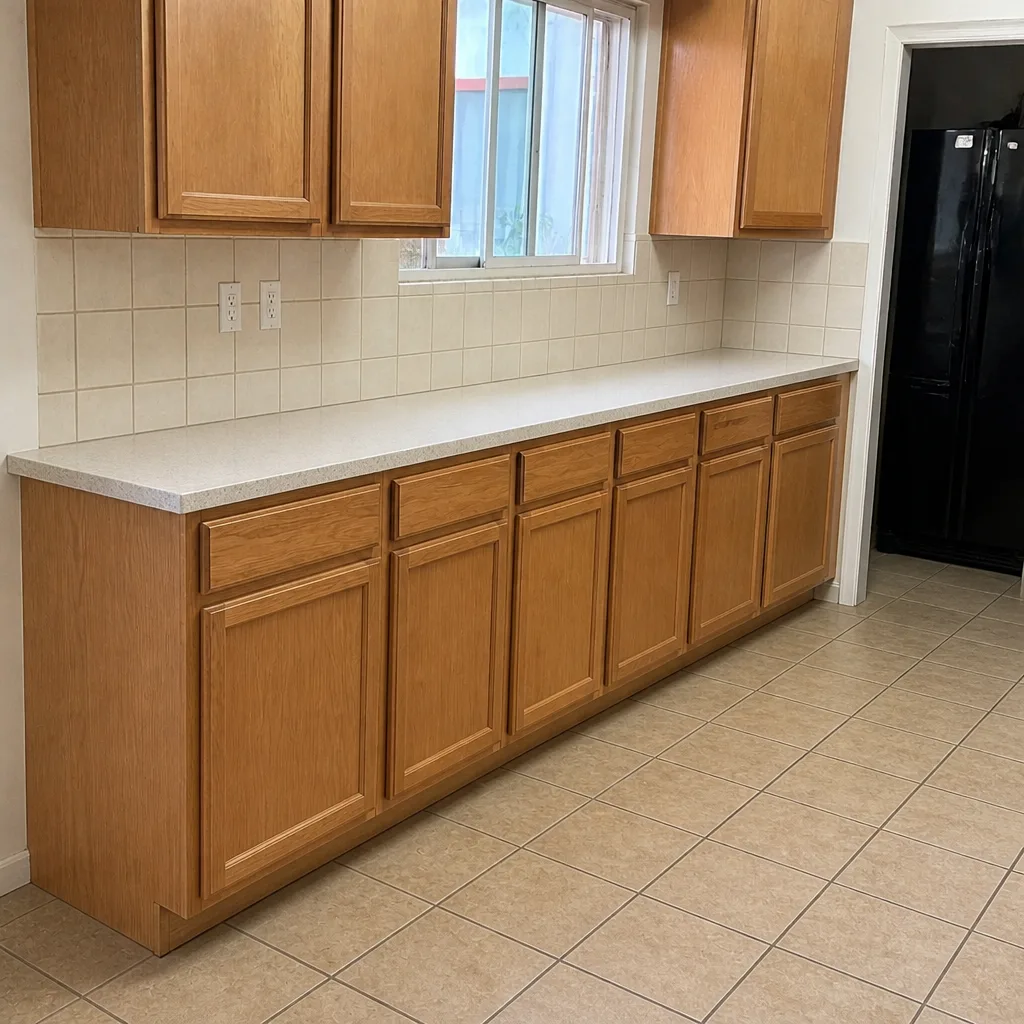
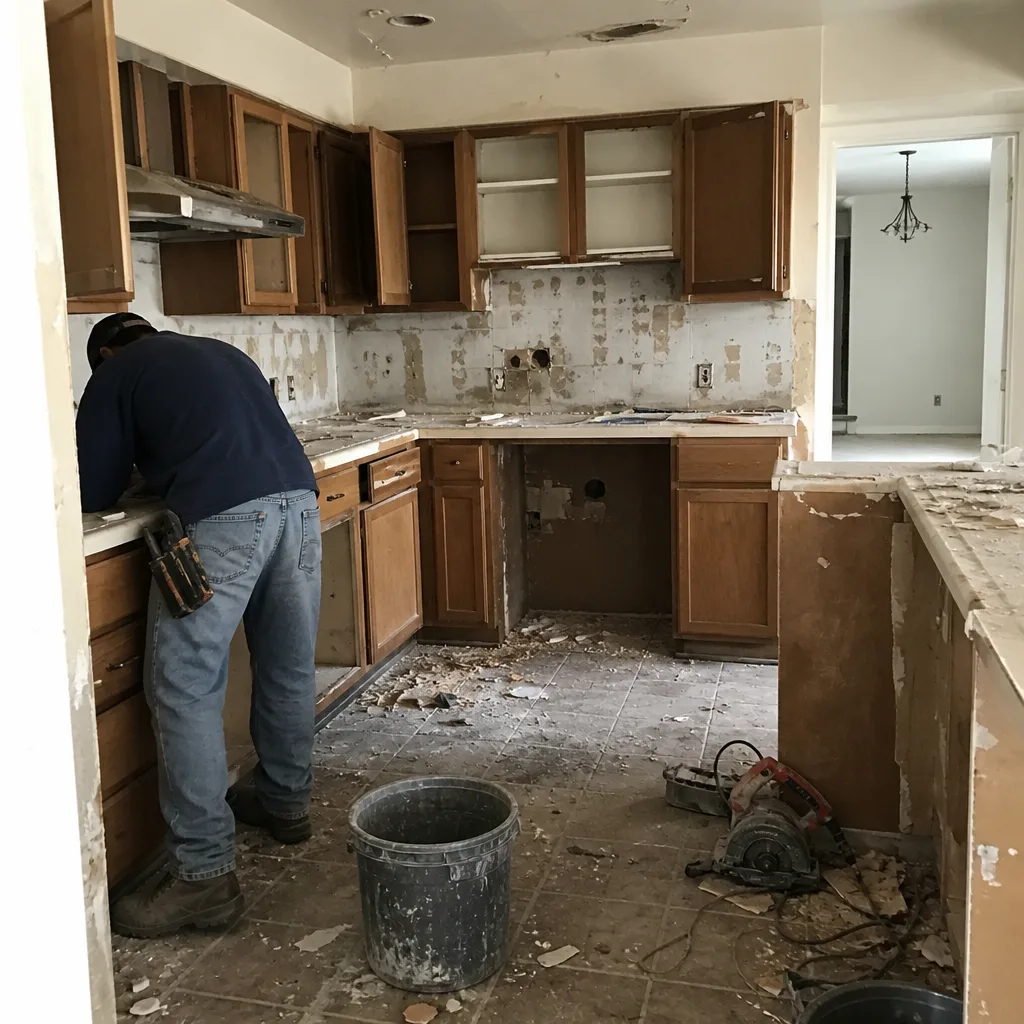
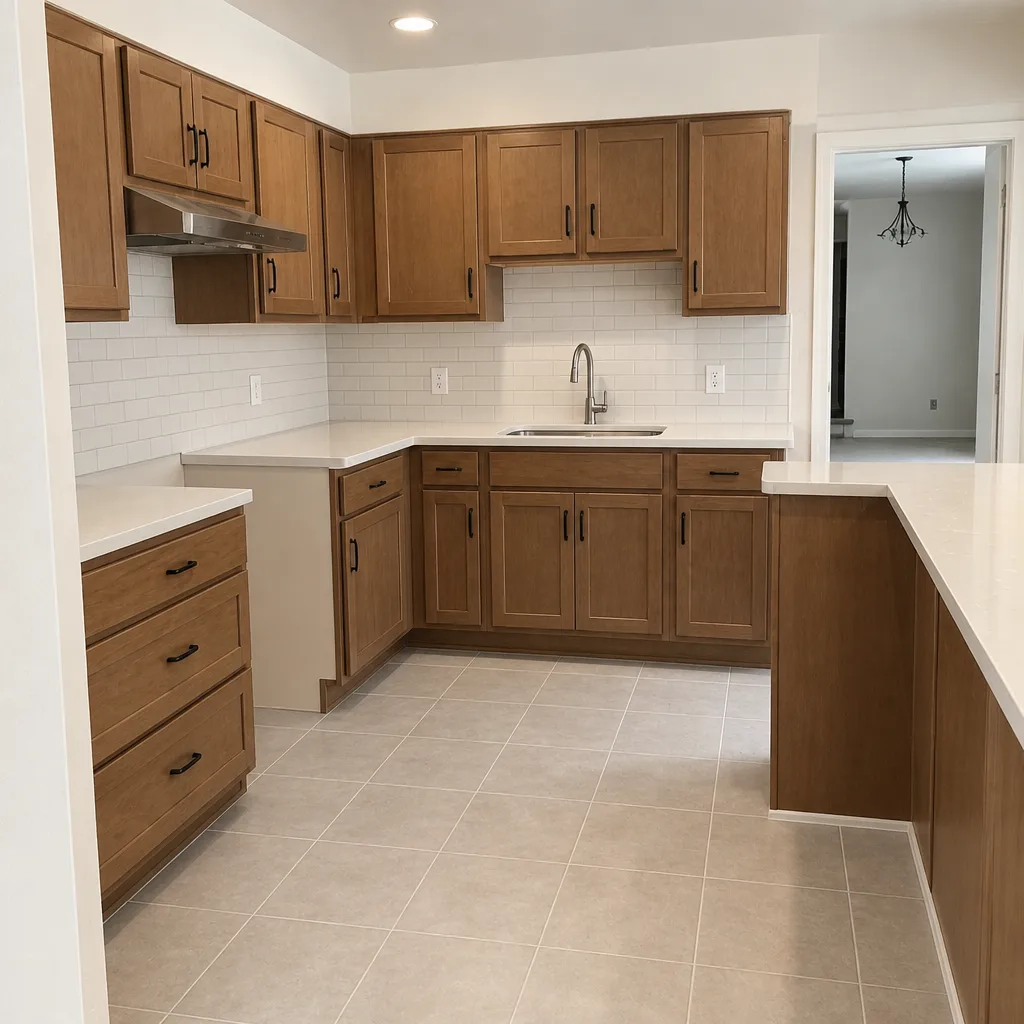
See the difference
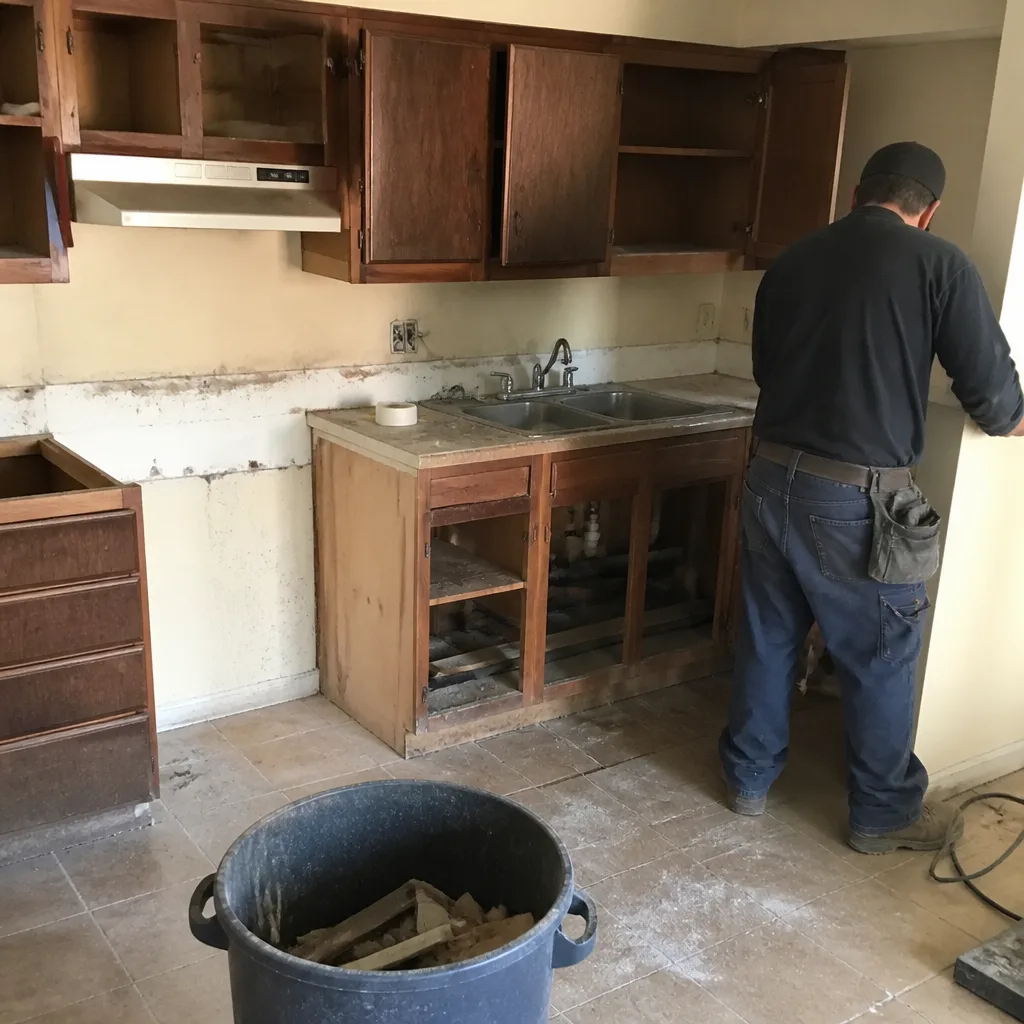 Before
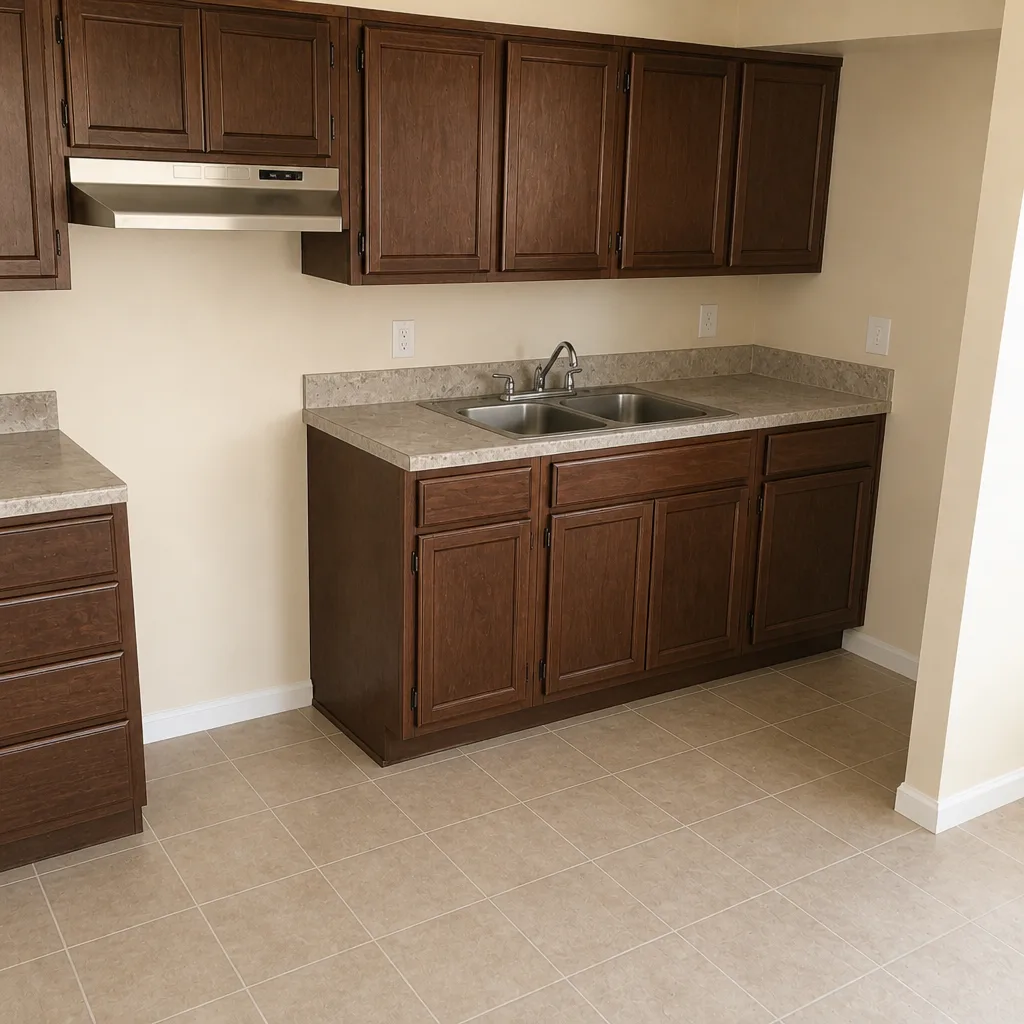 After
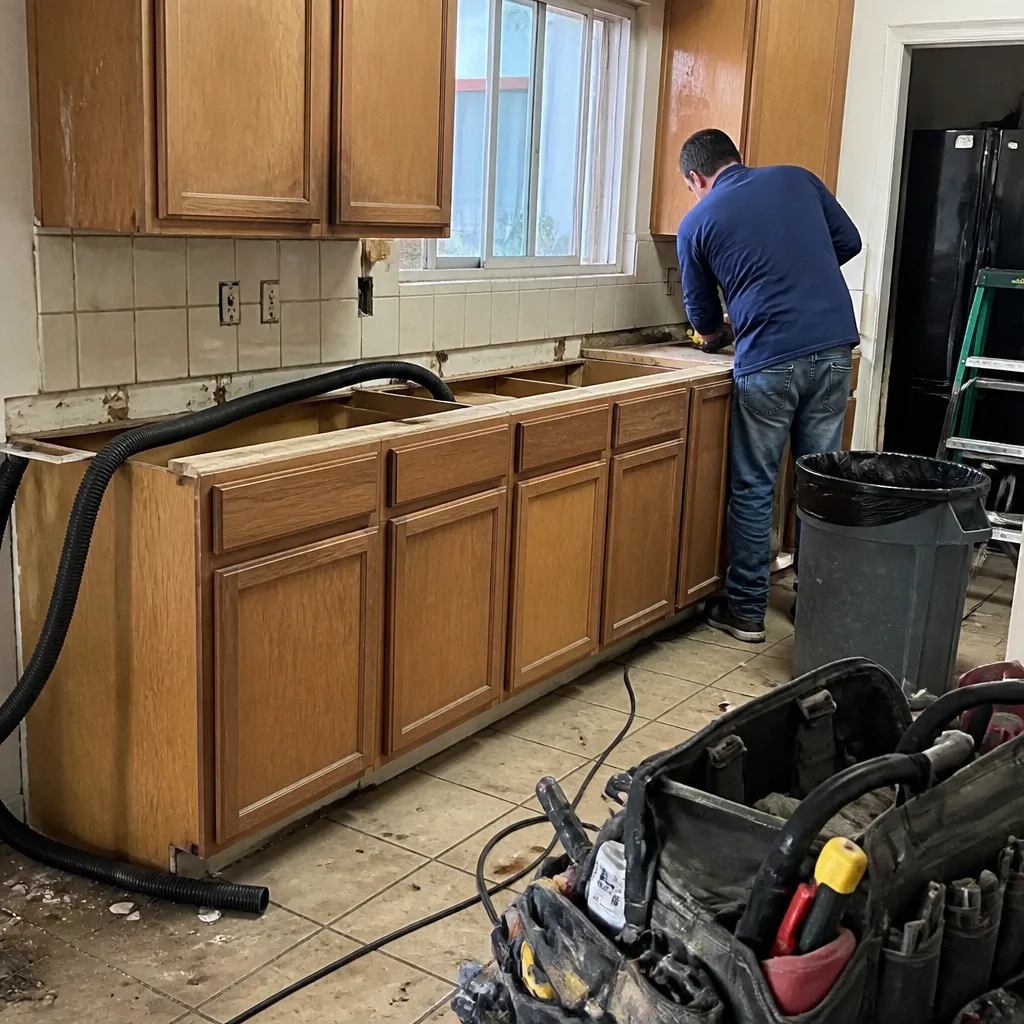 Before
 After
 Before
 After
When to Call a Professional
Call a professional when you’re replacing cabinets and countertops together, when the layout is changing, or when a west- or south-facing wall is involved and you need product selection matched to exposure. Call when you can’t get a written cutaway spec or warranty terms from a dealer, or when the dealer can’t explain who handles a claim. Call when an existing countertop has been scorched or a cabinet finish is peeling and you need to know whether it’s a material issue or an installation issue. Call when you want one party to own the full sequence of cabinet installation, countertop installation, and fixtures. Valor Kitchen Remodeling offers free estimates in Las Vegas – call (844) 797-6597. We answer 24/7. Fast dispatch from 7am to 7pm, Sunday through Friday.
Frequently Asked Questions
The best brands are the ones whose construction and finish hold up to desert heat, UV, and hard water – plywood boxes, durable painted or stained finishes, and solid drawer boxes. Premium semi-custom and full custom lines like KraftMaid and Wellborn fit that profile, offered through an authorized installer who can warranty the product and back the installation. Call (844) 797-6597 for an exact quote – estimates are free.
Premium quartz is the strongest all-round performer in Las Vegas because it’s non-porous and UV-stable, though it needs trivets for hot pans. Quartzite, granite, and porcelain slab handle heat better but with more maintenance or installation demands. Cambria, Silestone, and Caesarstone are the three premium quartz lines we work with. Call (844) 797-6597 to talk through which surface fits your kitchen – estimates are free.
Thermofoil is a vinyl film over an MDF core, and sustained heat plus intense UV degrade the adhesive that bonds it, causing peeling and delamination – especially on west-facing walls. On sun-exposed cabinet runs, painted or stained finishes are the safer choice. We can walk you through finish options for your specific kitchen; call (844) 797-6597.
Usually not the way homeowners expect. Brand warranties typically cover material defects, not failures caused by heat exposure or installation errors, which are the most common causes. Ask for the written warranty and read the exclusions before you buy. An authorized installler who carries the brand relationship can act on a claim on your behalf – call (844) 797-6597 for details.
Ask for authorization documents, a cutaway of the actual cabinet box, and the written brand warranty, and confirm who handles a claim. A real dealer can show you all three; a broker can’t. If those answers are vague, treat the showroom as a catalog, not a dealer. Call (844) 797-6597 to speak with a kitchen specialist about premium brands – estimates are free.
A kitchen specialist is the better choice when cabinets, countertops, and fixtures are all changing, because one party owns the handoffs and nothing gets traded between trades. A generalist splits attention across trades and learns your kitchen’s specifics on your job. Call (844) 797-6597 to schedule a free estimate with Valor Kitchen Remodeling in Las Vegas.
The Bottom Line
In Las Vegas, choosing a kitchen brand is a performance decision before it’s a style decision. Prioritize plywood cabinet boxes and painted or stained finishes on sun-exposed walls, rank countertops by how they handle heat, UV, and hard water, and treat “designer-grade” as a set of written specifications rather than a marketing word. Verify that your dealer is an authorized installer who stocks and warrants what it sells, and read the warranty to understand what’s covered and who acts on a claim. Most of all, tie the whole purchase to one accountable party instead of three. Do that, and the investment you make in a premium kitchen holds up long after the first Las Vegas summer.
Ready to talk brands, specs, and a written estimate? Call Valor Kitchen Remodeling at (844) 797-6597 for a free estimate. We answer 24/7. Fast dispatch from 7am to 7pm, Sunday through Friday.
Written by the team at Valor Kitchen Remodeling.